



Howard Rosen made the calculation. Filling in a bubble for every race on his ballot except one — leaving the Senate option blank was a choice he could live with.
As a lifelong Democratic voter who couldn’t bring himself to back Abdul El-Sayed, nor stomach voting for Republican Mike Rogers and bring two more years of a GOP Senate majority, not voting was the only choice he could see. Many other voters in the Michigan Jewish community can’t say the same.
The high-stakes Senate election has exposed deep fault lines among the state’s Jewish community, most typically Democratic voters, who say they’re choosing whether to back a Democratic candidate they don’t feel represented by, sit out the race entirely or back a Republican candidate possibly for the first time ever.
For many in the Michigan Jewish community, this race has upended daily life, sown division some are worried will outlast Election Day, and changed the way many view the Democratic Party — and their fellow neighbors.
Approach to Israel changes the race
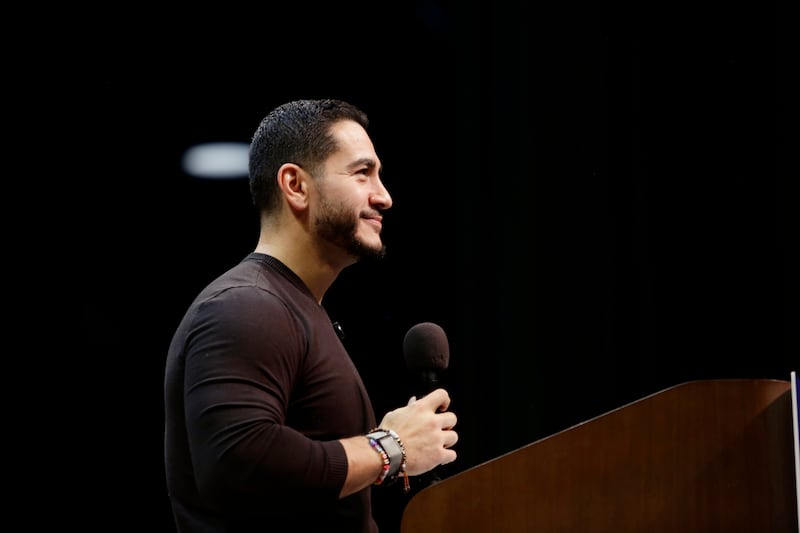
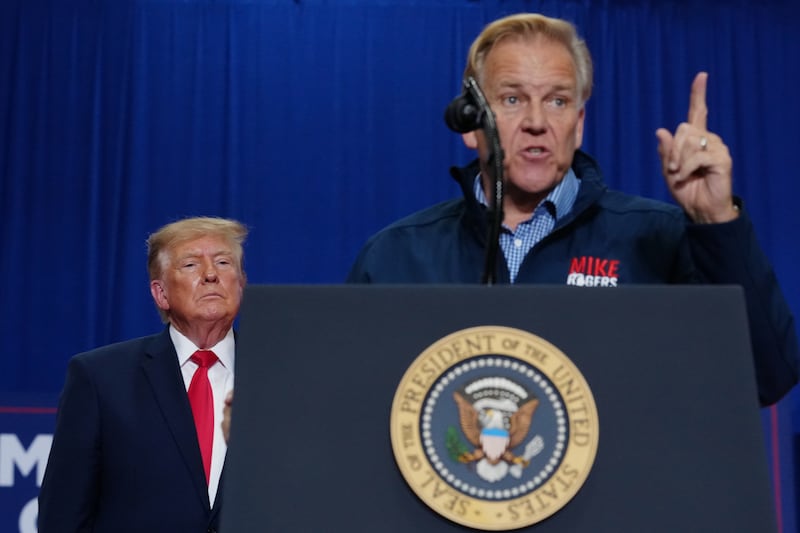
Progressive Abdul El-Sayed, a public health official, is running on a platform of Medicare for all and getting money out of politics and “back in your pockets.” Republican Mike Rogers, a former House member and FBI agent, is running to bring manufacturing jobs back to Michigan and strengthen national security.
The race has led to a wedge in the Jewish community that includes pockets of metro Detroit.
El-Sayed earned early enthusiasm from some Democratic voters looking to capitalize on a streak of progressive wins across the country, but his stances on Israel have dismayed Jewish voters, upending friendships, families as well as public and online spaces. He narrowly defeated Rep. Haley Stevens in the August primary.
Rosen, a West Bloomfield resident, is a member of Temple Israel where an antisemitic attack happened in March when a man inspired by Hezbollah, a Lebanese militant group, drove a truck loaded with gasoline and fireworks through the doors of the synagogue preschool. He was the only casualty.
The event was described by community members as terrifying and a very real reminder of the antisemitism on the rise across the country. El-Sayed responded to the attack by saying “hurt people hurt people,” later saying he didn’t mean to hurt anyone with his statement.
That, plus his deeply critical statements on Israel, refusal to acknowledge the country as a Jewish state and opposition to U.S. financial assistance to Israel has cost him longtime Democratic voters. Rosen is one of them, describing himself as an independent that leans left.
He has donated and campaigned actively for Democrats like Stevens in the past but refuses to cast a ballot for El-Sayed this November and doesn’t want to vote for Rogers in the chance that Democrats won’t win majority control of the Senate for President Donald Trump’s last two years in office.
“I will tell you, and I’m not embarrassed,” Rosen said, “But in this election, if someone put a gun to my head and I had to vote for one of the two nominees, I would vote for Rogers, but since we live in America and I can do what I want, I did not vote.”
The issue isn’t dissipating in the days leading up to Election Day, with Stevens coming out against a heavily-criticized anti-Israel ad funded by a pro-El-Sayed group.
Rosen said he believes Rogers would be a better “protector of Israel” but he can’t hang his hat on that one issue enough to vote for him. Others in the Jewish community see it differently.
Crossing party lines
Chelsea Rebeck, a West Bloomfield attorney, describes herself as a lifelong Democrat who is voting for Rogers. Stevens’ loss in the primary was shocking and upsetting, she recalled. Her Jewish community wondered, “what are we supposed to do now?”
“Abdul is just not a candidate that I can get behind from not only a Jewish perspective but just an American citizen perspective,” she said. “I don’t think that he represents what the Democratic Party has always stood for, at least the Democratic Party that I signed up for.”
Rebeck said El-Sayed is too progressive for her taste, regardless of his stance on Israel.
El-Sayed has said he is a capitalist who believes in taxing billionaires and expanding federal medical coverage for all. He’s pushed back on critics who say he’s associated with the Democratic Socialists of America, but has campaigned with popular progressives and drew backlash after campaigning with socialist streamer Hasan Piker.
Rebeck said she doesn’t recognize the Democratic Party anymore, saying it’s gone too far left. She said the only way party leadership will understand that voters like her feel misrepresented is to take a stand and “hold the line.” She said she’s “super disappointed” that Democrats like former President Barack Obama and Michigan Sen. Elissa Slotkin are backing El-Sayed and it’s changed the way she views the party nationally.
Rebeck said she met with the Rogers campaign and ultimately determined that she could sacrifice her party label and vote for a “good, moderate Republican candidate.” Rogers, who is endorsed by Trump, has tried to distance himself from the president, whose approval rating has been underwater much of the year.
Rogers has broken with Trump on some of the administration’s key economic policies, including opposing tariffs on Canada and calling for an end to the war with Iran, which has caused gas prices to soar since the conflict began in late February. He’s also tried to appeal to the Jewish community by offering Democratic Jews who are afraid of antisemitism “a home with us.”
“We’re in a really interesting time,” Rebeck said. “I’ve been through a lot of political races in my life and I remember thinking ‘this is the most important race ever’ but this one is really, really important and I think it not only is going to shape the state, but it’s going to shape how our community moves forward.”
Daniel Cherrin’s has crossed paths with both Rogers and El-Sayed in his professional life. They’re both “good people,” he said. Cherrin, who has in the past voted for Democrats and ran for local office as a Democrat, will be voting for Rogers this November.
He identifies with the Democratic Party more than the Republican Party, but he emphasized he is a member of the Jewish community. The difference between identification and membership is important to him, Cherrin said.
Cherrin explained that he thinks the issues presented by the Democratic candidate and the party brand are important to him, but in this race it’s more important to keep El-Sayed out of office over his views of Israel.
The most striking example of how the issue and the race has divided the community is the nastiness of the political dialogue on social media among the Jewish community, Cherrin said.
“It has driven a wedge within the Jewish community here in Michigan, and what I’m really concerned about is more the long term impact that will have on the community overall,” he said.
It’s something so intense that friendships and family relationships have been affected. People have even left volunteer positions they once were proud to hold.
Troy Zukowski-Serlin, who voted for Stevens in the primary, left his position at the Michigan Democratic Jewish Caucus because he was vocal about his choice to support Rogers in this election.
Both the caucus and the Michigan Democratic Party “have left me,” Zukowski-Serlin explained. He said El-Sayed’s candidacy puts liberal Jews like him in a “very, very uncomfortable position,” noting that he is now an “independent party-hopper” and his wife will write in his own name on her ballot this year.
“I think it’s very important to put down that flag and say, look, in this election, in this race, you have to look seriously at Jewish peoplehood over the practical realities of the U.S. Senate or the Supreme Court or who has a majority, who has a minority,” Zukowski-Serlin said.
Sue Kahn, a Republican who planned to vote for Rogers no matter which Democratic candidate won the primary, noted that this race has become so emotional for those in the Jewish community because it goes beyond the typical “Republican versus Democrat.”
“This isn’t your typical political race where you’ve got two major parties. This goes much deeper than that,” she said. “This goes to our faith, to who we are as a people, to what the dangers to our people are, dangers to Israel and support for Israel.”
Michigan voters have been inundated with political content this year, since they also face choices for governor, attorney general, secretary of state and 13 different House races on top of the Senate race.
While large swaths of the Jewish community in metro Detroit are crossing party lines in favor of Rogers, some are sticking behind El-Sayed and the Democratic Party.
Standing firm for the Democratic ticket
Rochelle Rubin has written letters to her neighbors to highlight how “dangerous” she views the Republican Party and the possibility of the GOP keeping its majority in the upper chamber if Michigan voters elect Rogers.
Door knocking for El-Sayed, she ran into a Temple Israel member who she described as “furious” that Rubin could support the Democratic candidate after the attack. And a close friend told Rubin she won’t spend time with her or her husband until after the election.
“I’m disappointed in some of the people I know, that they can’t see past their personal fears about antisemitism to realize that the antisemitism dangers are greater here in the United States if we continue with the current administration,” she said.
As a child of Holocaust survivors, Rubin agrees with the voters opting for Rogers that Israel has a right to exist as the Jewish state. Where she differs from her neighbors is that she feels like she needs to vote in El-Sayed’s favor so Democrats win the Senate majority for Trump’s final two years in office.
Rubin detailed how she felt about the Trump administration’s recent actions, including restricting access for some news outlets at the White House and the increase of Immigration and Customs Enforcement action across the country.
“These are the exact same things that were happening in Germany in 1933,” she said. “To me, there’s a lot of things here in this country that remind me very much of turning to a very authoritarian and very fascist type of leadership, and I think that’s what we should be scared of … that’s where a lot of my work for Abdul comes from.”
Roslyn Schindler, who cast her ballot for El-Sayed on her 81st birthday, feels the same. She described how she has been “working vigorously” to get El-Sayed elected.
“For me, this election is about Michigan and our country. This election being about trying to thwart Trump in all of his misdeeds is an understatement,” she said.
Schindler said it has been “heartbreaking” to see the rift in the Jewish community in metro Detroit and recognized that there will have to be serious, intentional reconciliation for the community to return to what it once was.
“Whatever happens on Nov. 3, when we wake up on Nov. 4 … we have to move forward in some manner, and we have to move forward within the Jewish community regarding reconciliation and unity,” Schindler said.
The path toward reconciliation
Some of the people pivotal in the reconciliation process will be rabbis. Rabbi Asher Lopatin, the director of community relations at the Jewish Federation of Greater Ann Arbor, acknowledged that there is “fear on both sides” prompting the “very emotional” divide in this race.
“It’s been challenging, I think, for the community and we’re in a difficult place,” the Orthodox rabbi said.
The issue has become so charged that rabbis have moderated events for different generations to speak about the candidates they support with civility. Other voters are taking it upon themselves to ease the tension and fear about El-Sayed.
Elissa Driker, a therapist who recently joined the group Michigan Jews for Democracy, has hosted events where concerned Jewish community members can ask questions about El-Sayed’s platform and why they should remain in the Democratic Party camp for this race.
Driker explained she wears an El-Sayed button everywhere she goes. She ran into neighbors at Costco who asked her how she could rationalize voting for him given his stance on Israel. Driker said she told those neighbors that she doesn’t have to rationalize it.
“I don’t personally feel a conflict about supporting him, and that is because I feel so aligned with his platform,” she said. “Another layer is my absolute terror about Mike Rogers getting elected … it’s not just that I support Abdul, it’s that I vehemently, vehemently oppose Mike Rogers and what he stands for.”
Driker said she was surprised by the aggression from the Jewish community toward El-Sayed and said things in the community have “absolutely” become hostile. Still, she sees a way forward and thinks there is an “incredible opportunity for dialogue.”
“I think a lot of people actually share some of my optimism around this being an opportunity going forward,” Driker said. “It has exposed these incredible fractures, but it hasn’t created them. It just exposed them.”
Rabbi Lopatin agreed, noting there will be a “lot of work” to remind people that even if they disagree politically, the Jewish community in Michigan has to respect one another.
Zukowski-Serlin pointed to the past. Jewish people globally have overcome challenges and atrocities both during the Holocaust and the Oct. 7, 2023, attack on Israel. The “trials and tribulations,” he said, have kept the Jewish community strong.
“It’s very important that we don’t let something like this linger on in terms of hard feelings,” Zukowski-Serlin said.
Drawing heavy hitters like Trump and Obama, the high-stakes race remains neck-and-neck in the final few days before polls close.
The outcome carries implications for local residents in Michigan and control of Congress.
For voters like Rosen, the anxiety about this race will extend far beyond a single night on Nov 4. Caught between an uncomfortable choice and a profound sense of political homelessness, many in Michigan’s Jewish community think that the fractures exposed by this Senate election will linger long after ballots are counted.
“I’m not going to be happy no matter who wins,” Rosen said. “There is no happy ending for me.”
Still, rabbis and others emphasize that the ultimate test for this community isn’t going to be over who wins the Senate seat, but how neighbors, families and congregations alike can rebuild their connections going forward.