

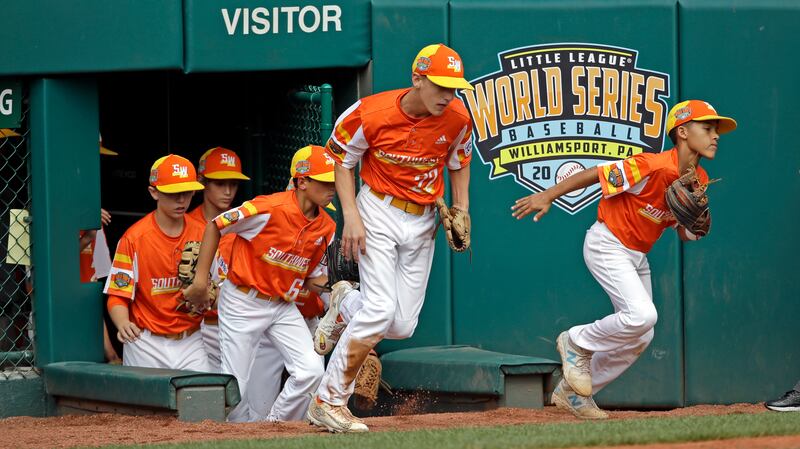

SALT LAKE CITY — Informed by a ballooning body of evidence, athletic trainers are telling parents that youth sports specialization can harm their children.
But on Wednesday, at a panel discussion with the National Athletic Trainers’ Association and a group of youth leaders in Dallas, parents pushed back — questioning whether youth sports leagues and institutions leave them any choice.
The panel convened to discuss the association’s six new guidelines aimed at limiting injury risk in youth sports while encouraging maximum participation — to restore balance to a domain that’s maximizing risk with little evidence of payoff. Parents seemed receptive to the idea, but many expressed concerns about the practicality.
“It became this year-round thing,” said one dad, whose 11-year-old daughter gave up soccer when her coach wouldn’t let her explore other interests. He never wanted her to play year-round soccer, but she was told such commitment was necessary.
“It’s this momentum that just gets ahead of you, and that momentum is driven by the institutions, by the leagues,” he continued. “And I’m interested in what is science doing to affect the way that the organizations and the elite leagues are structuring the competition?”
“We hear that all the time,” answered David Bell, an athletic trainer and associate professor of kinesiology at the University of Wisconsin–Madison. “That parents are frustrated by this system of youth sports.”
Embracing the guidelines could help relieve their frustrations. The National Athletic Trainers’ Association recommends that parents, coaches, leagues and kids:
- Delay specialization in a single sport for as long as possible.
- Play for one team at a time.
- Limit participation in a single sport to eight months per year.
- Restrict the number of practice hours per week to the child’s age (a 10-year-old would practice no more than 10 hours).
- Mandate two days of rest per week.
- Require time away from organized activity following the end of a competitive season.
The guidelines are endorsed by five professional athletic training societies — basketball, football, baseball, soccer and hockey — as well as the Intercollegiate Council for Sports Medicine.
But Bell acknowledged the challenge of convincing youth sports organizations to see the benefits when they need constant participation to ensure year-round stability. Still, he said, the big picture must be addressed: 70% of kids stop playing sports by age 13, he explained, because they’re no longer having fun. And the results for those who stay are increasingly alarming, too.
Jamie Reed, senior director of medical operations and sport science for the Texas Rangers, told the panel that he’s seeing a surge of overuse injuries in young baseball players. He evaluates the team’s top 575-600 prospects each year. In 2014, 41 players in the cohort had undergone reconstructive elbow surgery, or “Tommy John.” By 2018, the number had climbed to 109.
In 2019, it reached 308.
“It’s overwhelming,” he said. “It’s absolutely overwhelming.”
Since prior injury is the best predictor of future injury, Reed often advises the Rangers to avoid such prospects, regardless of talent.
“This guy is not gonna hold up,” he’ll say. “He’s been abused.”
Despite the risks, kids continue to be pushed into year-round participation in a single competitive sport, driven by parents seeking prestige or college scholarships and leagues pursuing their own the business interests, among other factors. And kids, inundated with stories of athletes reaching stardom via determination and constant training, embrace the harmful trend.
But even if the goal is as modest as making a high school varsity team, the panel agreed that participation in multiple sports, in addition to limiting injuries, encourages varied skill development that will help kids in any sport once they do specialize, which Reed said should happen when “talent separates” — usually in high school.
In addition to following the guidelines, the panelists said — multiple times — the key to a healthier youth sports ecosystem is fun. Every program, club and interaction should be, above all, fun, and avoiding overextension can help with that. Playing multiple sports can also benefit psychological health by limiting burnout, a mental condition with potential long-term physical consequences.
“The potential for burnout and stepping away from sports altogether and turning to nachos and Fortnite is a real public health problem,” National Athletic Trainers’ Association President Tory Lindley said during the panel, “and it’s becoming an epidemic.”