
There are no rules in college sports.
That’s what the Brendan Sorsby case means. The end of rules.
Not that many were being enforced these days anyway, but this … this was the wake-up call.
A “student-athlete” wants to transfer to a new school, every year. Go ahead.
A booster wants to lure him away from another school with offers of money and pay for play. Not a problem.
An athlete wants to play seven seasons to collect NIL money. Fine. Stay until Social Security begins.
A professional basketball player wants to return to the college game. Sign him up.
A college athlete gambles on his team or other teams. Do it. He’ll be fine.
All they have to do is lawyer up and find a friendly local judge, preferably a fan of State U., who will file a temporary restraining order or an injunction. The courts are in charge of college sports now. As Fox sports analyst RJ Young wrote, “College football has a commissioner, and his name is Local Judge.”
The courts have taken charge. They’re not letting the NCAA enforce its rules.
A Mississippi judge ruled that Mississippi quarterback Trinidad Chambliss was eligible for a sixth year of play after the NCAA had denied it.
An Alabama judge invoked a TRO allowing Charles Bediako — who had played professionally for three years — to play for Alabama. Bediako played five games. The judge later recused himself after it was learned that he was a large donor (more than $100,000) to Alabama’s athletic program and the case’s new judge ruled that Bediako’s professional career had violated college rules.
Oklahoma linebacker Owen Heinecke was denied a fifth year of eligibility by the NCAA, but an Oklahoma district court judge, Thad Balkman, issued an injunction allowing him to play this season.
Former Tennessee quarterback Joey Aguilar sued for an extra year of eligibility, asserting that his junior college seasons shouldn’t count against his NCAA clock (as they always have). For once, a local judge backed the NCAA — Aguilar lost.
There have been dozens of such cases. Even when the NCAA’s powers-that-be express an interest in enforcing their rules and cleaning up their messy organization (such as it is), judges stop it or stonewall it, and the NCAA has to launch a legal response.
Yahoo Sports reported that the NCAA received 1,450 waiver requests for extended eligibility last year, and two-thirds of those were granted. Of the approximately 500 that were not granted, more than 70 resulted in lawsuits. Yahoo also reported that the NCAA has won more than two-thirds of the eligibility lawsuits it has faced — but only after much legal wrangling.
The Brendan Sorsby case was the NCAA’s Waterloo. If the NCAA was already staggered with the myriad problems it faces via NIL and the portal, the Sorsby case was the kill shot.
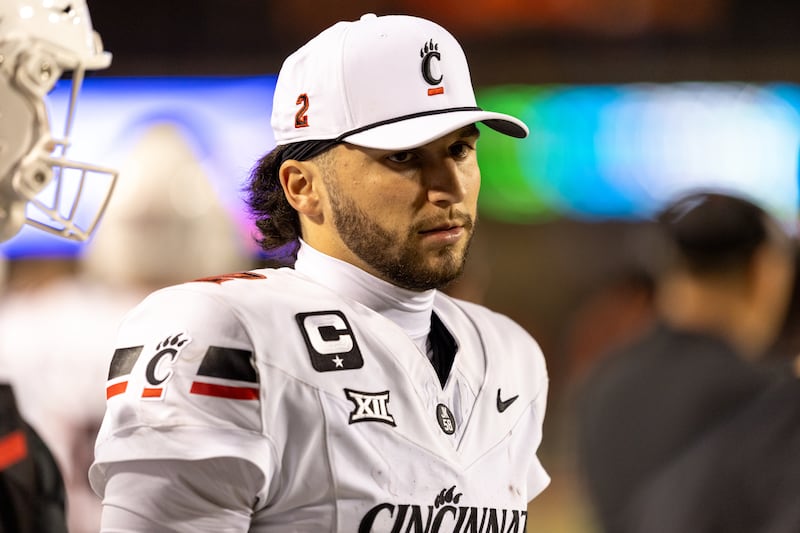
Sorsby admitted that while he was a quarterback at Indiana, he made more than 9,000 sports bets, at least 40 of them on his own team, totaling more than $90,000. Gambling rules in sports are considered sacrosanct for obvious reasons: The integrity of games is at stake.
There must be a fundamental belief that the games are fair, or sports fails. This case was a no-brainer. The NCAA ruled Sorsby ineligible (by then he had transferred to Cincinnati and then Texas Tech). Sorsby filed for a temporary injunction in a Texas state court. Judge Ken Curry granted an injunction, allowing the quarterback to suit up for Tech in the fall. The injunction prevents the NCAA from stopping Sorsby.
The judge’s conclusion that Sorsby would suffer “probably, imminent and irreparable injury” if he were denied the opportunity to play was nonsensical and silly. The same could have been said of Pete Rose, permanently banned from baseball (and the Hall of Fame) for gambling on his own games. Or the 1919 Black Sox, famously banned from baseball for fixing games, never to play again.
The sports world went ballistic — coaches, athletes, media. This was the one issue upon which everyone could agree — coaches, media, fans, the haves, the have-nots. The Sorsby case ignited outrage. Administrators at Nebraska and Georgia instructed their coaches not to schedule Texas Tech in the future. Kansas State and other schools are discussing the same action. Conferences are discussing a response.
“There needs to be serious conversations about not playing Texas Tech in any sports,” Georgia athletic director Josh Brooks told Yahoo Sports. “We cannot in good conscience put our student-athletes on a field where the competitive integrity of the contest is compromised and overridden by the courts. All FBS schools should only take the field against programs operating under a uniform, trustworthy standard of fairness. We’ve officially reached the point of no return.”
The reason courts can rule on NCAA cases is because the NCAA has no antitrust exemption — Major League Baseball has an antitrust exemption and the other major leagues all have limited antitrust exemption. That means courts can intervene in cases that involve restraint of trade, contracts and compensation restrictions.
Tulane sports law professor Gabe Feldman posted this on Monday: “If there’s one thing that could unify a divided Congress to pass a law that gives the NCAA more authority to govern itself, it might be a court prohibiting the NCAA from banning athletes who bet on their own games.”