Once upon a time, the NHL was a six-team league. Four of the six made the playoffs in any given season, giving two-thirds of the fan bases hope in the postseason.
In the late 1960s, the league expanded — and so did the playoff format.
It exploded from six teams to 12 in 1967, and the playoff capacity jumped from four teams to eight. Additional squads joined every few years until there were 21 by 1979. It was at that point that the league adopted a 16-team playoff, meaning three-quarters of the fan bases got to watch their teams in the spring.
League expansion has steadily continued since then, but the playoff format has not. The NHL is now at 32 teams and the playoffs remain capped at 16, meaning half of them fail to qualify for the postseason every year.
In a business where fans’ hope equates to profit, that’s a meager way to sell the sport.
Look at the Detroit Red Wings, for example. They have not qualified for the playoffs since 2016, meaning an entire generation of Michigan-based hockey fans will have no childhood memories of their team ever having a shot at the Stanley Cup.
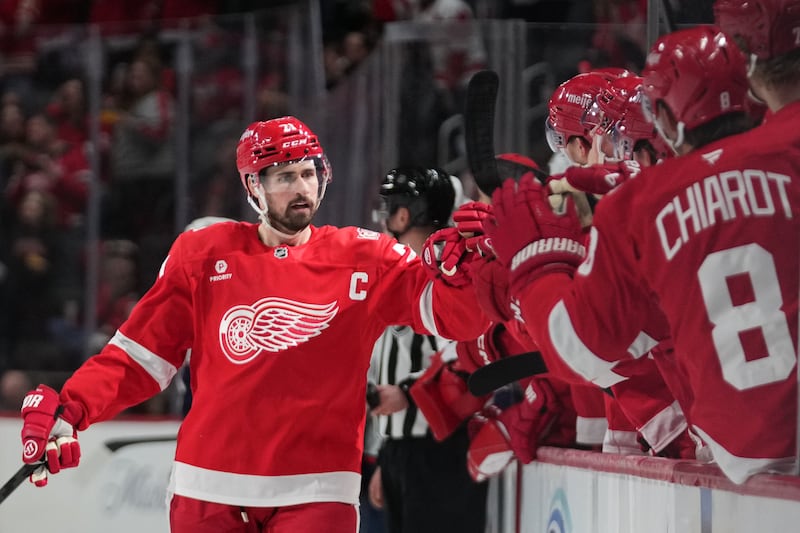
It’s no wonder Michigan hockey registration has decreased nearly 25% since the last time the Red Wings won a championship. Heck, even their captain, a Michigan native who grew up a Red Wings fan, has lost hope — he reportedly requested a trade this summer.
Similarly, the Buffalo Sabres finally broke out of their 14-year slump in 2026 and the San Jose Sharks fans haven’t experienced a playoff run yet this decade.
As the NHL contemplates yet another round of expansion, which could take the league to 34, 35 or possibly even 36 teams in the next decade, playoff expansion should not be considered optional.
What could improve the format of the Stanley Cup Playoffs?
The NBA uses a substantially similar playoff format to the NHL, with eight teams from each conference qualifying for the first of four best-of-seven rounds. The difference is that in basketball, the seventh and eighth seeds are determined by a play-in tournament.
It gives the league an extra few games of high-intensity, must-watch action that surely draws much more revenue than the average game. At the same time, it gives hope to six extra fan bases by convincing them that the season wasn’t an outright failure.
The NHL instituted a play-in round for the 2020 COVID bubbles in Edmonton and Toronto, but they did it differently than the NBA: byes for the top four seeds in each conference and best-of-five series among everyone else to determine the latter four seeds.
If logistically possible, hockey fans would probably prefer to see multi-game series for the play-in rounds, rather than one-off games like the NBA — and from a league revenue standpoint, that’s probably a lucrative option.
Perhaps it could follow a template like this:
- The top three seeds in each division get byes
- The top four non-playoff teams from each conference make the play-in round
- No. 1 plays No. 4 and No. 2 plays No. 3 in a best-of-three series
Each team would host a game in its own building, generating playoff revenue for both owners. The higher-seeded team would host the third game when necessary.
In a 34-team league, this system would allow 59% of the teams to qualify for the postseason. That’s still far lower than it was during the Original Six and Expansion eras of the NHL, but it’s a significant improvement over the hope-diminishing system that currently exists.
It would also keep more fan bases engaged in the final months of the season, as more of them would be in the race for those play-in spots.
Why hasn’t the NHL adjusted its playoff format in so long?
NHL commissioner Gary Bettman has defended the current playoff structure on a number of occasions in recent years.
“It gives us a sensational first round — probably the best playoff first round in any sport,” he said at a general managers’ meeting in March. “We get more games and longer series as a result of the format.”
He acknowledges that the system isn’t perfect, but he isn’t worried about it.
“You can always pick at certain situations in any given year and say, ‘Well, I’d like it to be different that year.’ But if you look at the body of work that our playoffs represent over time, what we have now works extraordinarily well,” he said.

Can the NHL change the playoff format?
To hockey lifers, the idea of changing the format of the Stanley Cup Playoffs is akin to telling a dedicated Christian that you’re going to edit the Bible. It’s sacrilege.
Here’s the thing, though: Hockey has changed immensely over the years, and it will continue to do so.
If you consider yourself a “traditionalist,” why aren’t you upset that they eliminated the rover position in 1923? Or that they began allowing players to pass the puck in a forward direction in 1918?
Are you against players being required to wear helmets? Do you oppose the elimination of the two-line pass? Even the playoff format has gone through a number of upheavals.
These adjustments made the game better. It’s evolution — not arbitrary change.
The Washington Capitals missed the playoffs this season with a .579 point percentage. All but six teams finished above .500. By contrast, the 1988 Toronto Maple Leafs made the playoffs with a .325 and a -72 goal differential.
The NHL does not need to go back to allowing 75% of the teams into the playoffs, but it’s high time for an evolution of some sort.