

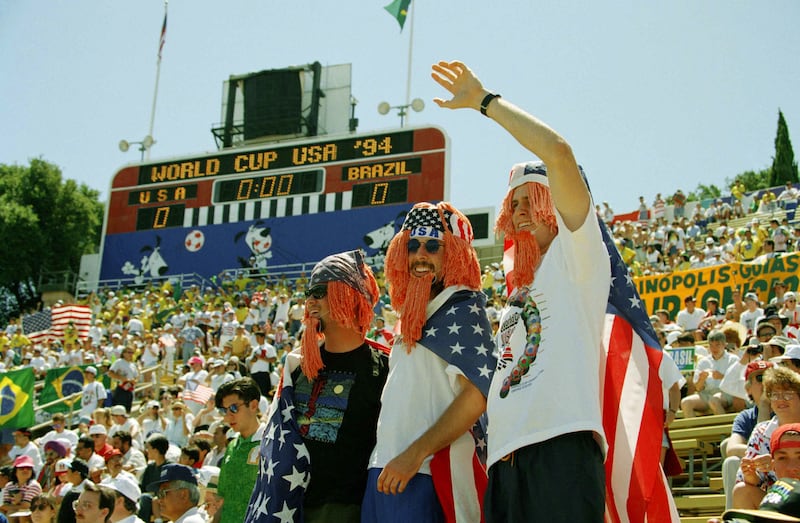

Historically, the U.S. lagged far behind other countries when it came to the most popular sport around the globe, as baseball, football and basketball led the plentiful sports buffet. So when the first World Cup was hosted in the U.S. over 30 years ago, international elites did not know what to expect as far as fan interaction and stadium attendance.
“We were at risk on the ticket side,” former U.S. Soccer President Sunil Gulati told Al Jazeera in a recent interview. “For the U.S. Organizing Committee, it was a big concern if we could sell all the tickets.”
Soccer interest in the U.S. was minimal leading up to the 1994 World Cup. Now, as the men’s World Cup’s second visit to America begins, it has reached higher popularity than America’s pastime, Sports Illustrated reports.
The U.S. squad jumps into group play action tonight at 7 p.m. MDT, squaring off against Paraguay at SoFi Stadium in Los Angeles.
An improbable bid to host
Following the March 1985 demise of the North American Soccer League after 16 years, no professional league existed in the U.S. Looking forward, securing a FIFA World Cup bid would be difficult when the U.S. Soccer Federation made a bid in 1987.
If secured, the nation would be set for large profits, since the event would require little construction with NFL stadiums found all throughout the country. But, according to media accounts, relevance was a real hang-up as Morocco and Brazil were also making pushes for the event.
Moroccan Minister of Sport Abdellatif Semlali said, “the United States does not need such competitions, they have so many already,” according to Soccer Forward.
It was true that football, basketball and baseball were giants compared to soccer in the U.S. Could the world-famous event garner any attention from the U.S. on its own soil?
However, the USSF not only believed it could be a big hit, but that it could revive a dying sport.
Learning from a previous attempt to secure the 1986 World Cup made in haste following Colombia’s dropout, the U.S. made sure to leave nothing unturned. In a 381-page report, delegates listed solutions to FIFA’s concerns, ranging from placing grass over artificial turf to finding a TV broadcast strong enough to allow viewing across the world. And of course, how could a country without a top-tier professional soccer league host the World Cup?
Still, all i’s were dotted and all t’s were crossed in the bid, according to accounts.
The Rose Bowl finish
The total cost to produce the bid ended up being in the ballpark of $1.4 million, but it meant the sport was “reborn” in the United States.
“I knew our country was in for a treat beyond anyone’s wildest dreams.” Jim Trecker, press officer for the World Cup USA 1994, said.
The tournament provided plenty of memorable moments, such as Diego Maradona’s primal scream following his final goal before a disqualification for banned substances, Brazil making the final for the first time in 24 years, and a five-goal match by Russia’s Oleg Salenko.
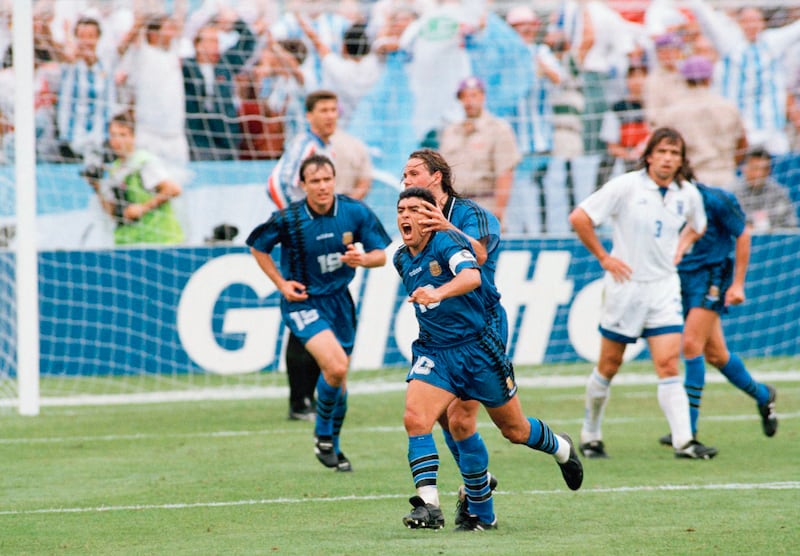
And the matches did not take place in quiet stadiums, like many around the world feared they might.
In fact, the U.S. broke records.
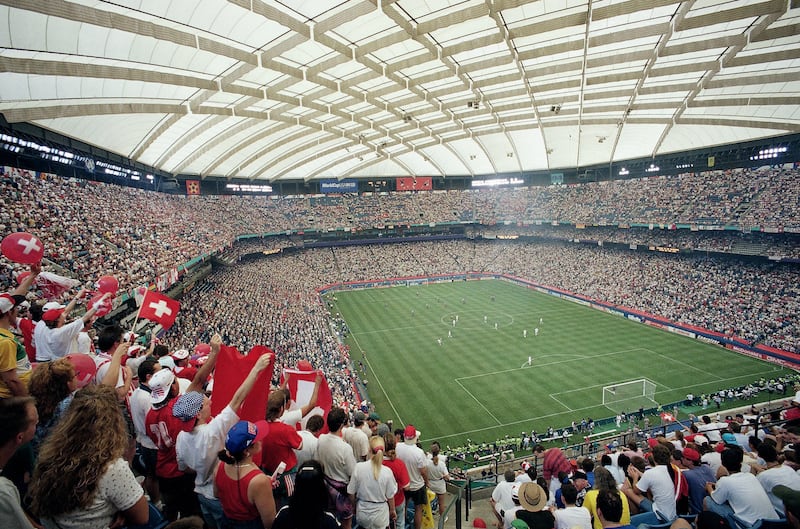
According to Guinness World Records, the ‘94 event saw 3,587,538 spectators across 52 matches, a record high 68,991 per game that still stands today. The next closest is Germany with 52,491 spectators per game in 2006.
Drawing a crowd in a country where the sport was considered niche, the final was sold out at the Rose Bowl, where Italy’s Roberto Baggio missed an iconic penalty kick as Brazil won its fourth World Cup.
Soccer would never be the same in the U.S. after that World Cup.
Birth of Major League Soccer

As a condition to host, the FIFA committee requested the U.S. form a top-tier professional league, a league to mark the World Cup’s legacy.
Promised in 1988, Major League Soccer was born in 1993, and the inaugural season was played with 10 teams in 1996. To start, the league “struggled to get even 5,000 fans a game, which looks awful in an 80,000-seat stadium,” Real Salt Lake Vice President of Communications Trey Fitz-Gerald remembered.
Fitz-Gerald started working in soccer in 1994 before moving to league offices for eight years prior to finding himself in Utah. He remembers wearing a lot of hats in each of his roles early on, since interest was still somewhat low.
But soccer has grown exponentially, thanks to greater mainstream media coverage following the World Cup.
“The rise of the internet in the late ’90s and early 2000s really shrank the world,” he said. “(North Americans were) able to see highlight clips, eventually full games, and get exposed to the personalities, play styles and the differences in the sport in different parts of the world.”
Greater media coverage allowed a base for curious soccer fans to explore and solidify their taste for the sport.
Comparing soccer to college football in the U.S., Fitz-Gerald said fan loyalty runs in the blood, often being passed down from generation to generation, and is still trying to play catch-up with countries where soccer leagues have existed for more than a century.
After its first 30 years, the MLS is headed in a positive direction. Tripling to 30 teams, most with a dedicated soccer venue, popularity is growing. Fitz-Gerald says RSL “has been selling out games for the better part of 15 years.”
“Every year, we are making progress toward more mainstream acceptance as a sport to be there alongside football, basketball, baseball and hockey.”
Formed 22 years ago, the expansion fee for RSL was $7 million. The most recent expansion with San Diego cost $500 million, a testament to soccer’s standing within the U.S.
Once an obscure sport, it is now among the most popular.
Women’s soccer blossomed in U.S.
It is hard to ignore the role of MLS as the driving force behind soccer’s surging growth, but the U.S. men’s team has never held significant relevance among the world-leading countries, such as Brazil, England and Argentina.
However, the U.S. women’s team has won nearly half of all FIFA World Cups ever played. Capturing the first women’s World Cup in 1991 and then again in 1999 on home soil, the team played a pivotal role in the rise of girls youth soccer in the U.S.

With stars such as Mia Hamm, Brandi Chastain, Abby Wambach and Alex Morgan, the sport provided a platform for girls across the country to look up to.
Utah Royals midfielder Courtney Brown recalled watching plenty of RSL games when she first started playing soccer as an 8-year-old, and when she got more serious about playing professionally, she started paying more attention to the dominant national team that featured Morgan and Wambach.
Now considered by many the most competitive women’s soccer league in the world, the NWSL doubled its team count since its beginning in 2012 from eight to 16.
“The growth of the NWSL and the growth of the MLS has been huge,” Brown said. “The leagues are both expanding, and you have cities in the U.S. that are huge soccer cities.”
Highlighting Atlanta and Portland as soccer “hotbeds,” Brown says soccer has come so far.
“As it continues to grow, you’re just going to get more and more of those hotbeds.”
A second World Cup on U.S. soil
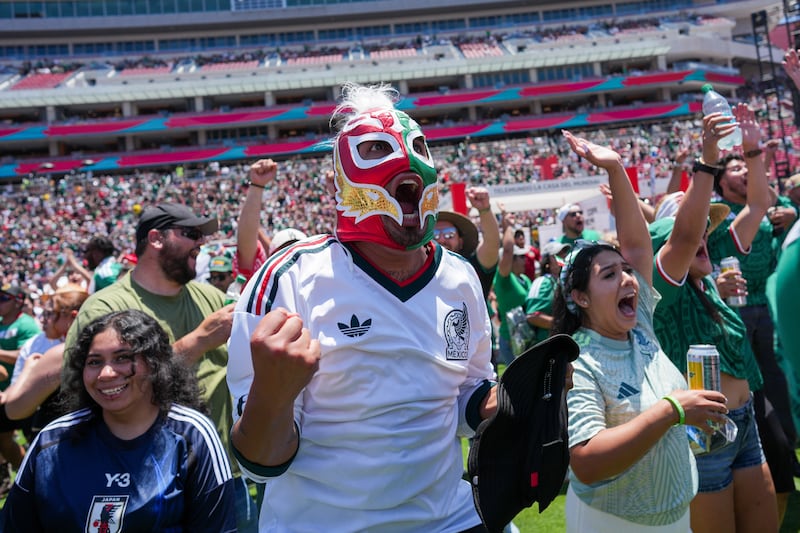
As the U.S. sets to host the World Cup for the second time, it’s a milestone for soccer enthusiasts to reflect on the strides the sport has taken the past 32 years.
“80,000 fans for an Argentina-Iceland friendly in Auburn, Alabama, is a sentence I thought I’d never utter,” Fitz-Gerald remarked.
Many in 1994 could have only dreamed about the state the sport is in now.
The games will surely be a chance to springboard the sport even further, but this summer is also “an opportunity to show the world that we embrace the sport,” he said.
With success, of course, comes challenges, such as high ticket prices, and political realities.
Still, the 2026 version of the World Cup — hosted by three nations — will likely set more benchmarks for future events.
Games began Thursday and the tournament will run through July 19 at sites in the U.S., Mexico and Canada.