

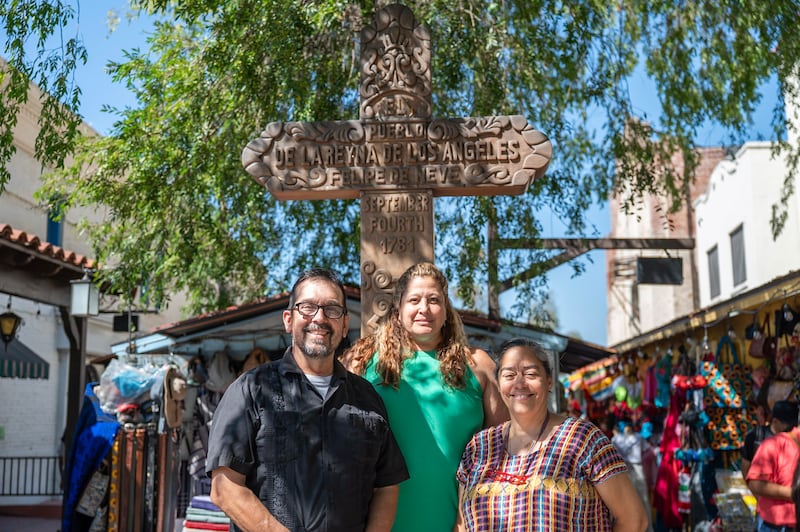

The Becket Fund, a nonprofit legal institute that defends free expression of faith, is joining a case to preserve a nearly century-old cross and a Nativity display at El Pueblo in Los Angeles.
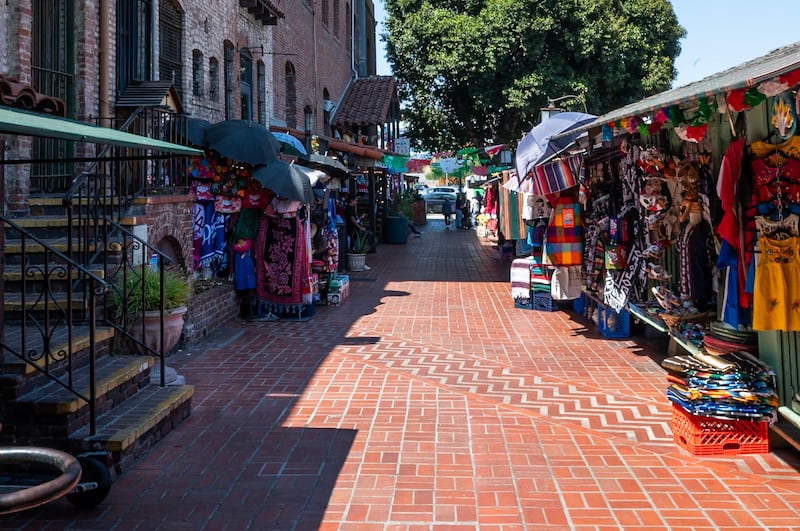
El Pueblo is the home of Olvera Street, a historic, brick-lined marketplace that marks the site where Spanish-speaking settlers founded the pueblo.
At the head of the street, which is lined with dozens of family-owned stalls, shops and restaurants, sits a 10-foot-tall wooden cross placed in 1929 to commemorate LA’s 148th birthday. Each year in December, the cross is joined by a Nativity display.
In 2025, a local resident, Jack Gerritsen, sued the city and petitioned to remove the cross and Nativity on grounds that the display violates the establishment clause. Gerritsen said the religious nature of the display offended him.
His request was rejected by a federal district court and the case, Gerritsen v. City of Los Angeles, was moved to the U.S. Court of Appeals for the 9th Circuit.
The Becket Fund announced Thursday that it had asked the court to let a group of Los Angeles merchants “join the legal fight” to defend the display.
Members of the Olvera Street Merchants Association Foundation, an organization with the mission of “preserv(ing) an understanding and an appreciation of the historical significance of Olvera street,” desire to join the case to defend the site.
“For generations, the merchants of Olvera Street have kept the neighborhood‘s rich Mexican-American heritage alive,” said Andrea Butler, counsel at Becket and lead attorney for the merchants. “Now one observer wants to take down the parts of that heritage that include religion. Thankfully, the First Amendment doesn’t include a third-party veto over history and culture merely because it acknowledges religion.”
The Becket Fund is “asking the court to make clear that the First Amendment does not require cities to erase such religious symbols and traditions from public life simply because someone takes offense to them,” the Becket Fund stated on their website.
In Becket’s motion to intervene, the fund said Gerritsen’s claim is “meritless” and “lacks standing.”
“Merely encountering a historic religious symbol in a public space is not a constitutional injury,” the motion states.
Becket announced that a decision on its motion to intervene is expected in the coming months.
LA is not the only place debating about the establishment clause
Olvera Street isn’t the only place where the establishment clause is making headlines.
Instead of a 10-foot cross, a case in Massachusetts involves 10-foot-tall statues depicting St. Michael the Archangel and St. Florian outside the public safety building in Quincy.
Last Tuesday, the Massachusetts Supreme Judicial Court upheld the trial court’s ruling that installing the statues “could be viewed by the public as endorsement of a particular religion, and the subordination of others.” The justices ruled that the public interest weighs in favor of maintaining the preliminary injunction.
Earlier this year, the U.S. Court of Appeals for the 5th Circuit ruled to allow Texas to require public schools to display Ten Commandments posters. The ruling said this practice would not violate the establishment clause or the free exercise clause.
A group of Texas families is seeking legal action to reverse the ruling.