

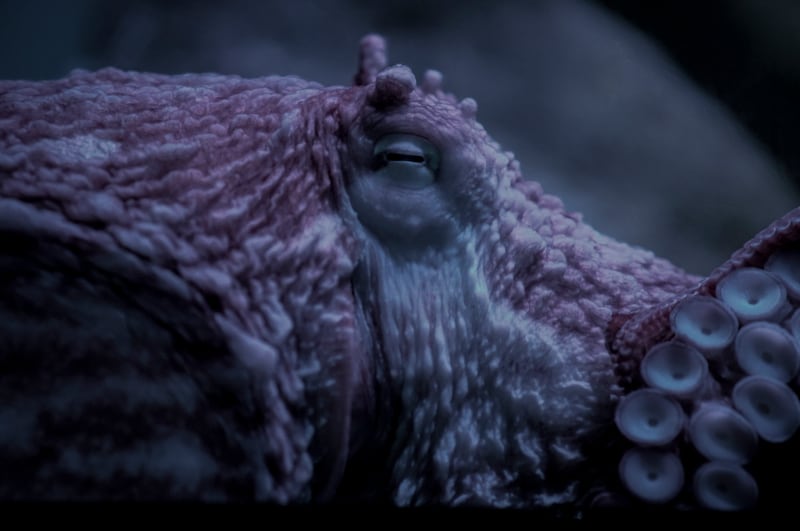

A new study suggests that giant octopuses were among the ocean’s top predators approximately 100 million years ago, published by the American Association for the Advancement of Science.
According to CNN, Japanese researchers used recently discovered fossils to compare jaw sizes with modern species and found that these ancient cephalopods reached lengths of 23 to 62 feet, with the largest specimens far exceeding any octopus alive today.
The fossils were discovered in Japan and Vancouver Island using a new technology called digital fossil mining, which utilizes AI to create 3D imaging, per Science Focus.
Scientists explained that it’s very rare to find fossil evidence of octopuses because most of their bodies are soft. They don’t have many hard parts that preserve well, outside of jaws, and fossilization favors hard materials.
What are the implications?
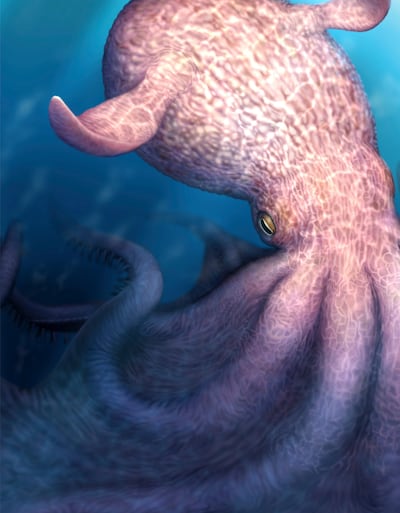
While sharks and other vertebrate predators were long thought to rule the oceans, new fossil evidence reveals that these octopuses likely vied for the position of apex predator as well.
These creatures weren’t your average octopus however.
“Our study shows that these were not simply large versions of modern octopuses. They were giant predators at the very top of the Cretaceous marine food web,” Yasuhiro Iba, a professor at Hokkaido University and one of the co-authors of the study, said, according to People.
Evidence of heavy scarring on the creatures’ beaks startled paleontologists, signaling a feeding strategy far more aggressive than previously assumed.
In addition to their size and strength, octopuses are also known to be quite smart and use that intelligence to capture prey.
According to National Geographic, some giant Pacific octopuses even know how to open jars and solve mazes.
“Like modern octopuses, it may have relied on intelligence to find, capture and consume its prey,” Iba told CNN.
Through digital fossil mining, Iba hopes to continue uncovering the secrets buried deep within the seabed.