



- Juneteenth marks the notification of freedom for over 250,000 enslaved Texans in 1865.
- In 2021, Juneteenth officially became recognized as a federal holiday.
- Celebrations often include traditional foods symbolizing African American and Black cultural heritage and history.
- Sociology professor Karida Brown emphasizes Juneteenth is a shared part of all Americans' history and experience.
- Currently, 30 states and Washington, D.C., recognize Juneteenth as a paid legal holiday.
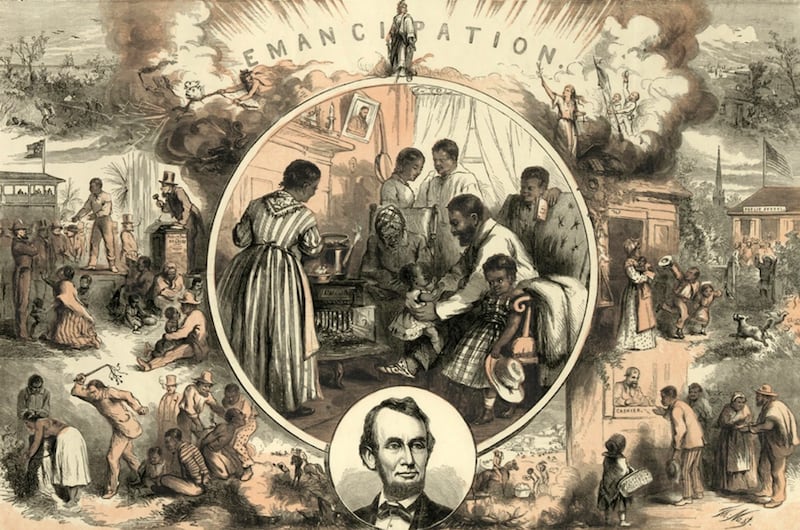
Nearly two years after President Abraham Lincoln signed the Emancipation Proclamation, Union troops arrived in Galveston Bay, Texas, with news for the state’s enslaved population: They were free.
More than 250,000 African Americans celebrated their newfound freedom following the executive decree from Union Gen. Gordon Granger, according to History.com.
“The people of Texas are informed that in accordance with a Proclamation from the Executive of the United States, all slaves are free,” Granger said. “This involves an absolute equality of rights and rights of property between former masters and slaves, and the connection heretofore existing between them becomes that between employer and hired laborer.”
That day, June 19, 1865, become known as Juneteenth, or Freedom Day. Texas became the first state to recognize the holiday one year later, on June 19, 1866.
Juneteenth in Utah
For Utah residents, the state’s holiday scheduling has caused some confusion, but that is changing.
Utah began recognizing Juneteenth in 2022, after President Joe Biden officially declared it a federal holiday in 2021.
When the state first recognized the holiday, if Juneteenth landed on a Tuesday, Wednesday, Thursday or Friday, it was observed as a legal holiday on the preceding Monday. If June 19 fell on a weekend, it was celebrated the following Monday.
Federal employees and some corporate employees get June 19 off, regardless of the day of the week.

During the legislative session earlier this year, Utah lawmakers voted to align the state’s celebration with the federal government, the Deseret News previously reported.
The bill will go into effect on Jan. 1, 2027.
A ‘jubilee’ of culture
As one of the nation’s newest federal holidays, some people are still figuring out how to recognize it.

In an interview with ABC News, Darrin Anderson, a native Texan and CEO of Urban League of Greater Philadelphia, described the holiday as a “jubilee.”
Anderson noted the holiday is an “opportunity to reflect back on our history and how Black culture has shaped and been important and understanding of who we are and who we are as a country.”
He later added celebrations are “about freedom and what Juneteenth is about independence. It’s about Black Americans and Black culture and Black heritage.”
How people celebrate Juneteenth
Like many American holidays, food plays a central role in Juneteenth celebrations. The New York Times reported that traditional menus feature barbecue and red foods or drinks — meant to symbolize the blood of enslaved ancestors. Over time, these menus have expanded to incorporate dishes representing the diverse histories and regional differences of Black American cooking.

For those looking for ways to honor the day, Alana Wise, an NPR reporter who covers race and identity shared several do’s and don’t’s in a 2025 interview with CBS News.
Some of the ways Wise suggested to celebrate included:
- Educate yourself: Learn about the history of Juneteenth and slavery by visiting museums and researching family history.
- Gather together: Spend intentional time with family and friends.
- Buy Black: Actively support Black-owned businesses.
Wise emphasized the true essence of the day is uplifting members of the Black community, honoring their legacy and celebrating contributions to American culture.
In Utah, places like Millcreek Common, Beloved Community and Project Success Coalition will each host community Juneteenth festivities and events for families and neighbors to celebrate.

A holiday for all Americans
Karida Brown, sociology professor at Emory University in Georgia whose research focuses on race, encouraged anyone who wants to recognize Juneteenth to do so, even if they are not Black or lack personal ties to the history.
“I would reframe that and challenge my non-Black folks who want to lean into Juneteenth and celebrate,” Brown said. “It absolutely is your history. It absolutely is a part of your experience. ... Isn’t this all our history? The good, the bad, the ugly, the story of emancipation and freedom for your Black brothers and sisters under the Constitution of the law.”
For those unsure of how to start, Brown suggested expanding your knowledge of the holiday through reading, attending local public events or visiting an African American history museum.
Over the years, the holiday has been referred to as Freedom Day, Emancipation Day, Black Fourth of July and second Independence Day, according to PBS News.
Currently, 30 states and Washington, D.C., recognize Juneteenth as a permanent paid legal holiday for state government workers. Alabama became the most recent state to join the list in 2025, according to Pew Research Center. In three U.S. states, Juneteenth is not a permanent legal holiday, but is still a day off for most state workers.
