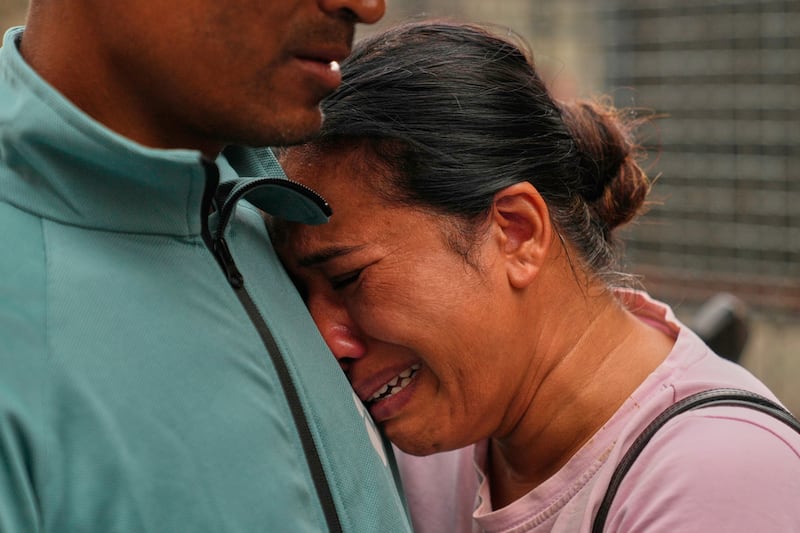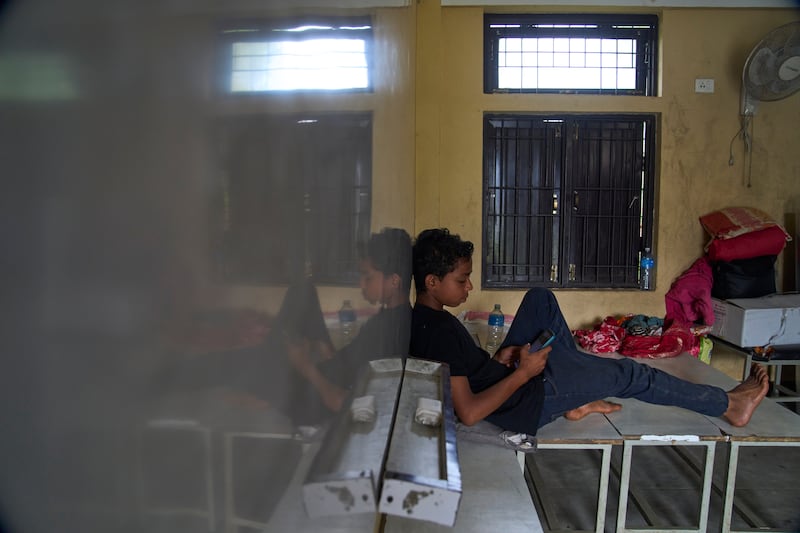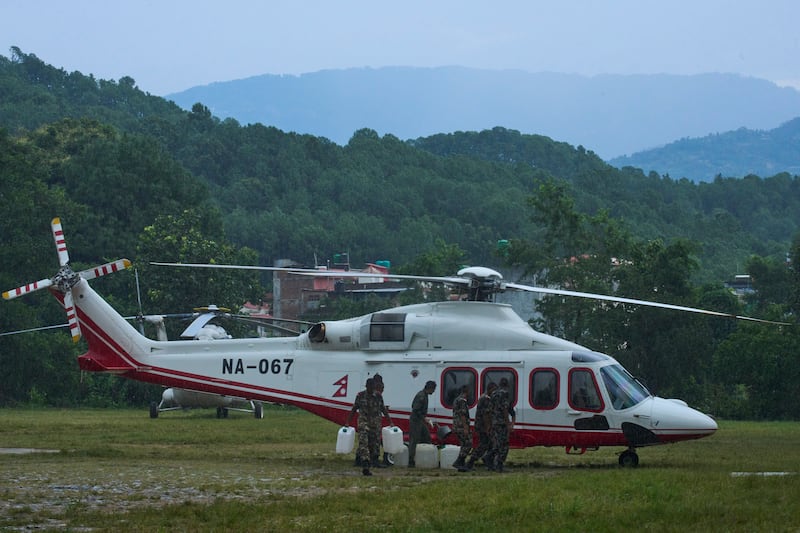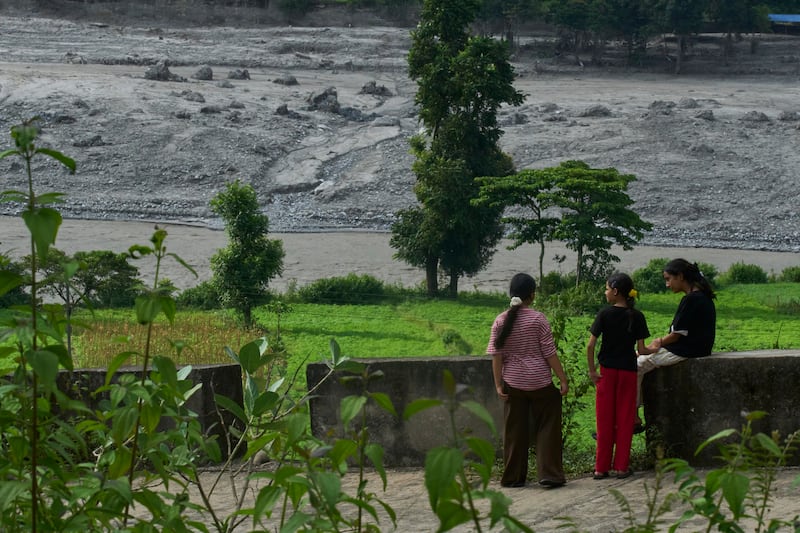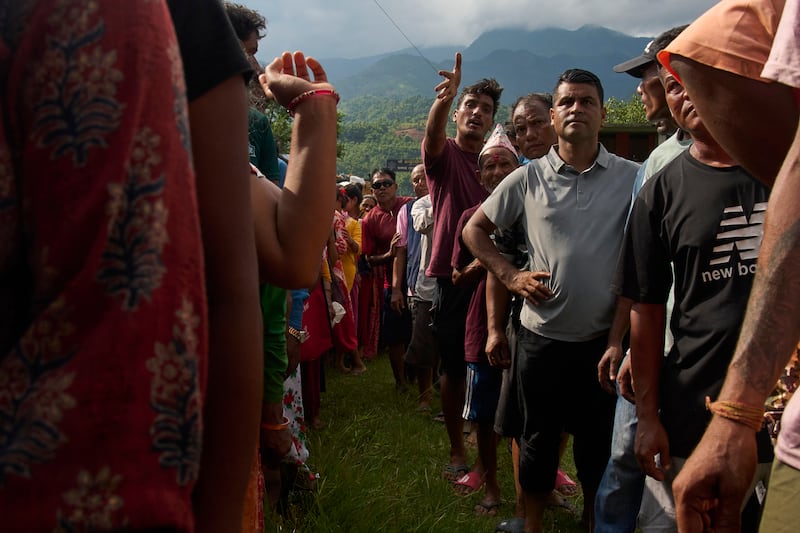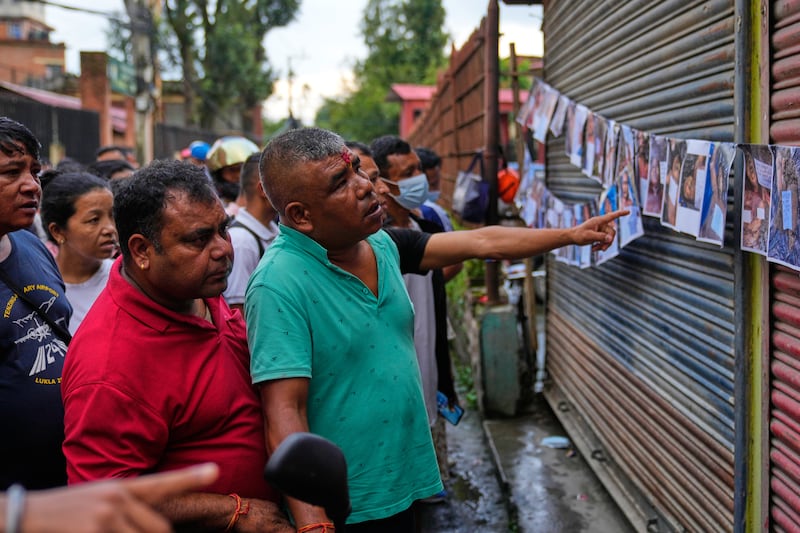

Since Thursday, the announced death toll in Nepal has risen from 389 to 579 following the deadly flash floods in Nepal and China earlier this week.
The BBC reported Friday morning that the number of people missing in Nepal has risen to 1,924, with 15,000 security personnel deployed in search and rescue operations. That figure includes 575 foreign nationals — a dramatic rise from earlier estimates.
There are missing foreign nationals from 36 countries, including 183 Indian nationals, at least 65 American nationals, 62 Ukranian nations and 33 British nationals, according to the BBC.
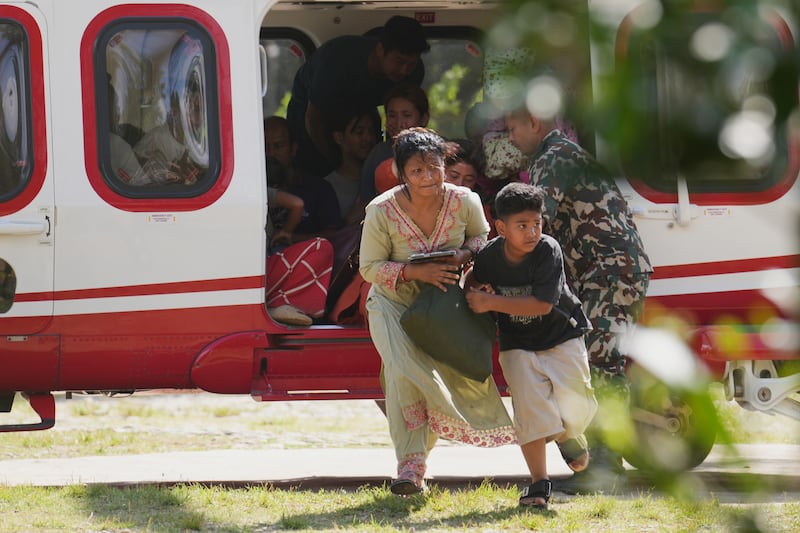
Nepal’s National Disaster Risk Reduction and Management Authority reports nearly 800 rescued persons following the flooding that began early Wednesday.
What are the new worries?
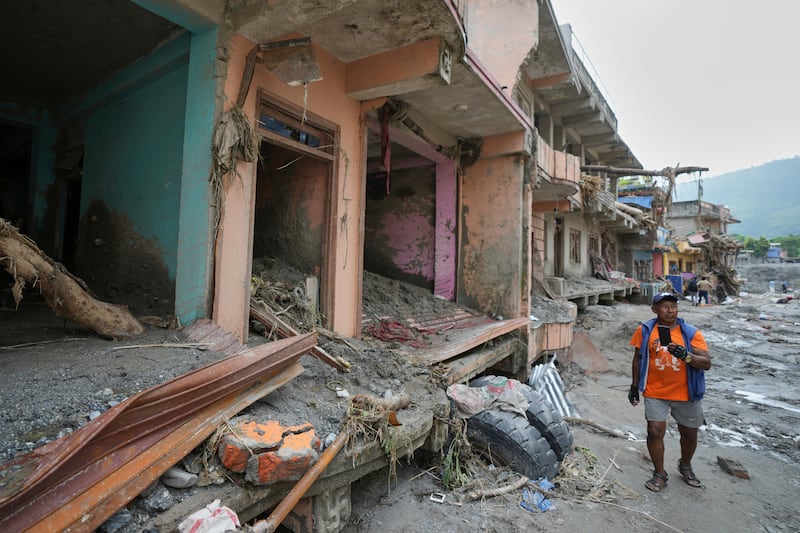
What was initially reported as a 4.4 magnitude earthquake Wednesday morning that caused the floods was later confirmed to be a glacial collapse. A large ice chunk, which broke off a glacier, fell to the valley below, pulverizing on impact, causing what Nepalese scientists say was a 5.2 magnitude earthquake. The ice immediately mixed with water and mud, creating a 250-foot-tall wall of debris tearing though buildings, bridges and infrastructure throughout the valley.
Now, Nepalese scientists are monitoring two other glaciers nearby, according to the BBC.
They say the monitoring is crucial as recent pictures the two glaciers reveal cracks in the ice — and scientists are worried more ice chunks could break off, leading to more deadly flash floods.
“Satellite imagery suggests one of the glaciers may contain hanging glacier ice masses that warrant observation and assessment,” said Qianggong Zhang, head of climate and environmental risks, with ICIMOD, in an interview with the BBC.
Scientists claim these hanging glaciers can be more hazardous as they cling to steep mountain slopes — which is what occurred Wednesday.
China reports on its casualties
Specific numbers and information and difficult to retrieve in Tibet and China, the BBC claims, because the area “is one of the most strictly controlled regions in the country.”
Many news agencies and governments rely solely on Chinese state media.
“To get into Tibet requires a special visa and it is difficult, if not impossible, for foreign media to gain entry,” the BBC reported. “Trying to contact people there is just as hard.”
However, Chinese state media reported Friday morning at least five people died and 558 were missing in Gyirong County, Tibet, the AP released. Of the 558 people missing, 260 were foreigners. An additional 100 Chinese citizens were missing on the Nepal side, China’s foreign ministry said.