



- Should off-roading be allowed in national parks and recreation areas?
- Two GOP Utah senators want to allow access for ATVs and UTVs in national park systems.
- Environmental groups say such a move would disrupt the visitor experience and ruin the solitude of some of the nation's most treasured landscapes.
Utah’s two Republican senators want to introduce off-road vehicles to the national park system, particularly Capitol Reef National Park in Utah, arguing that access is vital to the U.S. public.
With just a few days to go in Congress before it dismisses for the holidays, the effort remains to some extent in limbo — although Sens. Mike Lee and John Curtis vow to continue to make this a priority.
If they meet certain safety requirements, ATVs, UTVs and dirt bikes can be licensed as “street legal” in Utah, and after meeting equipment standards, that shift would allow those vehicles on paved and dirt roads within national parks statewide.
Earlier this year, the U.S. Senate passed a resolution introduced by Curtis and Lee to overturn a Biden administration rule enacted by the National Park Service restricting the use of off-road vehicles and all-terrain vehicles in the Glen Canyon National Recreation Area.
The resolution, passed by a simple majority vote, restored access to approximately 24 miles of park roads in the area of Glen Canyon known as the Orange Cliffs Special Management Unit. Companion legislation introduced by Rep. Celeste Maloy, R-Utah, was endorsed by the House.
At the time, Curtis said overturning the rule was a good fit for public access.
“Restoring off-road vehicles in Glen Canyon National Recreation Area is a step to ensure that public lands remain accessible for the people, not dictated by Washington bureaucrats,” Curtis said.

Access or solitude?
“Utahns have responsibly accessed Glen Canyon for decades, and Washington’s one-size-fits-all restrictions threatened not only that access but also the livelihoods and traditions of rural communities,” Curtis said. “This legislation restores the balance between conservation and responsible recreation — something Utahns have always led on.”
Lee has repeatedly argued that it is a public access issue specifically geared toward people with disabilities.
“Americans with disabilities should never be shut out from the places that represent our national story,” Lee said.
“The mountains, canyons, and forests managed by the federal government are part of our shared heritage, and access to them should not depend on whether someone can hike ten miles or climb a ridge. This bill ensures that Americans with disabilities have the same chance to experience the beauty of our country as everyone else,” as reported in RV Travel.
This latest effort, introduced last week by Lee in the Senate Energy and Natural Resources Committee, encompasses the State Motor Vehicle Laws in National Park System Units Act and the Off-Highway Vehicles in Capitol Reef National Park Act and mirrors laws on the books in more than a dozen states across the country.
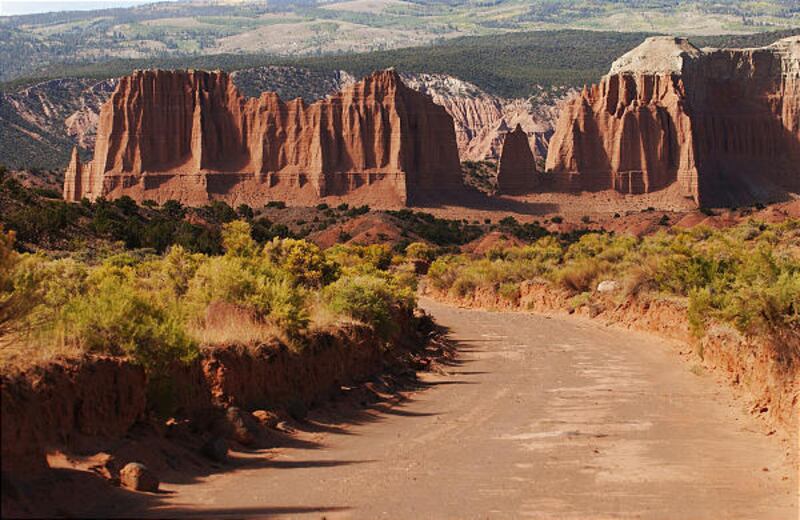
But the proposals have stoked the ire of conservation groups.
“We’re deeply concerned for Capitol Reef and America’s national parks,” said Cory MacNulty, southwest regional campaign director for the National Parks Conservation Association. “These bills strip the National Park Service’s ability to manage park roads by opening them to off-road vehicles that bring noise and damage to fragile landscapes.”
Former Capitol Reef superintendent Sue Fritzke, now with the Coalition to Protect America’s National Parks, noted that “substantial opportunities for OHV use already exist on Bureau of Land Management and Forest Service lands throughout Utah.”
But Lee insists Glen Canyon National Recreation Area is a prime example of the tug-of-war over access.
“This was a classic case of sue-and-settle policymaking where bureaucrats caved to activists and cut Americans out of the process,” Lee said.
“That’s not how representation is supposed to work. I’m proud the Senate made it clear that environmental groups don’t get to dictate our National Recreation Areas through backroom deals. That’s exactly what happened at Glen Canyon and what this (resolution) stops. If it says, ‘National Recreation Area’ on the map, people should be able to recreate there.”
The Southern Utah Wilderness Alliance is opposed to the change.
The organization argues that roads in Capitol Reef, for example, are already accessible by motorized vehicles — such as sedans, trucks and other vehicles — just not ATVs and UTVs.
It argues the introduction of such vehicles interrupts the solitude that visitors expect at Capitol Reef and the introduction of off of-road vehicles interferes with visitor experience.