
The Trump administration is warning the World Anti-Doping Agency that proposed changes in who tests athletes for performance-enhancing drug use would damage future Olympics, a list that includes the 2034 Winter Games in Utah.
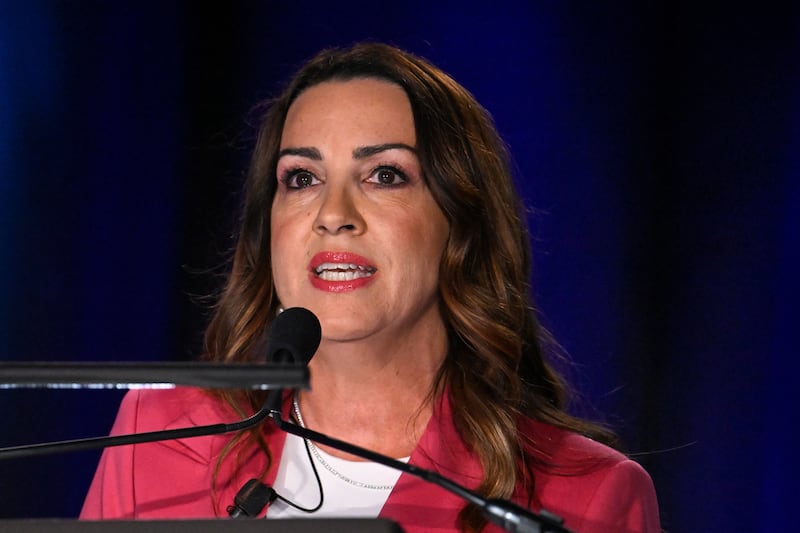
In a two-page letter Monday to the agency created by the International Olympic Committee to oversee anti-doping efforts worldwide as well as other stakeholders, Sara Carter, director of the White House Office of National Drug Control Policy, raised what she called “grave concerns.”
Carter, known as the country’s drug czar, was reacting to a proposal that reportedly would move some drug testing responsibilities at the Games now handled by the host country’s anti-doping agency to an independent organization.
Such a shift would “undercut confidence in the integrity of Games and pre-Olympic/Paralympic Games testing and thereby undermine the trustworthiness of the performances of competitors in the Olympic and Paralympic Games themselves,” she wrote.
She also said excluding the U.S. from a WADA meeting scheduled for Tuesday about the changes was “unjustifiable” and “disappointingly thwarts important collaboration and cooperation on issues” ahead of the 2028 Summer Games in Los Angeles.
Why Utah’s Olympics must respect WADA’s ‘supreme authority’

Not mentioned in her letter is the other Olympics coming to the U.S., Utah’s 2034 Winter Games. Two years ago, the IOC decision giving the state a second Winter Games was nearly stalled due to tensions over a U.S. government investigation into how WADA handled a Chinese doping case.
Before Utah was awarded In Utah’s case, last-minute negotiations resulted in a new termination clause being added to the state’s contract with the IOC to host the 2034 Olympics and Paralympics, signed by Utah Gov. Spencer Cox.
That clause allows the IOC to take back Utah’s Games if “the supreme authority of the World Anti Doping Agency in the fight against doping is not fully respected or if the application of the World Anti-Doping Code is hindered or undermined” by the United States.
The new contract language was sharply criticized last year during a congressional hearing into the ongoing friction between WADA and the U.S. Anti Doping Agency. The U.S. Olympic and Paralympic Committee has taken the lead in trying to resolve the situation.
Feud between U.S., WADA not new
The United States stopped paying dues to WADA, withholding a total of $7.3 million over 2024 and 2025, The Associated Press reported earlier this year. A WADA spokesman told The AP that’s why the U.S. wasn’t invited to attend Tuesday’s meeting.
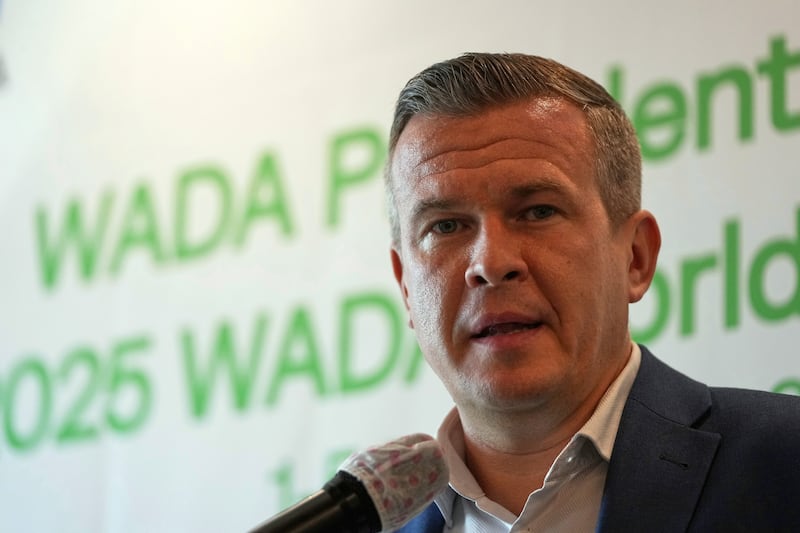
The spokesman, John Fitzgerald, said no action was planned at what the AP called an “extraordinary meeting” of the WADA executive committee to discuss the recommendations made by a working group assembled in response to the U.S. investigation.
Fitzgerald told the AP, “The working group’s objective and recommendations are designed to strengthen the independence and credibility of the anti-doping process, including at major events.”
While the federal investigation into WADA’s decision to allow Chinese swimmers to compete in 2021 despite testing positive for a banned substance has fueled the feud, there are other issues dividing WADA from its U.S. counterpart, including years of doping scandals involving Russia.
Carter, in her letter, said, “The robust and vigorous participation” of national anti-doping organizations “is of particular importance to the United States as we strive to ensure the cleanest Olympic and Paralympic Games ever.”
She said “the best way for WADA to restore trust would be to submit to an operational audit of WADA by independent experts and auditors” and asks that others “resist WADA’s efforts to undermine the effectiveness and transparency” of the world anti-doping program.