

Pineview Reservoir in Weber County will be largely drained later this year as part of the ongoing replacement of a 6.4-mile pipeline used to haul drinking water from around the reservoir to Ogden.
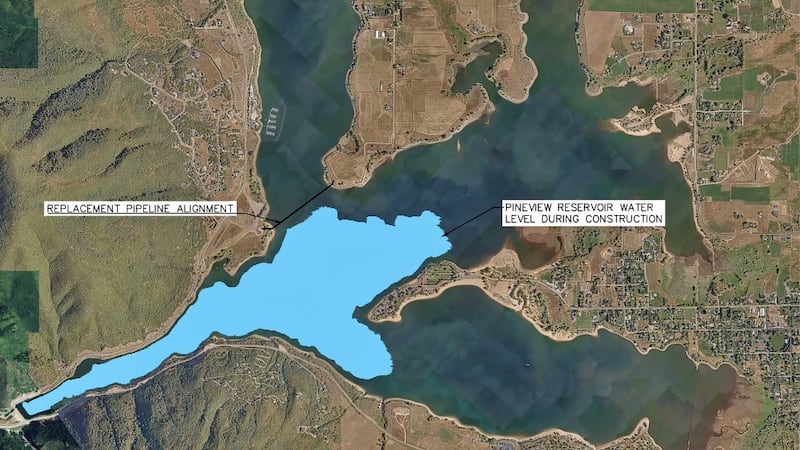
The large reservoir east of Ogden through the Ogden Canyon, a popular recreation destination, has three expansive branches that extend outward from the area where the body of water narrows before converging on the manmade dam that created the lake. Those three branches will be largely drained so a new pipeline can be installed along the reservoir bed to replace an existing pipeline.
“This section of pipeline connects the wellfield north of Pineview Reservoir to the transmission system at Port Ramp Marina and is a critical component of the water delivery infrastructure serving more than 120,000 customers in the Ogden area,” the city said in a statement Friday. The pipeline crossing location is in a relatively narrow section of the reservoir’s more northerly branch.
Jeffrey Putzke with Sunrise Engineering, which handled the design work for the project, said the process of pulling water from the reservoir has started. Maps on a website outlining project details show water will be largely gone from the three large branches by Sept. 15, leaving water only in the area of the reservoir around the dam and to the east.
“Any water released to support construction will remain within the broader water management system, where it will continue to serve beneficial uses and be managed through existing storage and delivery facilities, including Willard Bay,” reads Friday’s statement. From Willard Bay, Putzke said the recaptured water drawn from Pineview can be redistributed for use elsewhere.
The reservoir, which feeds into the Ogden River through the Ogden Canyon, is a popular summer draw for boaters, paddleboarders and swimmers, with several beach locations. The timing of the initiative, the city statement says, is meant to minimize impacts to recreation and take advantage of dry conditions that will likely lower the reservoir level anyway.
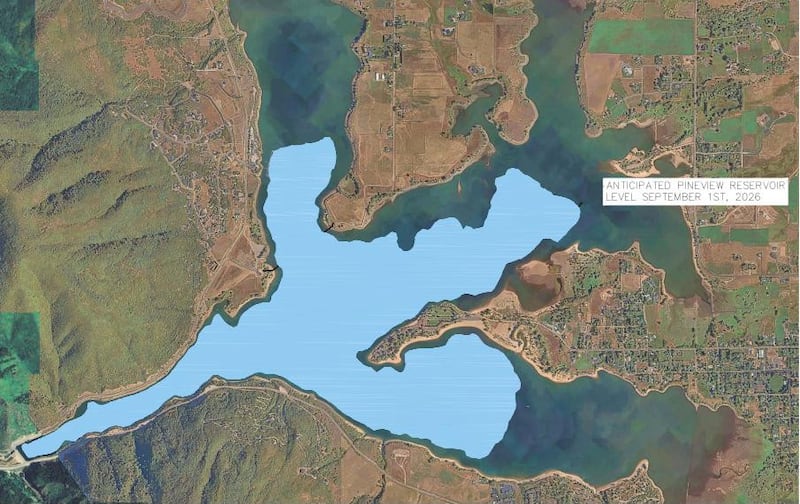
“The timing of this work is intended to minimize impacts to recreational use by taking advantage of naturally lower reservoir levels during a drought year rather than requiring more significant disruptions during a normal or high-water season,” reads Friday’s statement. “Project partners have been coordinating with marina operators, the Pineview Reservoir Yacht Club and other recreation partners and will continue providing updates as construction schedules are finalized.”
Putzke said another alternative to lowering the Pineview water level would have been installing a cofferdam around the worksite to allow access to the area where the new underwater pipeline section is to placed. Officials also mulled the option of using divers to complete the work.
Lowering the Pineview water level to access the reservoir bed, though, “turned out to be the best because it allows us to get it done fast and that’s the most important thing,” he said. Moreover, using a cofferdam or divers could have boosted project costs by perhaps $6 million.
The 6.4-mile, pipeline from the Pineview area through the Ogden Canyon to Ogden that’s being replaced is 90 to 100 years old in sections and at the end of its life. As is, it is leaky in spots, and the overall upgrade will result in savings of around 1 million gallons of water a day, according to city officials. The pipeline along the bed of the Pineview Reservoir, which requires the draining of the body of water, is around 55 years old.
The $100 million project started in 2024 and is to be completed by the spring of 2029. The replacement of the pipeline across Pineview Reservoir will take from November to next February.
Putzke didn’t offer a firm timeline of how long it will take to refill Pineview once the project is complete as it will depend on the sort of snowfall and precipitation in the area over the winter.
“But a natural snow year with a little excess would naturally fill that reservoir up and still be capable of providing water partitions or distribute water to users, irrigators, commercial (operations) downstream,” he said.