



- The prediction market platform Kalshi sued Utah to block enforcement of its anti-gambling laws.
- A federal judged ruled that Utah law applies to the sports betting contracts Kalshi offers.
- Utah bans all forms of gambling and offering online betting in the state is a third-degree felony.
A federal judge ruled Tuesday that Utah’s anti-gambling laws apply to sports betting contracts Kalshi offers on its prediction market platform.
U.S. District Judge Robert J. Shelby concluded that the federal law Kalshi relied upon in the case does not preempt the state’s ability to enforce its statutes.
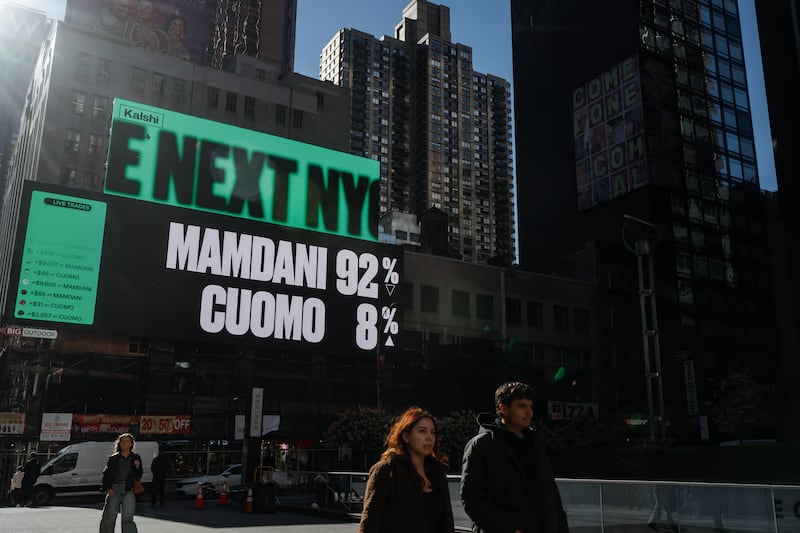
New York-based Kalshi allows users to place “event contracts” on future outcomes and earn a payout if they are correct. Those transactions are regulated through the Commodity Futures Trading Commission or CFTC, which historically has monitored futures contracts on things such as livestock, crude oil and gold and silver prices.
The company sued Utah in February, asking the court to block enforcement of laws that interfere with the operation and function of its futures market. It argued that because it operates a federally registered exchange, the state could not treat its sports bets as gambling.
Shelby sided with the state.
“The court agrees that enforcement of state gambling laws is not inconsistent with the CFTC’s regulation and oversight of derivatives markets. Congress is aware that some States permit gambling while others do not and the CEA (Commodity Exchange Act) explicitly provides for state jurisdiction,” he wrote.
States regulate gambling
Gambling is traditionally regulated by states, and Congress has supported that authority since the early 1800s.
Trading in swaps greatly expanded in the early 2000s and is believed to be a causal factor of the 2008 financial crisis, according to the ruling. In response to the crisis, Congress passed the Dodd-Frank Wall Street Reform and Consumer Protection Act, which, among other things, expanded the CEA’s authority to regulate swaps.
“The Supreme Court has stated that it is ‘quite sure the government has a substantial interest in supporting the policy of (non-gambling) states, as well as not interfering with the policy of states that permit (gambling).’ Congress has attempted to support states in these efforts ‘since the early 19th century.’ It is simply implausible that Congress would silently reverse course though an act addressing the 2008 housing financial crisis,” Shelby wrote.
Utah bans all forms of gambling and offering online betting in the state is a third-degree felony. Kalshi’s federal registration does not put those bets out of the state’s reach, according to the Utah Attorney General’s Office.
“You can’t rebrand illegal gambling as a federal commodity, and today a federal judge agreed with us. Kalshi bet that clever branding would beat Utah law. Kalshi lost and Utah won,” said Utah Attorney General Derek Brown. “Utah’s constitution bans gambling to protect Utah families, and my office will enforce that ban. Gambling is gambling no matter what any company calls it.”
Shelby ordered the case closed.
Utah Gov. Spencer Cox also weighed in on the ruling.
“Prediction markets are gambling, full stop. They are causing tremendous harm to countless American families. Today’s ruling affirms that Utah’s anti-gambling laws are an appropriate way to protect our citizens and are not preempted by federal law,” he posted on X.
The American Gaming Association applauded Utah for upholding its laws.
“A Utah judge’s final decision reaffirms that the authority to regulate gambling rests with the state. We agree with Attorney General Brown and 43 other state attorneys general that sports gambling is sports gambling — the so-called ‘prediction markets’ can’t rebrand it and offer it outside the law,” according to an AGA spokesperson.
Utah bans prop bets
Earlier this year, Utah passed a law specifically targeting what are known as proposition bets, those placed on specific players or events during sporting contests that are not directly connected to the outcome of a game, such as who will score the first touchdown or how many points a player will score.
It came amid the rapid rise of prediction markets where users can “trade on futures” ranging from who will win the Oscars to who will win a presidential election.
Cox, Brown and other Utah leaders see the buying and selling of contracts on prediction market platforms no different than making a bet on a sportsbook app.