

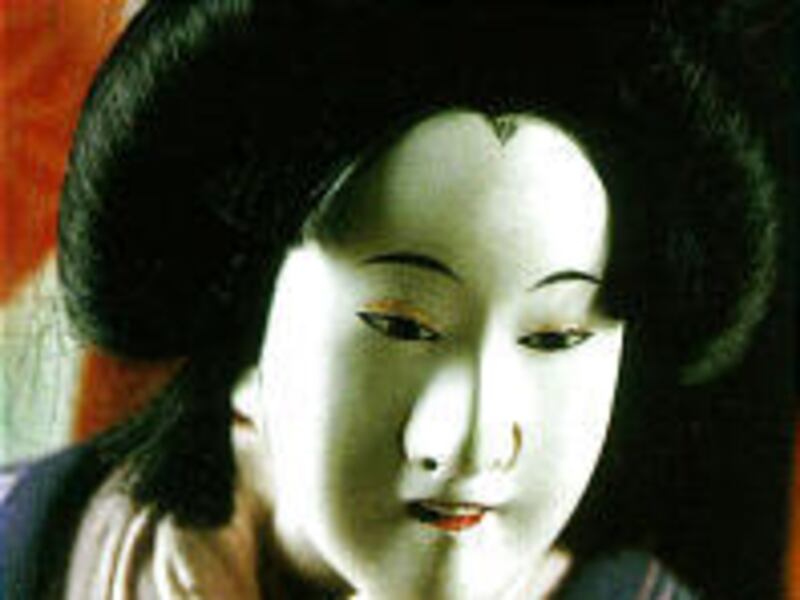
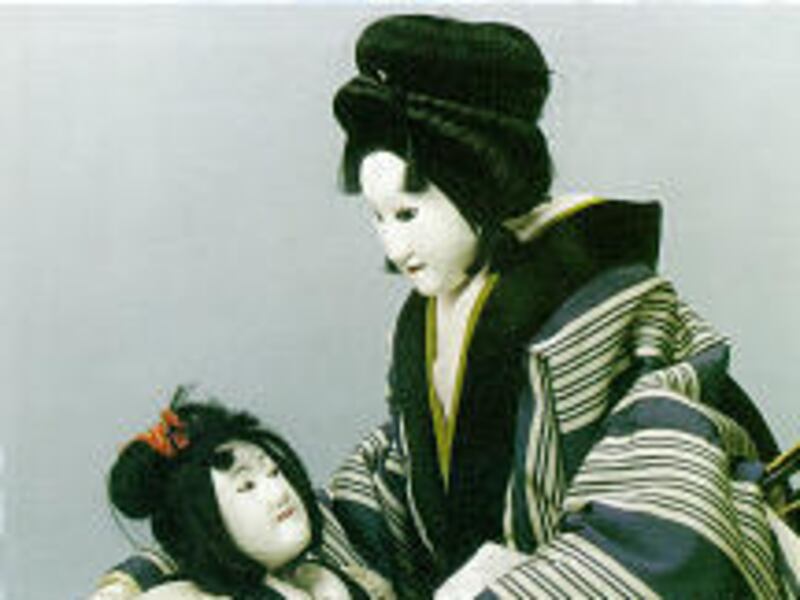
"An Evening of Bunraku," showcasing traditional Japanese puppetry by the Tonda Puppet Troupe, is making four stops in the United States this week — two of them in Utah (the other two are in Massachusetts).
"This is quite an honor," notes S. Glenn Brown, an assistant professor in the University of Utah theater department, who traveled to Japan for two months last summer to study the art of Bunraku. "It's so infrequent to see Bunraku puppetry at all in the United States."
Brown said the Tonda troupe will also teach a master class at the U. on Monday morning. The session is open to all theater students and others in the Asian studies department classes.
The 16-member touring troupe, including puppeteers, chanters and musicians, is headed by Hidehiko Abe, a seventh-generation puppeteer.
Brown and Jerry Gardner, also a U. faculty member, both traveled to Japan. Brown stayed with Abe and his wife, who live next door to the Tonda troupe's theater in Osaka. While Brown studied the Bunraku style of puppetry, Gardner focused on Noe movement, which he teaches as part of the U.'s Eastern theater program.
He said he had begun making arrangements for the Tonda troupe to visit Utah before he and Gardner went to Japan. While these negotiations were under way, they were invited to visit Japan to study Eastern theater.
Brown noted that Bunraku is a very stylized form of puppetry. "The puppets can weigh from 50 to 80 pounds," he said.
Traditionally, it would take 10 years just for a puppeteer to learn how to manipulate one hand and arm, and another 10 years to learn other movements. "We were originally going to present them in the smaller fine-arts theater but decided to move it to Libby Gardner Hall in order to accommodate more scenery," said Brown.
Due to the size of the scenery required, Brown created his own sketches while in Japan. He and some students have built the scenery for use in the Gardner Hall performance.
The Tonda Puppet troupe has been designated as "an intangible cultural treasure" in Japan.
Four classic pieces from traditional Bunraku repertoire will be performed: "Keisei Awa no Naruto," first staged in 1769 in Osaka; "Yaoya Oshichi," "Hikakagawa" and "Sanbaso."
The art of Bunraku is considered the most refined form of puppetry in the world. It began sometime before the year 1600 when puppet manipulation, the tradition of oral narrative (joruri recitation) and music (shamisen) were combined in a dramatic form that soon became the most popular entertainment in Japan.
The dolls in a Bunraku show are about half life-size. The movements are highly specific (eyes move, eyebrows rise, mouth open and shut, and their hands and arms gesture gracefully). Each of the principal dolls is operated by three manipulators — on stage and visible throughout the performance.
E-MAIL: ivan@desnews.com
If you go . . .
What: "An Evening of Bunraku"
Where: Libby Gardner Concert Hall, U.
When: Monday, 7:30 p.m.
How much: $6-$12
Phone: 581-7100 or 355-2787
Web site: www.arttix.org
Also: Tuesday, 7:30 p.m., Nelke Experimental Theatre, BYU, Provo, free (no tickets required)
E-MAIL: ivan@desnews.com