

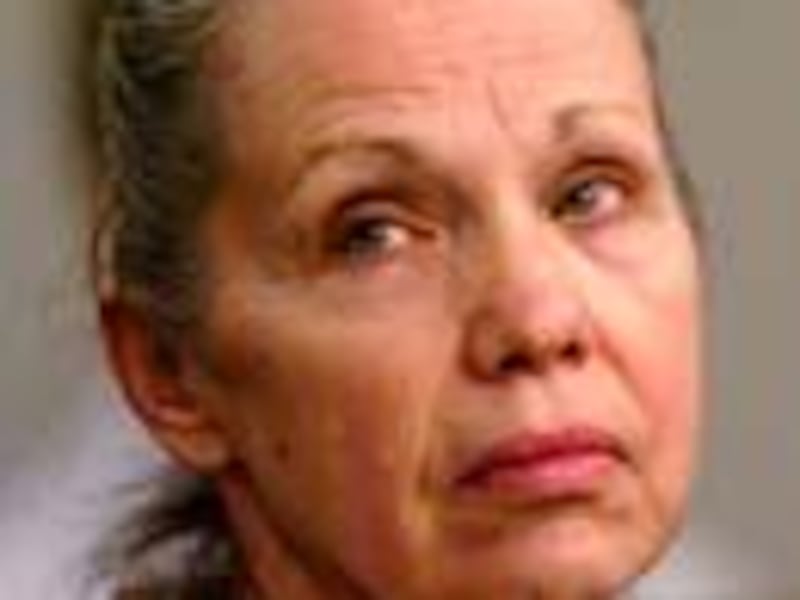

Two and a half months after she was declared mentally incompetent to stand trial, accused Elizabeth Smart kidnapper Wanda Barzee was transferred Wednesday to the Utah State Hospital.
Department of Human Services spokeswoman Carol Sisco confirmed Barzee, 58, was admitted to the Provo-based hospital about 9 a.m. Wednesday. She was admitted to the forensics unit.
For security reasons, officials said Barzee was moved with as little fanfare as possible.
Over the next few days Barzee will receive a basic assessment to determine her needs, Sisco said.
"Right now we're primarily getting her settled," she said.
Traditionally patients at the hospital have roommates. It wasn't clear Wednesday whether Barzee would also share a room, Sisco said.
But Sisco also noted that Barzee was not the hospital's first high-profile patient and she would be treated just like every other person.
"We treat them all alike," she said." It doesn't matter if they're high-profile or not."
Third District Judge Judith Atherton ruled Jan. 9 that Barzee was mentally incompetent to stand trial based on the reports of two doctors who both found her to be mentally ill. One doctor concluded Barzee suffered from "shared psychotic disorder" or "shared delusional disorder." The other diagnosed her with paranoid schizophrenia.
Barzee, however, disagreed with the assessment of the doctors in a letter to the court. "I do not believe myself to be mentally ill or infirm or incompetent in the eyes of the Lord," she said in her letter.
Barzee and her husband, Brian David Mitchell, 50, are accused of kidnapping Smart in June 2002 and holding her captive for nine months before the three were found in Sandy on March 12, 2003. Each defendant is charged with kidnapping, aggravated sexual assault, aggravated burglary and attempted aggravated kidnapping.
Since she was found mentally incompetent to stand trial, Barzee has been waiting in the Salt Lake County Jail for a bed at the State Hospital to become available. Her defense attorney, Scott Williams, said the delays were due to "the lack of appropriate funding to the mentally ill."
Now that Barzee has been moved, examiners can begin the process of determining what she needs to be restored to competency. Sisco said Wednesday there was no way to determine how long that would take.
Williams said he was happy the delay in getting his client to the hospital was over.
"We're happy she's in the facility that is most appropriate," he said.
Williams called Barzee's admission to the hospital and her treatment a nonadversarial period of the case.
"This is not a situation where we're a guiding hand or influence on what the State Hospital does in the way of evaluating or attempted treatment," he said. "We remain committed to representing her legal interests. Should an issue arise that impacts her rights then we will be involved in defending them."
Questions have been raised in the media about what would happen if doctors at the hospital determined forced medication was the best way to treat Barzee.
"I do not believe there will be any attempt to force medicate," Williams said.
Williams said the type of mental illness his client has is not susceptible to medication. As of Wednesday, Williams said there was no indication that forced medication was a possibility. He said the media mentioned it.
If forced medication should become an issue, however, Williams said, "we're there for her legal interests."
Mitchell's competency hearing is scheduled to begin May 4. Doctors have split on whether they believe he is competent to stand trial. Before that, Mitchell is scheduled to be back in court in April to determine matters relating to whether the hearing should be open to the public.
E-mail: preavy@desnews.com