


Heart failure is common, expensive to treat and has high morbidity and mortality. It doesn't discriminate based on age or gender or race. It's a devastating equal-opportunity disease that affects nearly 5 million Americans.
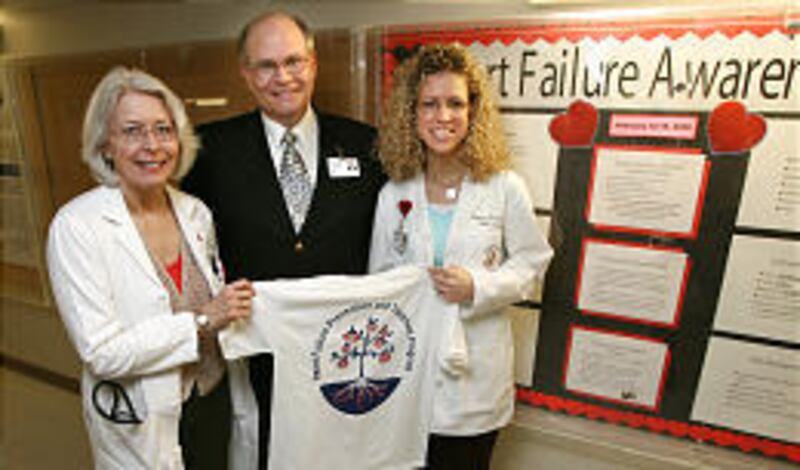
It's also very treatable, according to Dr. Dale G. Renlund, medical director of the LDS Hospital Heart Failure Program, who will be one of the featured experts on the Deseret Morning News/Intermountain Healthcare Hotline Saturday. Renlund, nurse practitioner Sally Brush and registered nurse Charmain Nemelka will answer questions from 10 a.m. to noon. All calls are confidential.
Only since 1985 have treatments been available that are known to prolong life in heart failure patients. Now a variety of treatments offer both survival benefit and better quality of life, Renlund says.
Treatment success hinges in part on early diagnosis. But prevention is even better.
Renlund says that one-third of heart transplants result from poorly controlled hypertension, which is either not diagnosed or is inadequately treated. At least another third come from coronary heart disease, usually caused by high cholesterol or risk factors like smoking.
While heart transplants can cure heart failure, they are "in many, many cases the failure of a system to prevent or intervene early to prevent progression to end-stage heart failure," says Renlund, who is also a professor of internal medicine at the University of Utah School of Medicine and medical director of the UTAH Cardiac Transplant Program. The UTAH acronym stands for Utah Transplantation Affiliated Hospitals.
A number of different classes of medication can help treat the disease, including ACE inhibitors, beta blockers and aldosterone antagonists. When those don't do enough to solve the heart's pumping problem — the very definition of heart failure — implantable devices such as a defibrillator or in some cases a pacemaker that synchronizes the squeezing of the left ventricle reduce the risk of death even further, Renlund says.
"Compared to pre-1985, there are lots of tools that can be used to address individual patients," Renlund says. "Regardless of where they are, the majority can be helped to live longer and better than they otherwise would have. "
The symptoms of heart disease can be problematic because they are not that unusual. Because other conditions can also lead to them, people may overlook heart failure as a cause. Renlund says one of the earliest manifestations is shortness of breath with exertion.
Other indications include shortness of breath when you lie flat or after you fall asleep, waking you up needing more air. Those are more common symptoms than swelling in the ankles, abdominal bloating and poor appetite, which can also be signs of the disease.
Heart failure can kill in three ways. In some people, the heart pump progressively fails in a slow and insidious deterioration. The disease becomes more difficult to manage. People also die when an abnormal heart rhythm, incompatible with life, develops. A prominent sign of that is feeling lightheaded and faint when you haven't changed positions. That could be an arrythmia that requires immediate care.
Heart failure can also allow blood to sludge around in the heart, forming clots that can break loose and cause strokes or other serious medical problems.
Diagnosis involves talking to the patient, looking for low blood pressure, abnormal heart rhythm, fluid retention, fluid accumulation in the lungs and other signs. The simplest and most definitive test to confirm it is an echocardiogram, which is a sound wave test to see how the heart is squeezing, Renlund says.
Tomorrow: Living with heart failure
E-mail: lois@desnews.com