

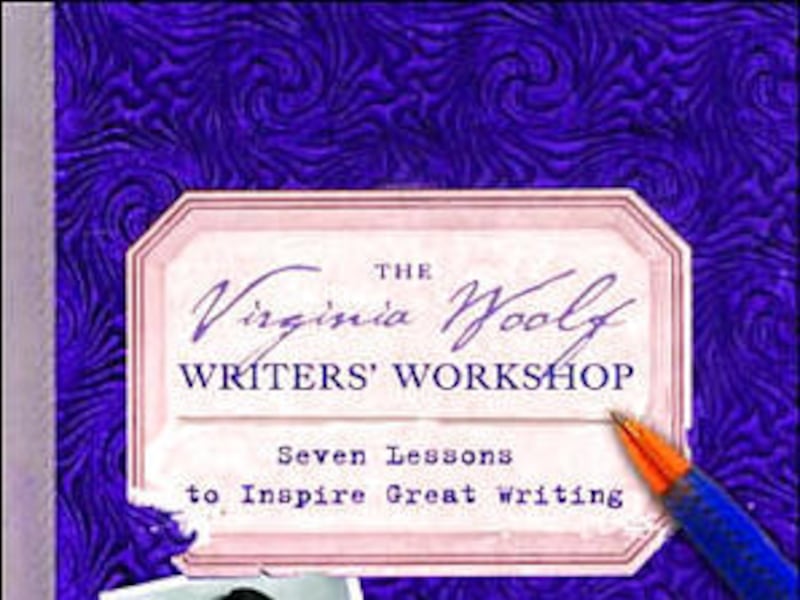
'The Virginia Woolf Writers' Workshop'
By Danell Jones
Bantam, $24
In this book, subtitled "Seven Lessons to Inspire Great Writing," Jones, a poet, essayist, teacher and critic, has taken Virginia Woolf's writings and broken them into seven classroom scenes: practicing, working, creating, walking, reading, publishing, doubting.
Each is worth any writer's attention.
Jones imagines what a funny, ambitious and encouraging teacher Woolf might have been, using Woolf's own words from her letters, diaries and essays. For instance, to the question, "What conditions are necessary to produce a work of art?" Woolf answers, "A room of her own and five hundred a year."
Woolf is quoted saying, "Imagine me writing a novel in a state of trance. Think of a fisherman lying sunk in dreams on the verge of a deep lake with a rod held out over the water."
She encourages the aspiring writer to "let your imagination sweep unchecked 'round every rock and cranny of the world that lies submerged in the depths of our unconscious being." — Dennis Lythgoe
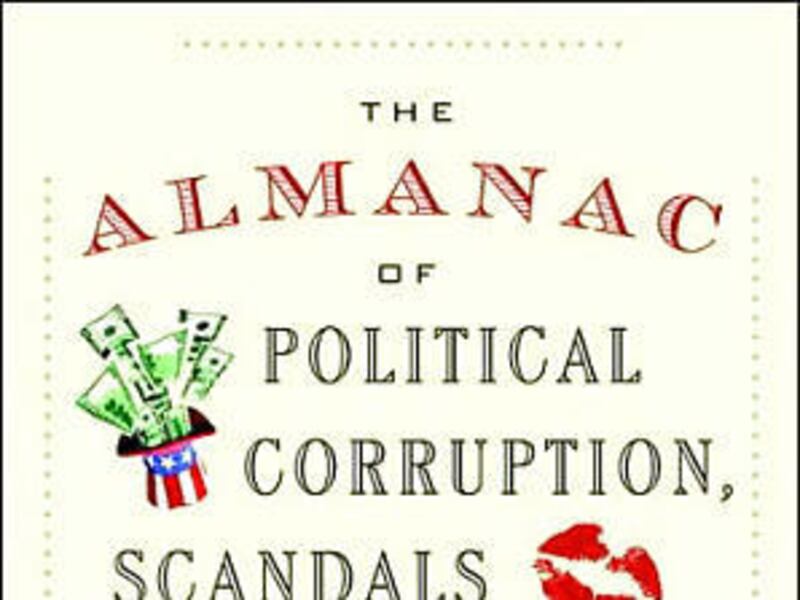
'Almanac of Political Corruption, Scandals and Dirty Politics'
By Kim Long
Delacourt Press, $24
For idealistic readers, this book may come as a surprise — but it's true that American political history is filled with scandal and corruption.
Using photos and concise text, the author carefully discusses Watergate, Iran-Contra, Teapot Dome and many other scandals that have plagued our society.
Scandals are probably most interesting for the people who make them happen — so the author discusses these people, their personalities and their "moments of licentiousness and larceny" with colorful detail.
This book presents 300 years of political wrongdoing in one small volume. — Dennis Lythgoe
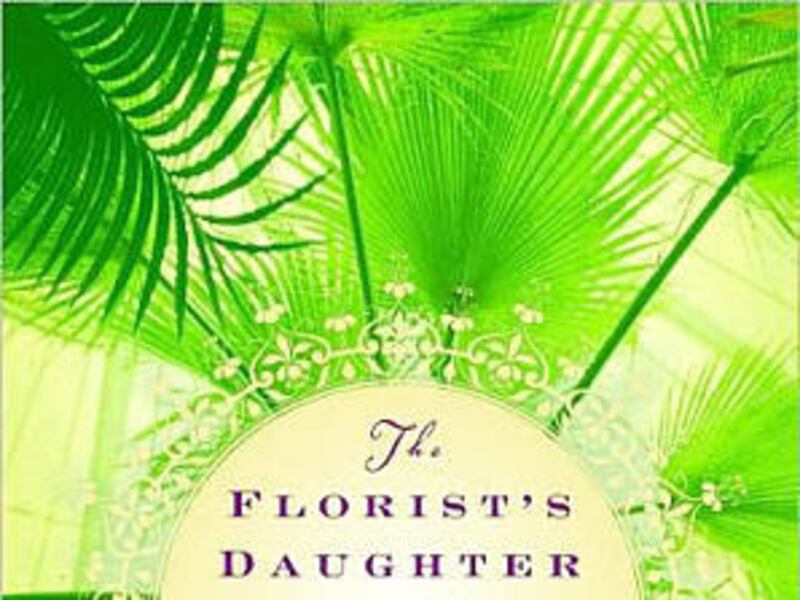
'The Florist's Daughter'
By Patricia Hampl
Harcourt, $24
In this well-written volume, Hampl, a gifted memoirist, discusses her Midwestern girlhood. Her father was a Czech florist and her mother a "distrustful Irishwoman."
She grew up in St. Paul, Minn., and was closer to her father than her mother. Her father's ideas had a bigger impact on her than anyone else's.
Using colorful anecdotes, Hempl pays tribute to seemingly "ordinary people" everywhere, including her own parents. She describes with special emotion the illness and death of her mother and the ways that loss impacted her own life. — Dennis Lythgoe