

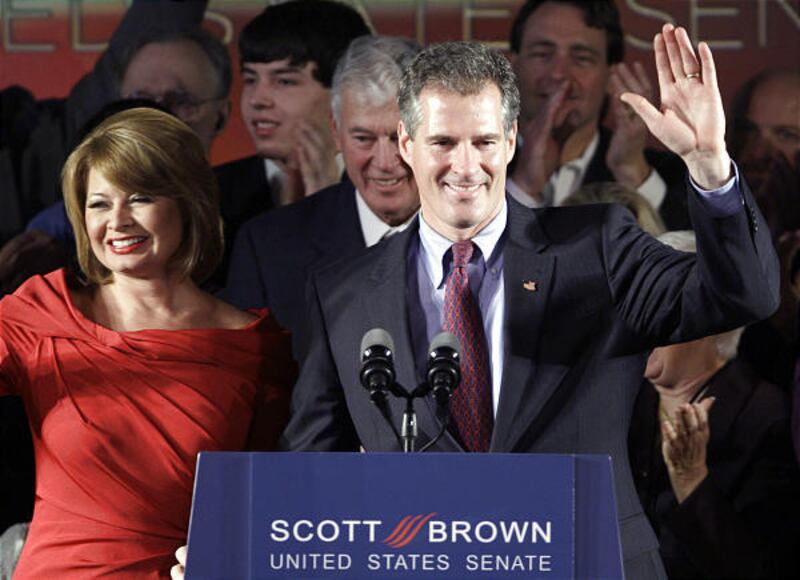
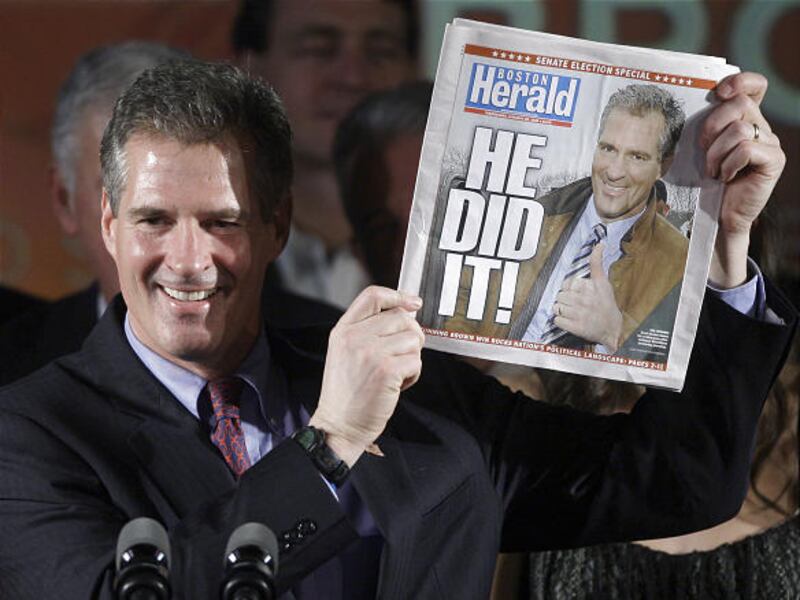
BOSTON — In an epic upset in liberal Massachusetts, Republican Scott Brown rode a wave of voter anger to win the U.S. Senate seat held by the late Edward M. Kennedy for nearly half a century, leaving President Barack Obama's health care overhaul in doubt and marring the end of his first year in office.
Addressing an exuberant victory celebration Tuesday night, Brown declared he was "ready to go to Washington without delay" as the crowd chanted, "Seat him now." Democrats indicated they would, deflating a budding controversy over whether they would try to block Brown long enough to complete congressional passage of the health care plan he has promised to oppose.
Utah's two senators cheered Brown's win, saying his erasing of the Democrats' filibuster-proof Senate majority will force reworking health care reform — and may foreshadow big Republican gains in elections later this year.
Sen. Orrin Hatch, R-Utah, enjoyed seeing the seat held for 46 years by his late, liberal friend, Sen. Ted Kennedy, go to Brown, saying it "signals that liberal Democrats in Washington are out of step with the American people."
Hatch added that it shows that Americans "are increasingly angered by the majority party's arrogance of power and wanton disregard for the will of the American people with respect to health care reform and other issues confronting the nation."
Sen. Bob Bennett, R-Utah, said Brown's win likely kills Democratic health care reform in its current form.
"If not kill it, it certainly will sidetrack it so that there can be a lot of changes made before it comes back to the Senate for a vote," Bennett said.
He said that "will consume a lot of activity and time. And activity and time tend to mitigate against the bill being passed in the long run."
"Scott Brown was a complete unknown as recently as 30 days ago," Bennett said. "For him to surge to the front, and then — in the onslaught of full campaigning by President Obama himself — go on to victory, has to be a statement of referendum against the Democratic agenda."
Massachusetts voters "certainly had enough publicity to tell them what you are doing will have a major impact on the health care debate in Washington," he said, "and they did it anyway."
Hatch said, "Brown's triumph also may be a harbinger of what is to come in this year's elections if elected officials in Washington don't set aside their far-left agenda and mend fences with mainstream America."
Senate Majority Leader Harry Reid, D-Nev., acknowledged Brown's victory. "The people of Massachusetts have spoken. We welcome Scott Brown to the Senate and will move to seat him as soon as the proper paperwork has been received," Reid said.
Massachusetts Secretary of State William Galvin said he would notify the Senate today that Brown had been elected.
The loss by the once-favored Democrat Martha Coakley in the Democratic stronghold was a stunning embarrassment for the White House after Obama rushed to Boston on Sunday to try to save the foundering candidate. Her defeat on Tuesday signaled big political problems for the president's party this fall when House, Senate and gubernatorial candidates are on the ballot nationwide.
Brown's victory was the third major loss for Democrats in statewide elections since Obama became president. Republicans won governors' seats in Virginia and New Jersey in November.
"I have no interest in sugarcoating what happened in Massachusetts," said Sen. Robert Menendez, the head of the Senate Democrats' campaign committee. "There is a lot of anxiety in the country right now. Americans are understandably impatient."
Brown will become the 41st Republican in the 100-member Senate, which could allow the GOP to block the president's health care legislation. Democrats needed Coakley to win for a 60th vote to thwart Republican filibusters. The trouble may go deeper: Democratic lawmakers could read the results as a vote against Obama's broader agenda, weakening their support for the president. And the results could scare some Democrats from seeking office this fall.
The Republican will finish Kennedy's unexpired term, facing re-election in 2012.
Brown led by 52 per cent to 47 percent with all but 3 percent of precincts counted. Turnout was exceptional for a special election in January, with light snow reported in parts of the state. More voters showed up at the polls Tuesday than in any non-presidential general election in Massachusetts since 1990.
One day shy of the first anniversary of Obama's swearing-in, the election played out amid a backdrop of animosity and resentment from voters over persistently high unemployment, Wall Street bailouts, exploding federal budget deficits and partisan wrangling over health care.
"I voted for Obama because I wanted change. … I thought he'd bring it to us, but I just don't like the direction that he's heading," said John Triolo, 38, a registered independent who voted in Fitchburg.
He said his frustrations, including what he considered the too-quick pace of health care legislation, led him to vote for Brown.
For weeks considered a long shot, Brown seized on voter discontent to overtake Coakley in the campaign's final stretch. His candidacy energized Republicans, including backers of the "tea party" protest movement, while attracting disappointed Democrats and independents uneasy with where they felt the nation was heading.
A cornerstone of Brown's campaign was his promise to vote against the health care plan.
Though the president wasn't on the ballot, he was on many voters' minds.
Coakley called Brown conceding the race, and Obama talked to both Brown and Coakley, congratulating them on the race.
The Democrat said the president told her: "We can't win them all."
Brown will be the first Republican senator from Massachusetts in 30 years.
Even before the first results were announced, administration officials were privately accusing Coakley of a poorly run campaign and playing down the notion that Obama or a toxic political landscape had much to do with the outcome.
Coakley's supporters, in turn, blamed that very environment, saying her lead dropped significantly after the Senate passed health care reform shortly before Christmas and after the Christmas Day attempted airliner bombing that Obama himself said showed a failure of his administration.
Days before the polls closed, Democrats were fingerpointing and laying blame.
Rep. Chris Van Hollen of Maryland, head of the House Democrats' campaign effort, said Coakley's loss won't deter his colleagues from continuing to blame the previous administration.
"President George W. Bush and House Republicans drove our economy into a ditch and tried to run away from the accident," he said. "President Obama and congressional Democrats have been focused repairing the damage to our economy."
At Boston's Park Plaza Hotel, giddy Republicans cheered, chanted "USA" and waved the "tea party" version of the American flag.
Even before Brown won, the grass-roots network fueled by anti-establishment frustrations, sought credit for the victory, much as the liberal MoveOn.org did in the 2006 midterm elections when Democrats rose to power.
GOP chairman Michael Steele said Brown's "message of lower taxes, smaller government and fiscal responsibility clearly resonated with independent-minded voters in Massachusetts who were looking for a solution to decades of failed Democrat leadership."
Wall Street watched the election closely. The Dow Jones industrial average rose 116 points, and analysts attributed the increase to hopes the election would make it harder for Obama to make his changes to health care. That eased investor concerns that profits at companies such as insurers and drug makers would suffer.
Contributing: Beth Fouhy, Bob Salsberg, Steve LeBlanc, Karen Testa, Kevin Vineys and Stephanie Reitz
e-mail: lee@desnews.com