


PROVO — The turkey and gravy, macaroni and cheese, and dinner rolls taste just like mom used to make — if mom had been cooking 31,000 meals a day. Monumentally larger than the average kitchen, BYU's new super kitchen, the Culinary Support Center, is the recently completed hub where all the food for campus is diced, sliced, chopped, cooked, baked, stewed and steamed.
BYU cooks, chefs and bakers have a menu of nearly 300 different items, from potato salad to pork chops, barbecued ribs to bagels and chocolate chip cookies to chicken poblano soup.
They can cook up to 1,000 pounds of meat at one time, and their pasta and soup vats, which look like mini hot tubs, hold 100 gallons of water. The pasta strainer is raised and lowered by a crane.
Previously, the university's mountains of food were prepared in several kitchens across campus. It wasn't a bad system, but it meant more delivery stops, increased chance for food variation and error, and greater waste.
The recently renovated BYU Creamery building allows the chefs additional room and equipment to prepare meals using the freshest ingredients and under strict quality and temperature controls. The school reports directly to the Utah State Board of Health.
"If BYU is going to produce it, let's make it as fresh as possible," said Dean Wright, director of BYU dining services. "We built this facility for the next 30 years with the goal of providing the very freshest products."
The center is just now operating at full capacity after its late 2009 completion.
Before dawn each morning, workers load up carts with the specific orders for the eateries and deliver them via refrigerated trucks.
The eateries, many of which don't have their own kitchens, are only responsible for final preparations: assembling salads, cooking French fries or heating soup.
Next, instead of relying on someone else's soup base, BYU cooks make their own, full of fresh vegetables and fresh, not dried, herbs, said BYU executive chef John McDonald.
"I don't know anyone else in the state who (uses fresh herbs), except some high-end restaurants," Wright said, "but not when they're making 31,000 meals a day."
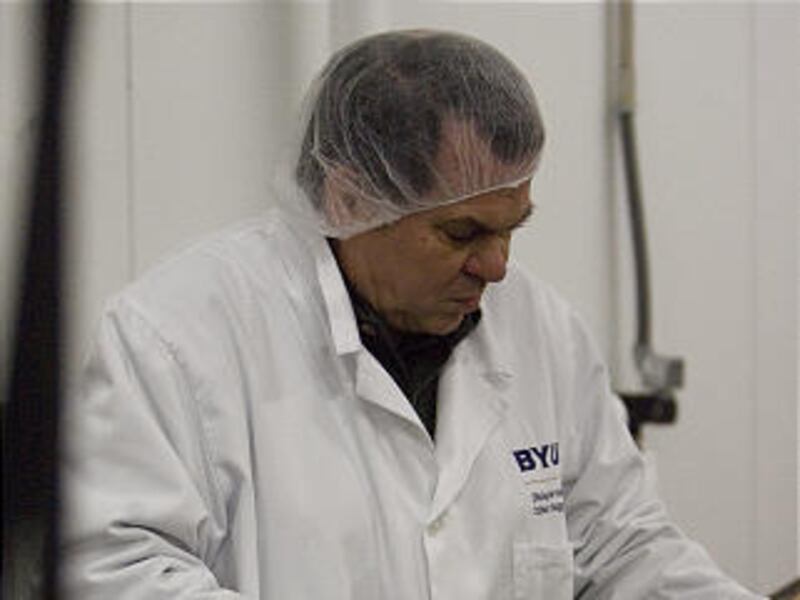
The center's 25 full-time employees, including management, and 120 student employees also make their own salad bases and chop their own vegetables.
Gone are the days of pre-cut, pre-peeled baby carrots. BYU now buys fresh-from-the-ground carrots and does the finish work itself.
First, the roots are dropped into the new drum peeler, a big barrel lined with what looks like food-grade sandpaper, and after bouncing around, they come out nice and smooth.
Then it's off to the dicer/slicer, which can chew through 50 pounds of carrots in 30 seconds.
Nearby, lettuce leaves are sent on a conveyor belt through a washer, chopper, shaker and spinner before they're bagged, tagged and sent to the refrigerated storage area.
Each bag has the air sucked out, ensuring better taste and short-term storage without preservatives.
"This is all as fresh as you can get," Wright said.
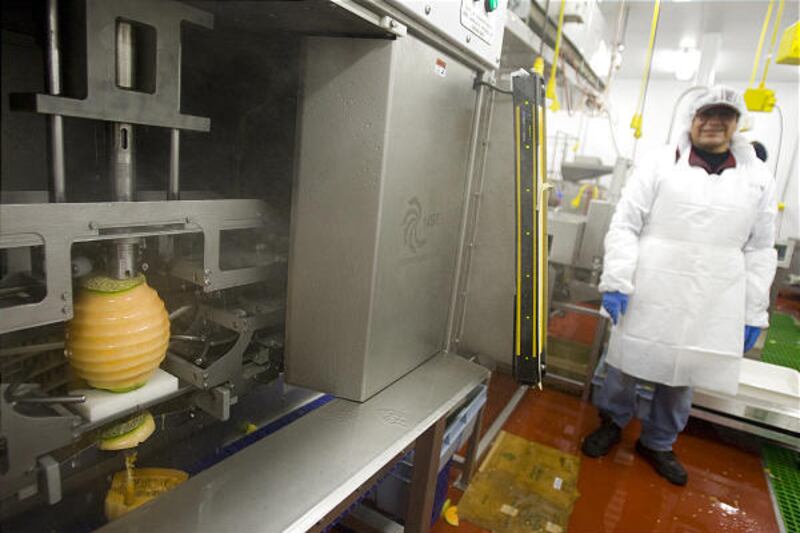
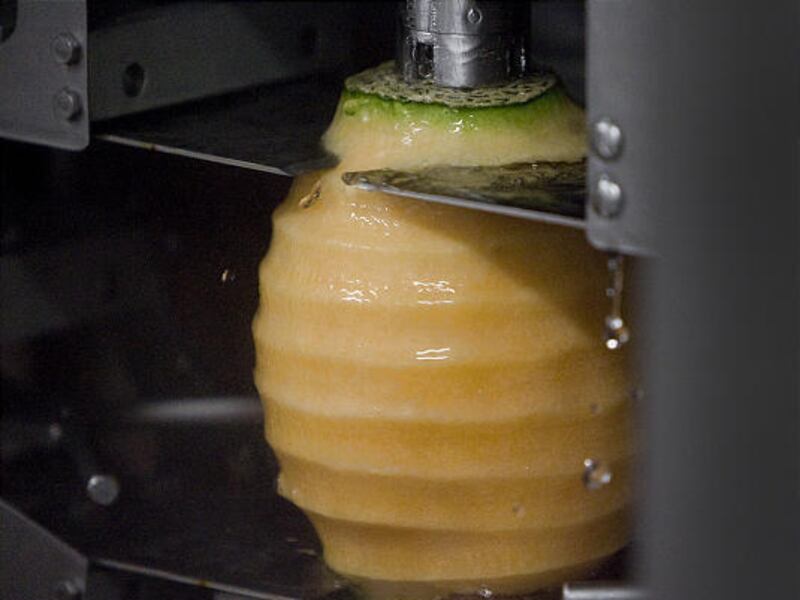
Wright's favorite machine is the melon (and pineapple) chopper, which mechanically peels the fruit, sucks out the melon seeds with a vacuum attachment and cubes the fruit into the desired size.
What used to take employees 42 hours a week can now be done in less than six, thanks to the $30,000 machine.
All the peelings are fed to the pulper, a giant gnawing bin that turns food waste — and cardboard boxes — into a mash used for compost on campus.
The center still makes all BYU's dairy products on site, with its gleaming 2,000- and 3,000-gallon holding tanks of milk and cream, which become cheese, sour cream, cottage cheese and, of course, ice cream.
The best smelling area is the bakery, with its trays of warm peanut butter cookies, loaves of fresh bread and rising blueberry bagels.
But amid all the machines and massive ovens, the employees still have to pipe out éclairs by hand.
Just like mom does.
BYU food facts
BYU makes 141 flavors of ice cream.
BYU's orange juice is actually a 100 percent orange juice blend made specifically for BYU by Minute Maid. Dean Wright, director of BYU dining services, only knows of two other such arrangements: the U.S. Armed Forces and McDonald's.
During the holiday season, the chefs make 200 gallons of turkey gravy a week.
The center provides food for 24 eateries on campus, including the Missionary Training Center and all vending machines.
BYU is only the third institution in the state to use a cook and chill kitchen, behind Intermountain Healthcare and Davis School District.
BYU got advice for its Culinary Support Center from the University of Notre Dame and Miami University in Ohio, where such centers are already in place.
The Culinary Support Center has an outlet store in front where anyone can buy extras from the day's production.
Many of the building's original features and equipment were preserved during the renovation.
e-mail: sisraelsen@desnews.com