

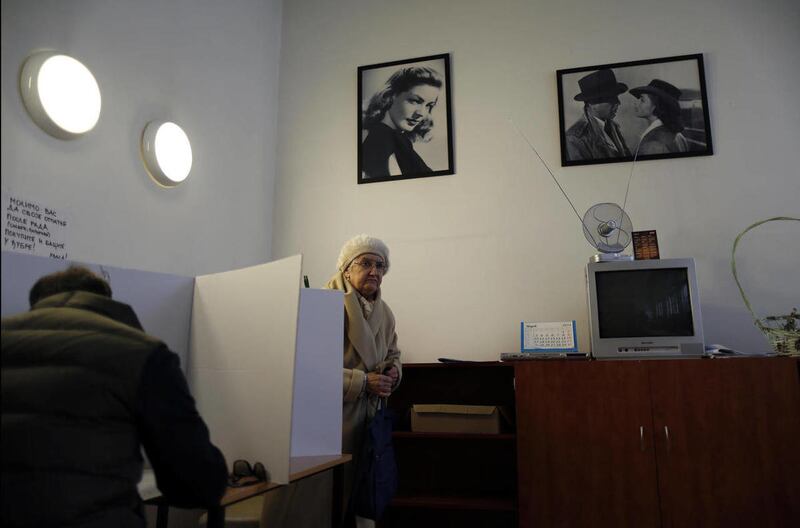
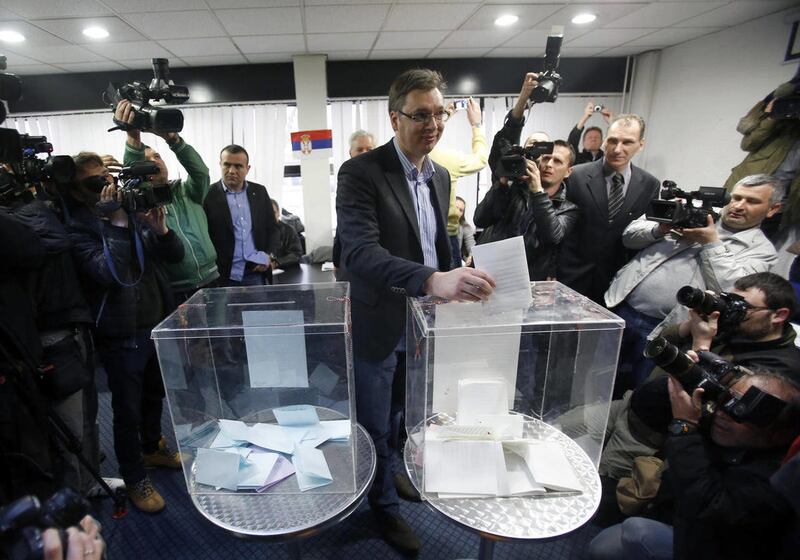
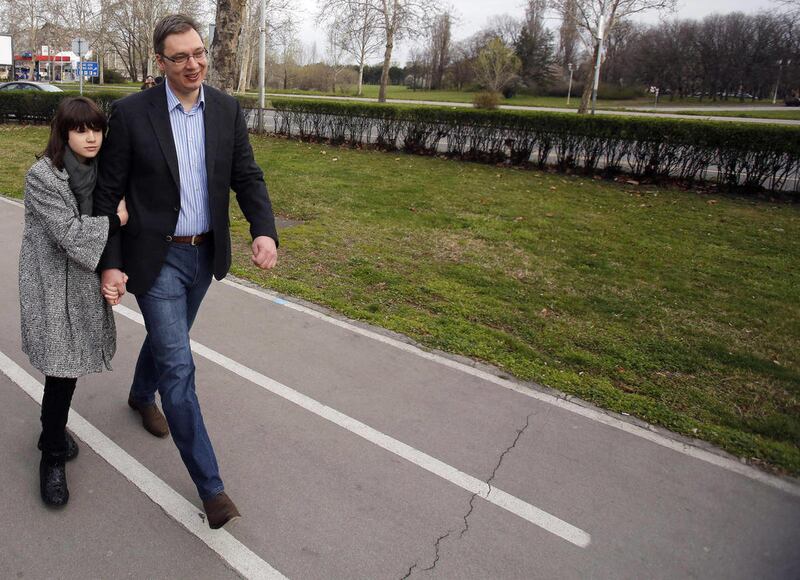
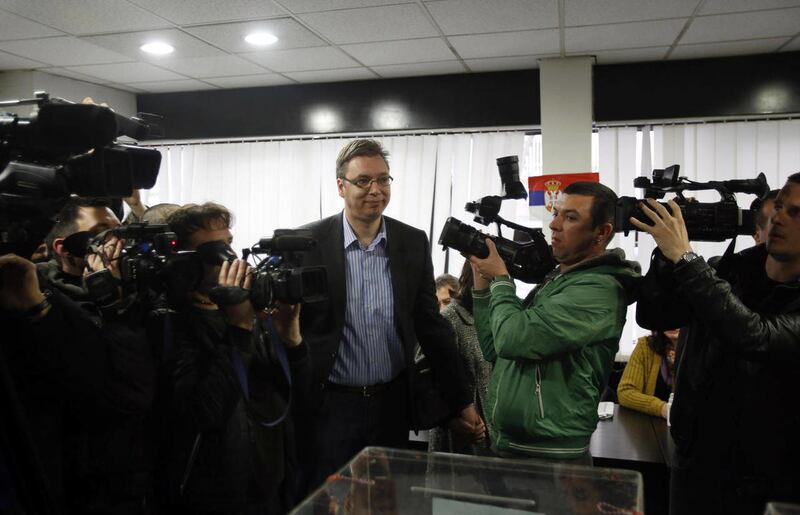
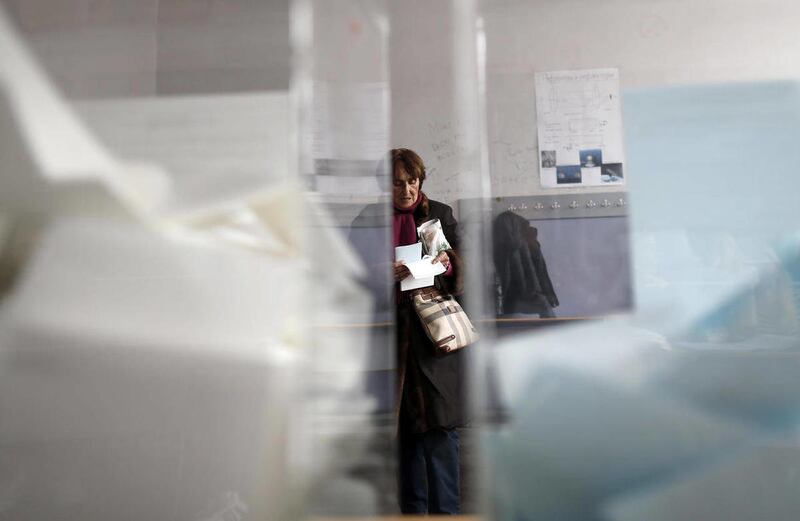
BELGRADE, Serbia — In a parliamentary election Sunday, Serbs gave a landslide victory to the ruling center-right party that has vowed to overhaul the nation's struggling economy and push for membership in the European Union, according to an independent poll.
The Belgrade-based CeSID polling group said the Serbian Progressive Party won about 160 seats in in the country's 250-seat parliament. Its coalition partner in the current Serbian government, the Serbian Socialist Party, came in second, with about 50 seats.
The rest of the seats went to the pro-Western Democratic Party and the New Democratic Party of former President Boris Tadic, the two groups that split up before the vote.
It was one of the most convincing victories by a party since the multiparty system was introduced in Serbia in the 1990s.
The Progressives are expected to choose their leader Aleksandar Vucic — a former hard-line, pro-Russian nationalist who has become a pro-EU advocate — as prime minister.
In his victory speech, Vucic pledged to vigorously fight against corruption and crime, and revive the economy in the troubled Balkan nation of about 7 million people.
"We are facing tough reforms," Vucic said. "But, I am sure that Serbs will soon live better than they are living now."
Turnout was about 52 percent, slightly less than during the 2012 parliamentary election that brought the Progressives, former allies of late Serbian strongman Slobodan Milosevic, back to power in Serbia.
The vote came as Serbia, a longtime international pariah for fomenting wars in the Balkans in the 1990s, is officially seeking entry into the EU, amid deep economic problems and simmering social discontent because of plunging living standards.
Serbia this year opened membership talks with the EU after signing a deal normalizing ties with Kosovo, a former province which split in 2008, but whose independence Serbia's refuses to recognize.
Vucic says he needs a strong mandate to carry out painful reforms needed to help Serbia's economy, which has been ravaged by mismanagement, wars and international sanctions.
"The citizens of Serbia, thank you for the overwhelming support that you have given us," Vucic said.
The opposition has accused him of seeking to introduce a Russian-type, hard-line leadership in Serbia by assuming dominant powers in the state, which is deeply split between pro-Russian and pro-Western sentiment.
Unemployment in Serbia officially stands at about 20 percent, but experts say it is much higher. Serbia has been told by international creditors that to move forward it must cut jobs in the public sector and privatize state-owned, loss-making companies.
Also running were are the Liberal Democrats and hard-line pro-Russian nationalists who oppose the EU bid, but according to the unofficial results, they didn't reach the 5 percent threshold needed to enter the parliament.
AP correspondent Dusan Stojanovic contributed to this report.