

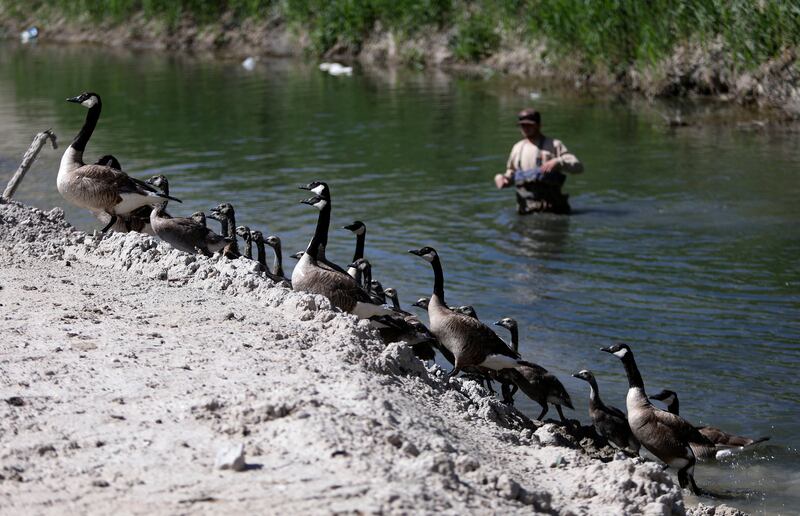
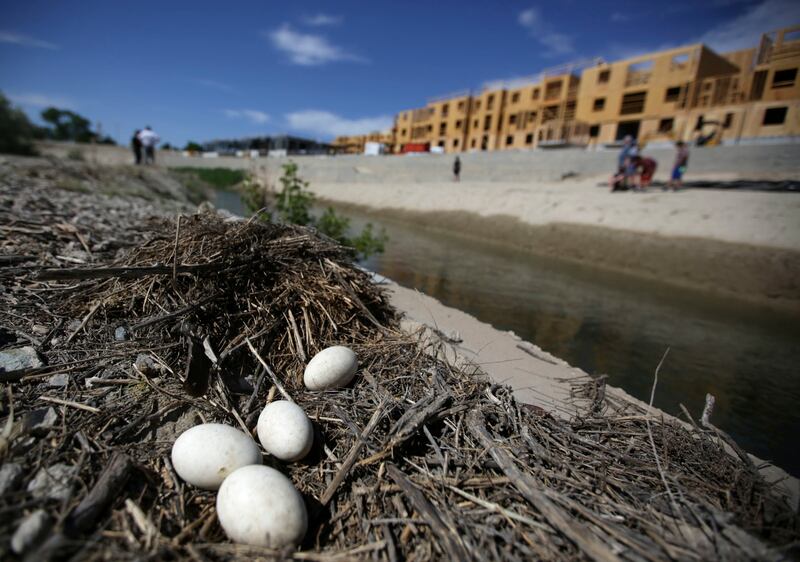

SALT LAKE CITY — Canada geese, with their distinctive white patches on their faces, their long black necks, and the tan bodies with black-and-white feathers, are beautiful, but they are also a nuisance.
Years ago, golfers could hardly play a round of golf in Salt Lake County without competing with a gaggle of geese. The geese were a nuisance with their behavior and their droppings.
"They were aggressive," said Rick Hansen, migratory bird banding coordinator for the Utah Division of Wildlife Resources. "When they have their young they're pretty protective, so they would chase kids down."
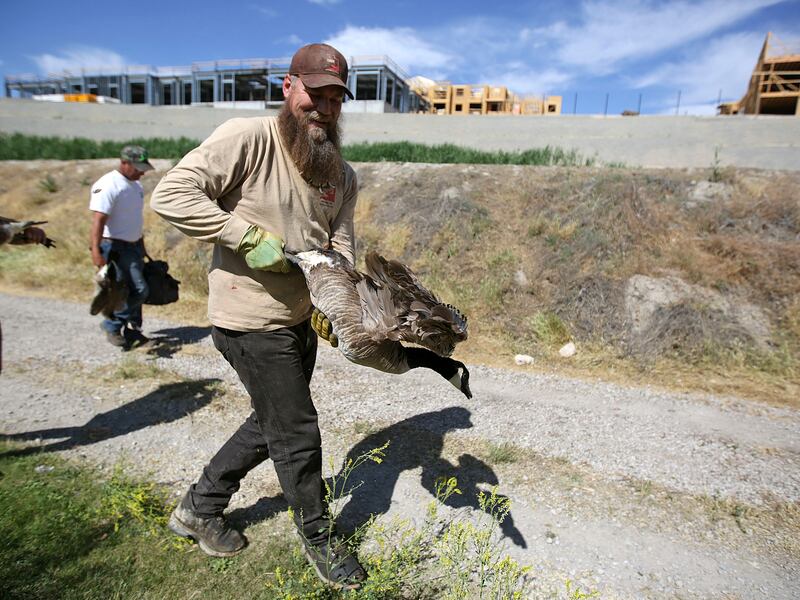
There were many complaints over the years, so 13 years ago, the Division of Wildlife Resources started rounding up the geese from golf courses and parks. The program has made a substantial difference for humans and birds alike.
"We've gone from thousands of birds in the city to 500 to 600 in the entire valley," Hansen said.
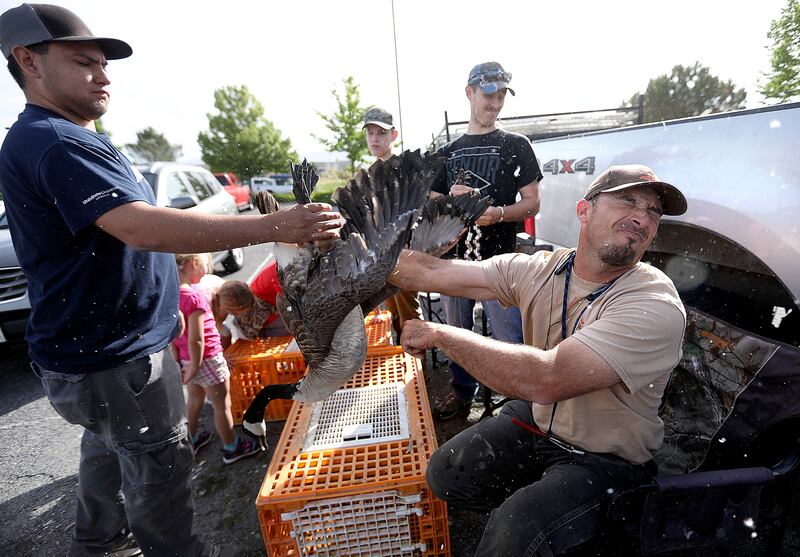
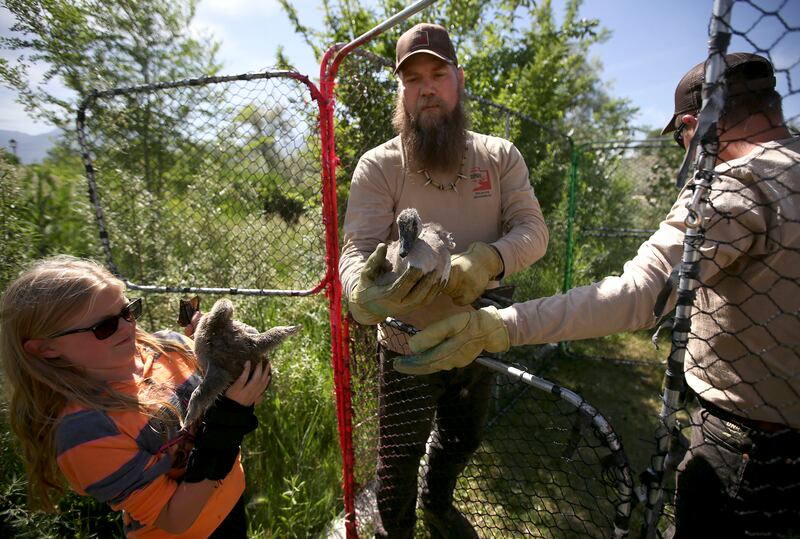
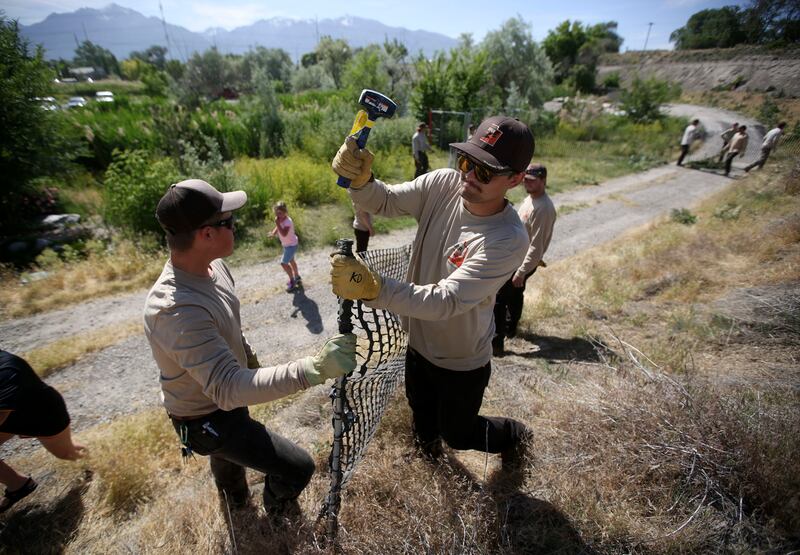
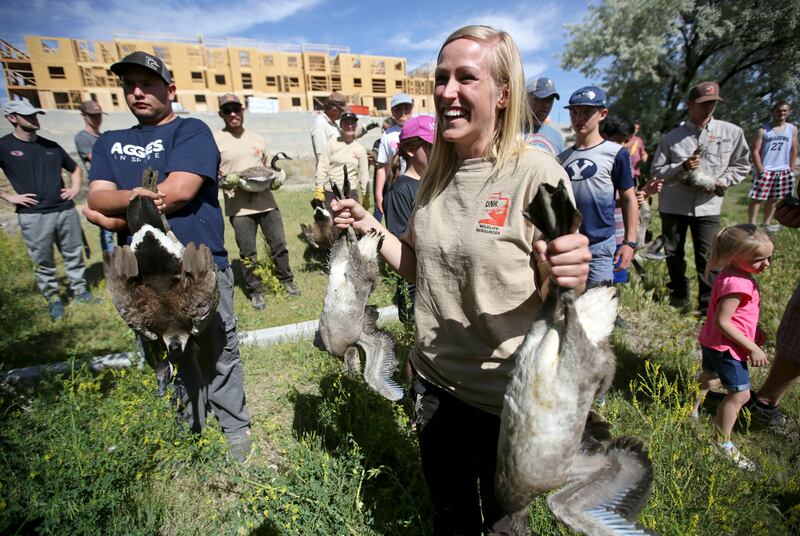
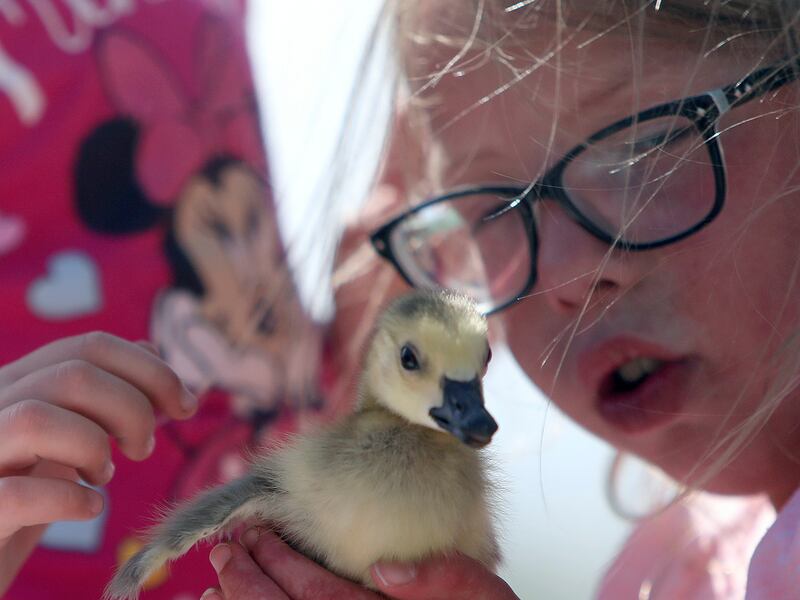
Tuesday, with the help of volunteers, the DWR was able to round up 34 adult geese and 60 young from nine golf courses and parks, including Glendale Park and Wheeler Farm.
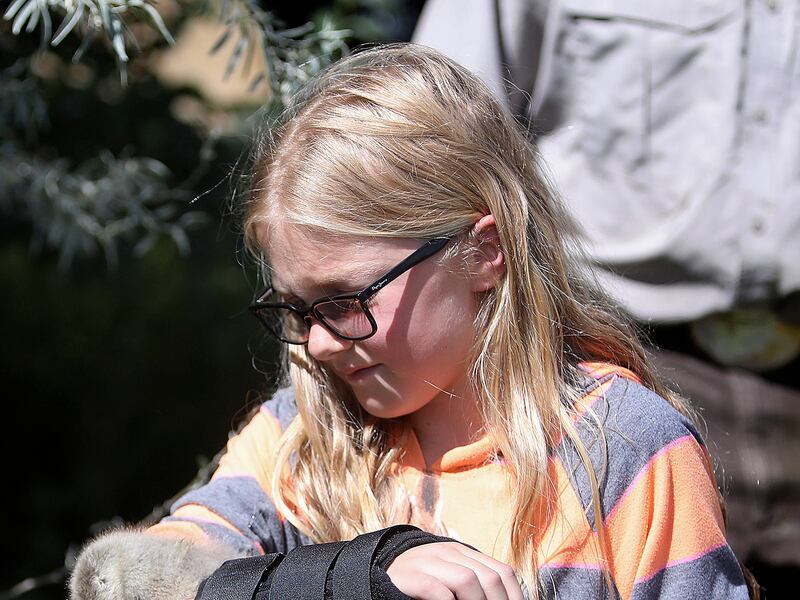
Hunter Cornia, 13, from the Ogden area, has been a volunteer with the relocation program for six years. "Bread makes them sick, so getting them out of the areas is essential for their health, and not only that, everybody's else health," Cornia pointed out.
Hansen said the birds are not as susceptible to disease out in the wild as they are congregated in urban areas.
Cornia got a few bites and scratches during the roundup. "I'm a little sore, but it was a good day," she said.
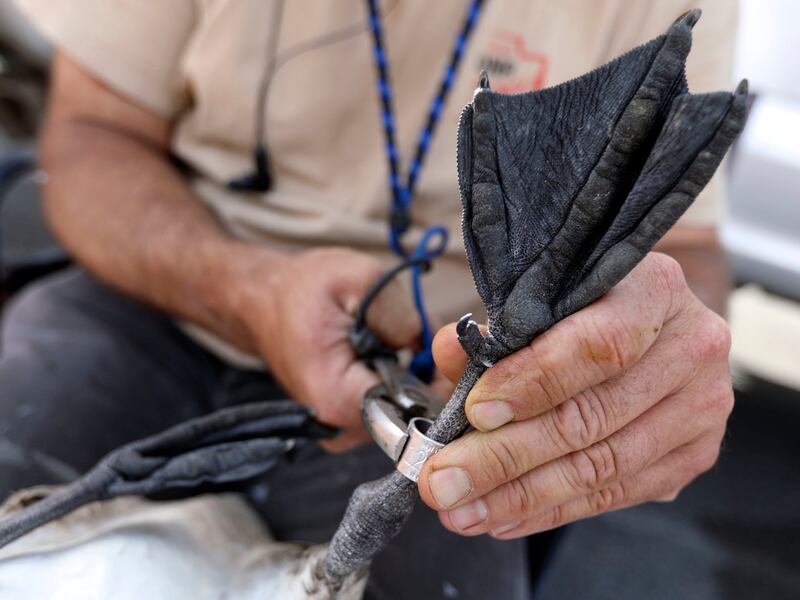
After rounding up the geese, officials put an aluminum band on each bird, identifying age and sex. All that information is entered into a national bird banding database "to tell us survival rates, mortality rates, migration patterns," Hansen said.
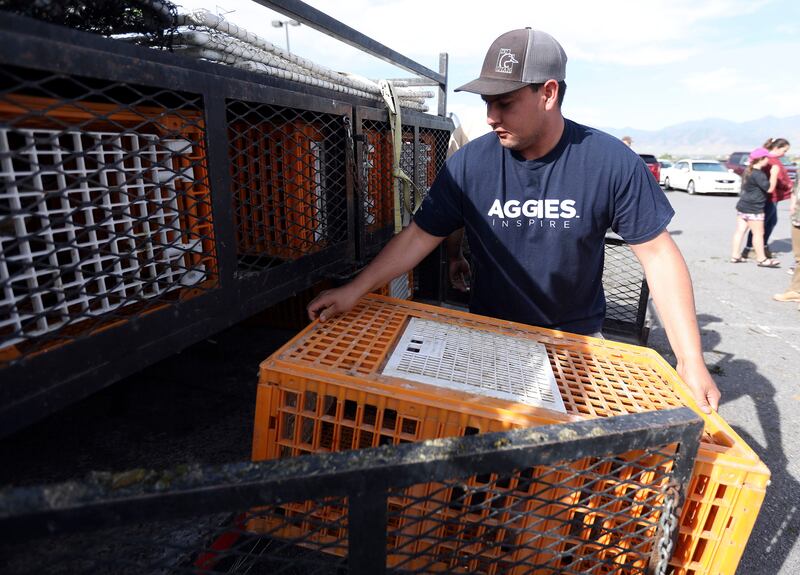
The birds will be separated by age. "We will separate the adults and put them in a trailer that will go to Vernal," Hansen said. "We will put the young in a trailer that will go to Ogden Bay."
He said that by releasing the young birds with wild birds already there, the young birds will imprint on the wild birds and stay out of the city.
Over the years, the DWR has relocated more than 6,000 adults and 6,000 young geese. "Less than 1 percent of the young have returned to the city, so we've made great progress," Hansen said.
The success rate isn't as high for adult geese. He said half of the adult birds seem to make their way back to Salt Lake County, even if they're dropped off at a lake in Vernal.
Next week, the wildlife biologists will be out of the city and back on the water tracking geese that live in the wetlands.