

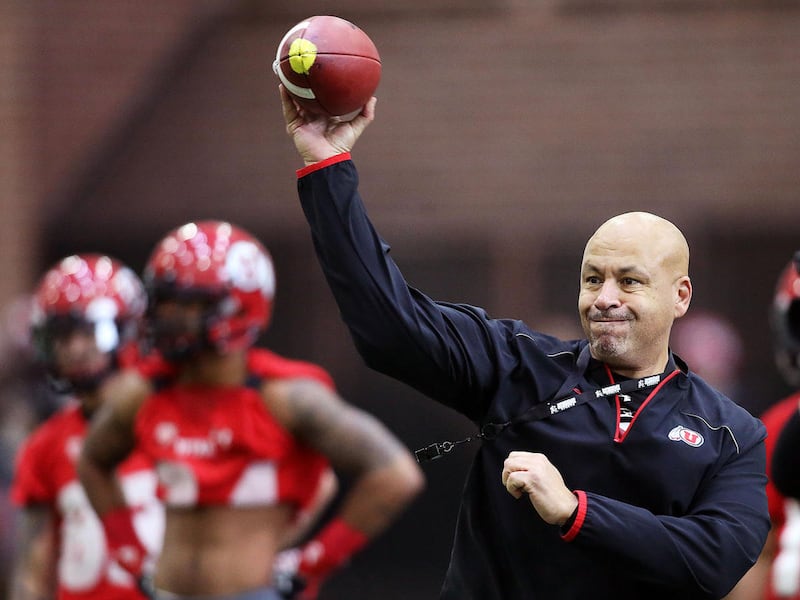

It's not like we're going to be under center all the time. You just want to have that element in our offense. – Utah co-offensive coordinator Aaron Roderick
SALT LAKE CITY — Utah fans will have to get used to a new quarterback under center this fall, but might have to become acclimated to that quarterback actually taking snaps under center, also.
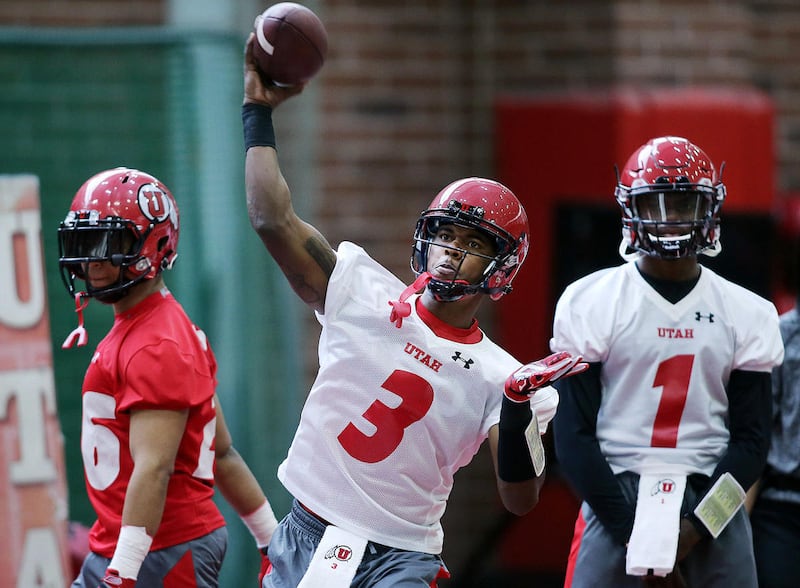
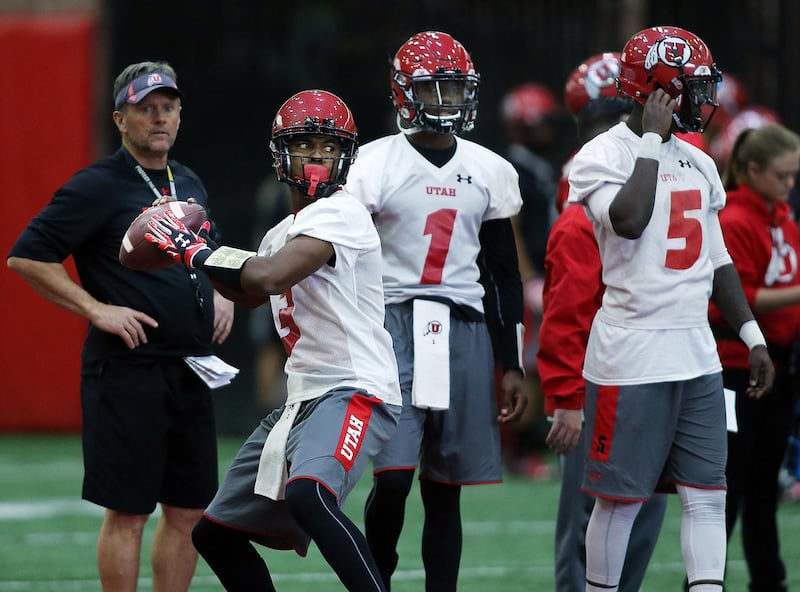
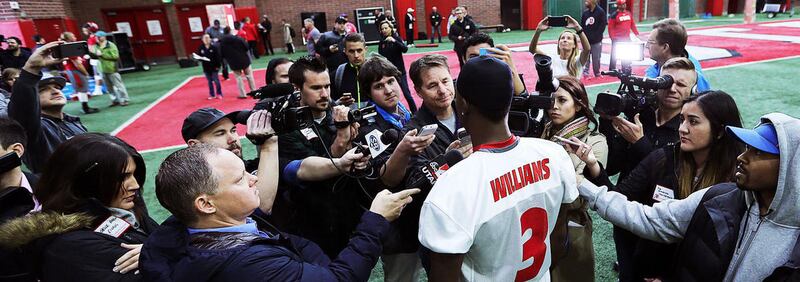
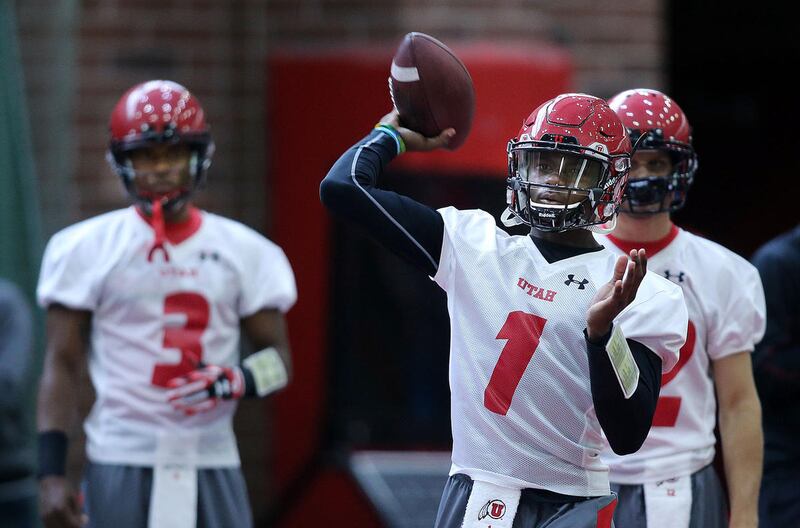
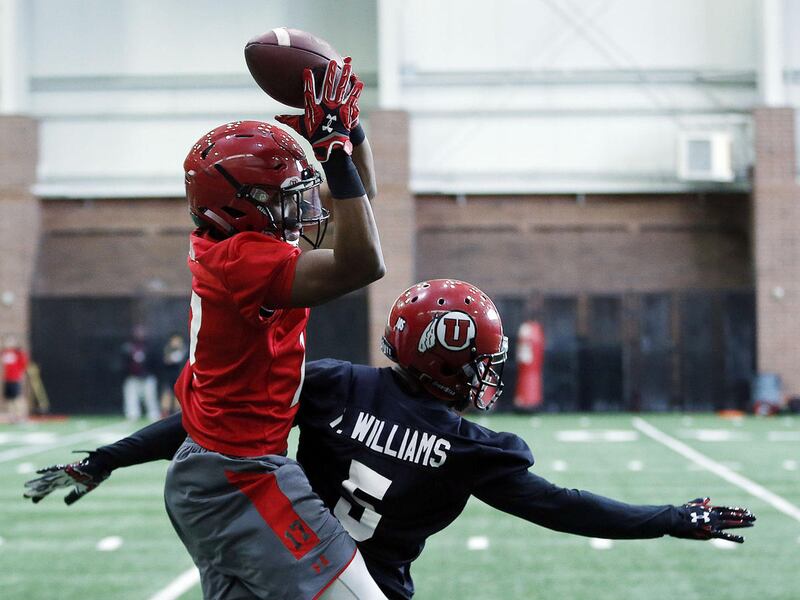
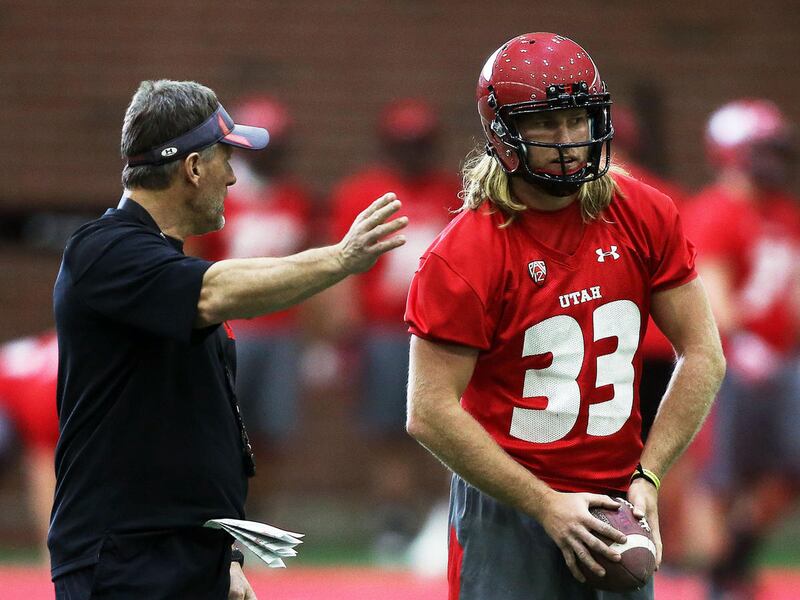
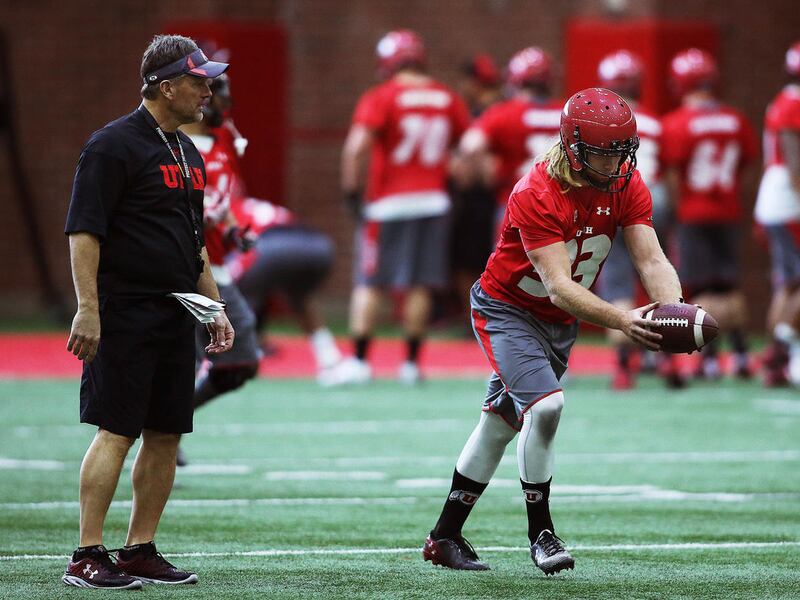
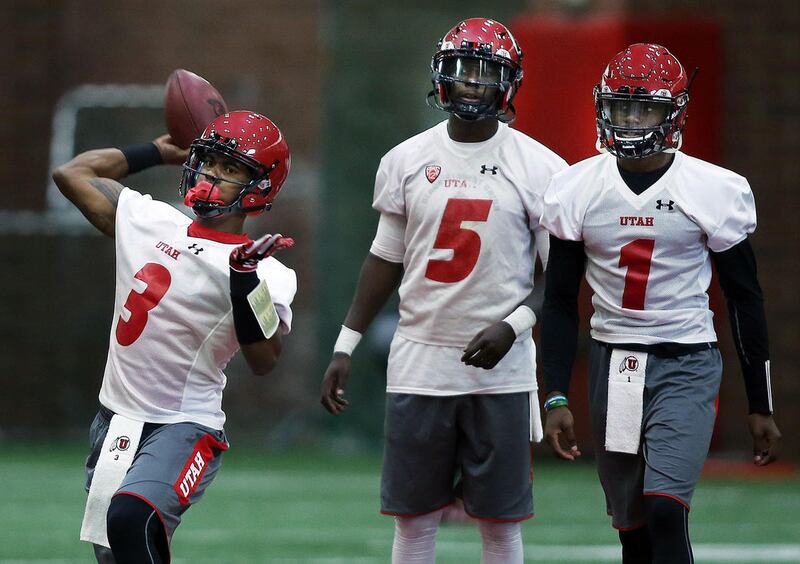
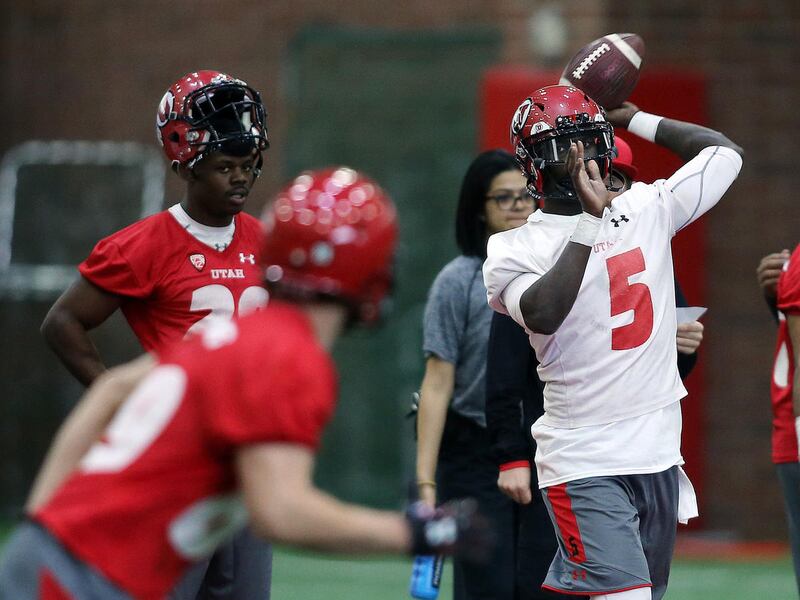
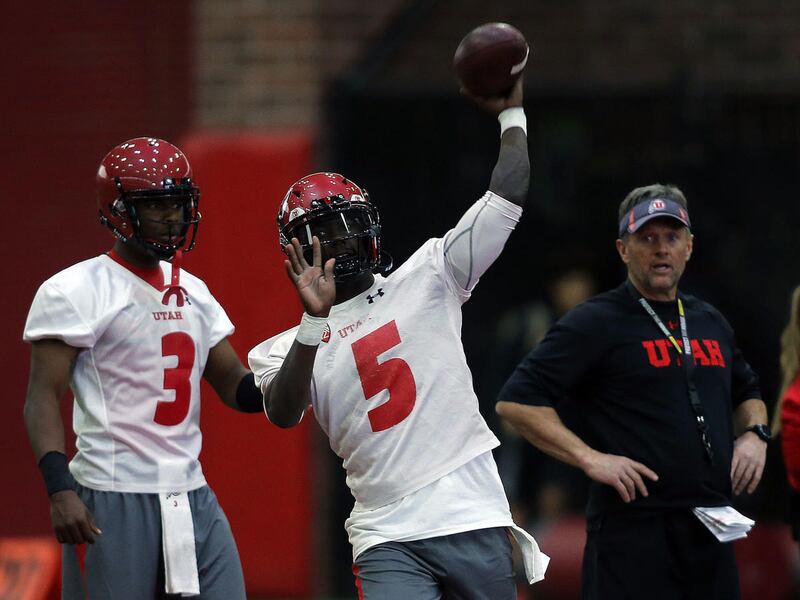
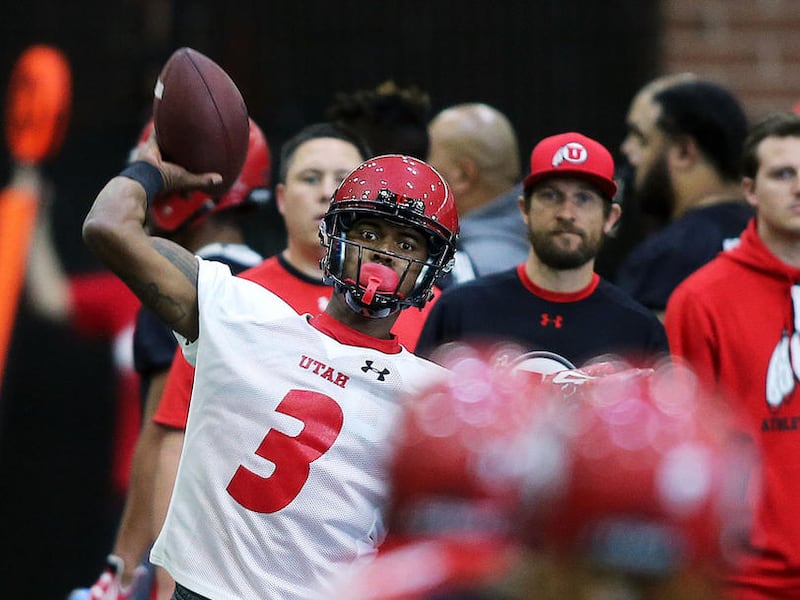
As spring practice opened Tuesday, all three quarterbacks vying for the starting job — junior Brandon Cox, junior transfer Troy Williams and true freshman Tyler Huntley — spent time taking exchanges with centers as the Utes experiment with new wrinkles to Utah's mostly spread offense that primarily features quarterbacks lining up in the shotgun formation.
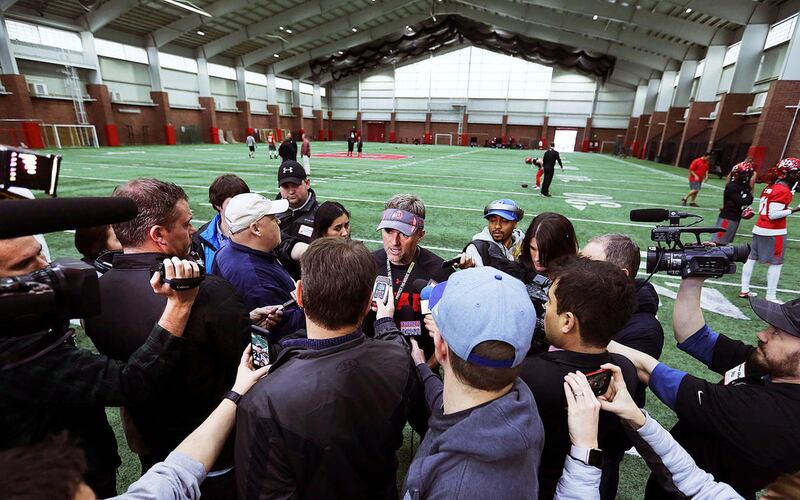
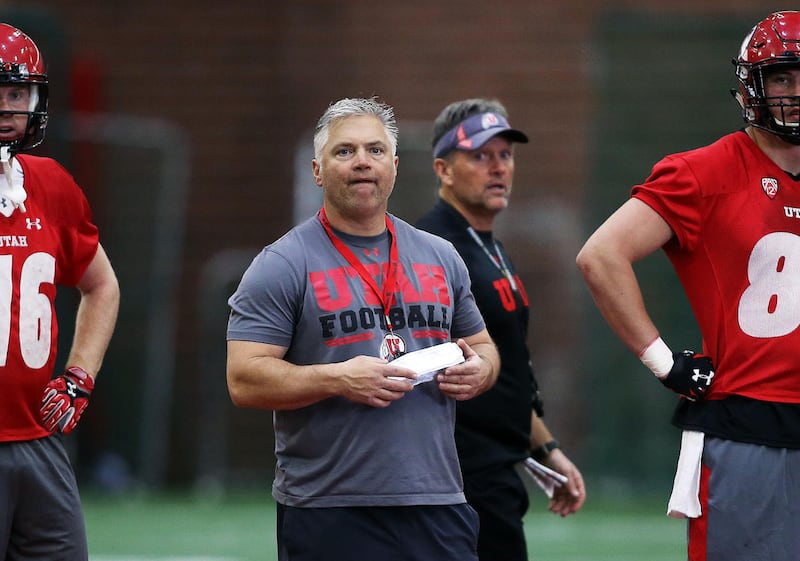
"Our main reason is we had some short yardage issues late in the year last year," co-offensive coordinator Aaron Roderick said, following the team's first practice of spring camp. "We ran the ball great all year, but there were a few times late in the season where we felt like being more downhill in our run game — just let the back run downhill would help, and then we really want to improve our play-action pass and play-action pass is far more effective from under center than it is under the gun. So we thought we could pair those things together."
All three of those quarterbacks have experience under center at some point in their playing career. Cox and Huntley each have experience in offenses that played traditionally under center during high school and Williams also played that style at Washington.
It's also a move that, Roderick said, doesn't change any dynamic of the blocking schemes, which makes it an easy adjustment to make for the rest of the offense. As for the quarterbacks, it hasn't been a major issue either.
"That's one of those changes that's easy to make," Cox said, regarding that alteration in the offense.
There were a few missteps here and there in practice Tuesday, but overall Roderick said he was happy with the exchanges between the centers and quarterbacks.
"I thought for the first day, it was pretty good," Roderick said.
Though there might be more snaps from under center and dropbacks in 2016, that doesn't mean a complete offensive overhaul. The adjustment isn't something that will rewrite the playbook but instead give the Utes more options.
While quarterbacks spent time more time than in past years under center on Tuesday, they also spent most of their practice time in Utah's traditional shotgun formations. That's something not likely to change this upcoming season.
"It's not like we're going to be under center all the time," Roderick added. "You just want to have that element in our offense."
Thus, Utah has no plans to change its offensive identity.
"Still definitely a spread offense," head coach Kyle Whittingham said. "Just because we're under center a little bit doesn't change the overall philosophy."
So what benefits does this new wrinkle actually bring?
"You get good play fakes and it gets receivers really nice matchups to get open and draws the linebackers into the line of scrimmage, freezes safeties and isolates some space on the field for guys to get open," Roderick said.
That gives quarterbacks a little more time to find open receivers or, with the case that Utah's quarterbacks have the option to run, lanes to move the ball down the field with their feet.
It also gives receivers more time to possibly gain separation downfield or even time for blocking to open up in rushing attempts.
"I like how we're going a little bit under center," said junior tight end Harrison Handley, who is Utah's top returning receiver from 2015. "It gives quarterbacks a little bit more time to drop back and look around to see what (the defense) is doing. So yeah, we're changing it up a little bit. We have a couple of different styles of quarterback — they're a little faster so we're able to go under the center and drop back."
Cox added that while it's a minor adjustment to the offense that won't eat up all the practice time, it gives opposing defenses more to think about when it's implemented at the start of the season.
"When you move under center, you open the game for more downhill runs and play-action passes," Cox said. "It's hard to read play-action passes from under center because they don't have that automatic look at you, since they don't know if it's a run or pass. It opens up more downfield throws and it makes a defense be on their toes a little bit more."
It's a strategy Roderick said will be dictated by its success throughout the season, but one that will be attempted regardless.
"If we're good at it, we'll do it a lot. If not, we'll do it a little," he said. "But we're going to do it."