

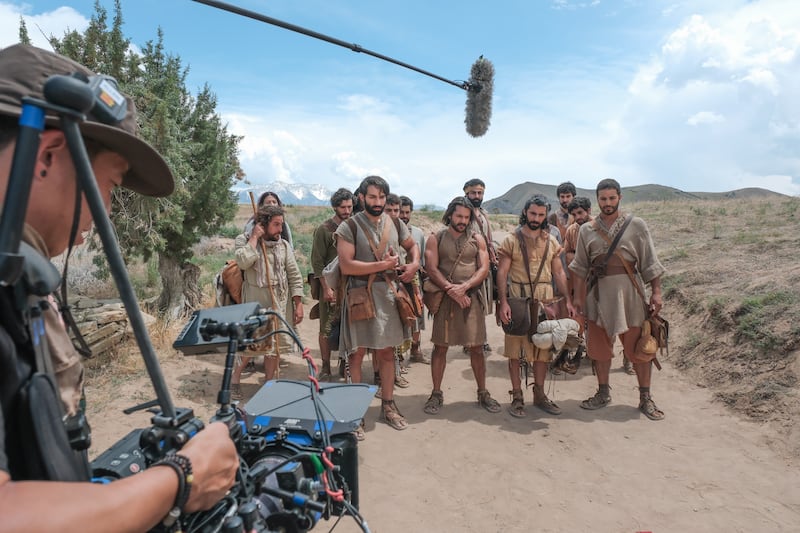

Artificial intelligence is helping propel “The Chosen” toward an ambitious goal — translating the series into hundreds of languages, many of which have long been overlooked by mainstream media.
The organization leading the effort, Come and See, ultimately aims to translate all seven seasons of the series into 600 languages, making the biblical drama about the life of Jesus Christ accessible to 95% of the world’s population.
Of the languages slated for translation, more than 500 are minority languages with no existing dubbing infrastructure required for large-scale projects like “The Chosen” — so Come and See is relying on a new AI tool to accelerate and support the translation process.
Adopting the AI tool has already allowed translation teams to move “exponentially faster than we ever expected,” said Wendi Lord, vice president of localization at Come and See, while also creating translation work in communities that previously had none.
“The translation has scaled faster than I ever anticipated. And it’s because of all the new emerging technologies and tools that we have,” Lord said. “What’s most surprising to me is the heartbeat of diverse groups of people all around the world who come together united for one purpose.”
She continued, “We all have the same goal of reaching the world for Jesus. And the most surprising thing is the way people are willing to give and suffer and sacrifice to prioritize this work so that everyone can come and see and hear.”
Record-breaking strides
Since deploying the tool roughly a year ago, Come and See has made record-breaking strides, scaling over 100 languages.
In February, the biblical drama was recognized by Guinness World Records as the most-translated season of a television series in history with 125 languages. The feat came shortly after the series reached the same record in September for translations in 86 languages.
Some of the 125 dubbed languages include Arabic, Bulgarian, Danish, Dutch, Flemish, Haitian, Hindi, Korean, Slovenian, Turkish and Vietnamese. Another 260-plus language translations are currently in progress.
“The Chosen” has now surpassed — twice — the translations available for television hits such as “Friends,” “SpongeBob SquarePants” and “Baywatch.”
Still, after meeting record-setting translation milestones twice over, Comes and See remains in the early stages of its broader goal.
The aim is not to simply add subtitles to the remaining languages in need of translation, but to prioritize dubbing, which the organization says is especially important in regions with lower literacy levels where subtitles are a less effective means of access.
The AI tool, which supports dubbing, is helping scale that effort.
“Something completely different happens when you can sit back and relax and watch (‘The Chosen’) with an open heart because you can just hear it in your own language and you’re not having to think about it,” Lord said.
“We have an obligation to not just take it out in the written word, but in the spoken word. We want people to come and see and hear about Jesus in their own language in order to create that ability to unlock their heart so they can experience real transformation.”
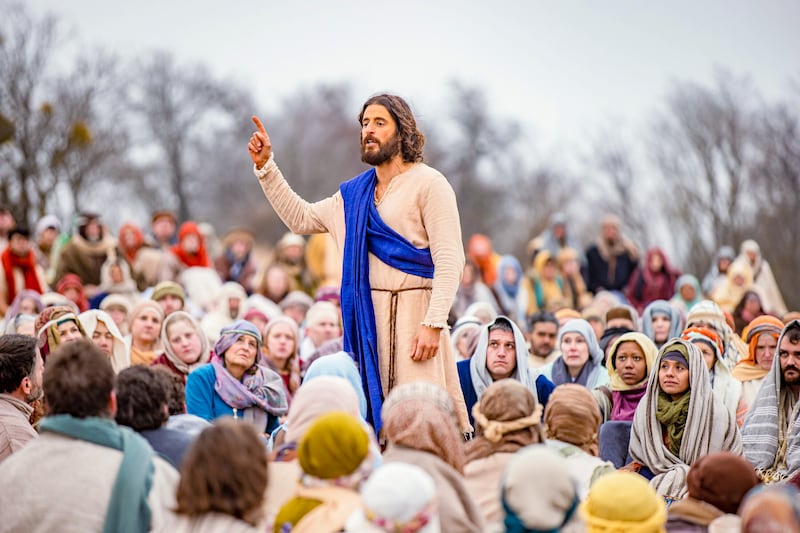
How AI supports ‘The Chosen’ translation process
Come and See uses a two-pronged approach to translation.
For majority languages such as Spanish, French, Italian and Hindi, where dubbing infrastructure already exists, professional dubbing teams work with subject matter experts — including pastors, theologians and ministry leaders — who review scripts multiple times to ensure high biblical fidelity and cultural relevancy.
In these cases, the process resembles standard Hollywood localization and does not involve the AI system.
However, in lower-resource minority languages, where there is often no established translation or dubbing infrastructure, Come and See uses the AI-based app to generate a first pass of the translation, followed by a meticulous review from subject matter experts to ensure quality and accuracy.
Once the translation is finalized and subtitles are embedded into the video, linguists anywhere in the world can record the translated lines directly into the translation app in their local language. Because these are not professional voice actors, speech-to-speech AI technology is then used to overlay the sound of the original voice actor onto the audio provided by linguists and translators.
“It will make it sound now like the original actors are speaking in that language,” Lord said. “So we get a dual benefit. We get the benefit of the good acting from our original cast, and we get the benefit of great pronunciation from the translators.”
“We bring those together and get some pretty stunning results when we have human-centered AI,” she added.
While AI has eased the translation effort, Lord remains alert to its limits and says keeping the process human-centered — with linguists and subject matter experts — is essential to maintaining biblical fidelity and cultural relevancy.
James Christian, a project manager at Come and See overseeing more than 40 translations, who also helps translate the series into Hindi and Gujarati, said cultural and religious nuances — the kind AI cannot detect — are a particularly challenging part of the translation process. “Especially when we talk about the faith-based content, there are a lot of different things happening,” he said.
There are many languages that the New Testament has not been translated into, he added, which presents another challenge in producing accurate translations.
These challenges make it crucial for translations to be reviewed by linguists and theologians, a process that is creating jobs in remote areas such as in Kenya and Nepal, Lord said.
“These are languages that aren’t getting a lot of attention. There aren’t a lot of other translation jobs in these languages,” Lord said. “The domino effect of us collaborating on all these languages is transformation of entire communities by adding jobs ... even in the commercial markets we are having to add jobs because there’s still work we have to do.”

The expanding global reach of ‘The Chosen’
More than 300 million people in over 175 countries have watched “The Chosen,” racking up nearly a billion episode views. No biblical series has ever come close, and the biblical drama’s reach continues to expand across the globe.
The fifth season of the series, which was largely crowdfunded, received donations from 105,000 individuals or groups from 150 different countries.
Expanding the series’ global reach — ultimately aiming to reach 1 billion viewers — and sharing the story of Jesus to a worldwide audience remain central to Come and See’s mission.
Through her work in localizing “The Chosen,” Lord has seen firsthand how both those involved in the translation process and audiences experiencing the series in their native language are being transformed by the biblical drama.
“I actually do consider this missional work now. I have a strong desire to take the truth to the world, to everyone,” Lord said.
“We get story after story of people who experience Jesus’s healing or peace or restoration or joy because of what they experience when they watch the show,” she added later.
“That can happen because this show is so relatable. By people seeing these characters experiencing similarities to what we currently experience in the modern day, it really resonates with them, and they find comfort in knowing that there can be good outcomes despite really difficult circumstances that they’re in today.”
