

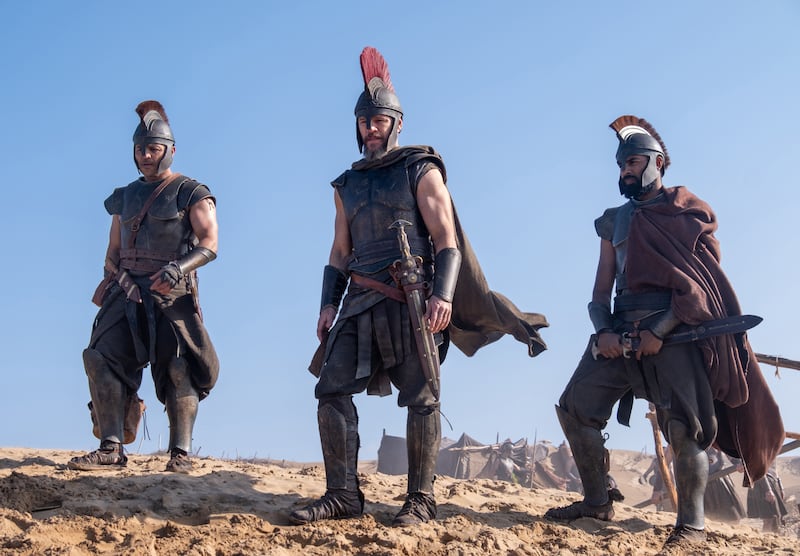

One of the summer’s most hotly anticipated new films isn’t telling a new story — in fact, it’s based on one of the oldest surviving tales in Western literature.
But even for those of us who read “The Odyssey” in high school, it can be hard to remember all the story beats and keep track of all the characters.
If you’re planning to see Christopher Nolan’s new movie version of “The Odyssey” this weekend and need a quick refresher, here’s what you need to know.
What is ‘The Odyssey’ about?
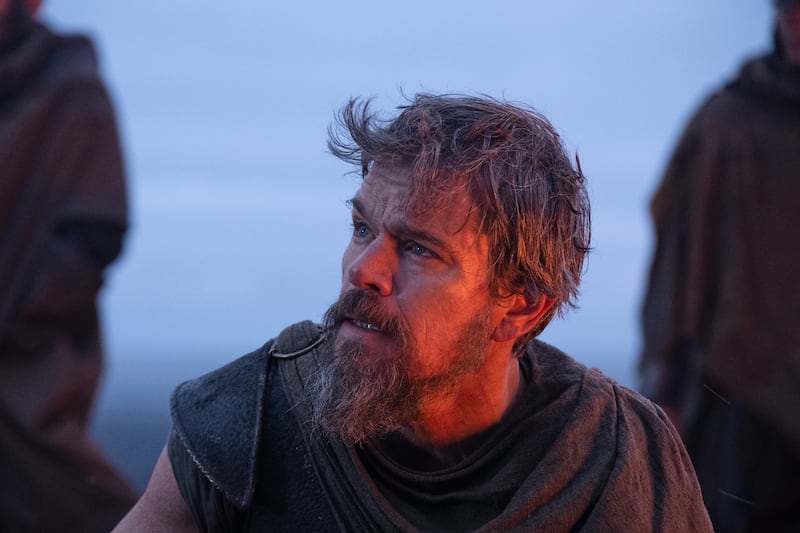
In its simplest form, “The Odyssey” is the story of a man returning home from war. But along the way, he faces dangerous obstacles, and interventions from the gods, that delay him on his quest.
After fighting for 10 years in the Trojan War, Odysseus and his soldiers are returning to their homeland of Ithaca. But Odysseus faces setback after setback on his journey home: from wily sirens to a man-eating cyclops to a powerful witch that turns his men into pigs.
Meanwhile, at home, Odysseus’ wife, Penelope, has been facing a challenge of her own: a horde of suitors that are determined for her to choose one of them as her new husband — and they’re eating her out of house and home at the same time. Odysseus and Penelope’s now-adult son, Telemachus, wants to rid the palace of the suitors — and find out what happened to his father.
Who are the major characters in ‘The Odyssey’?
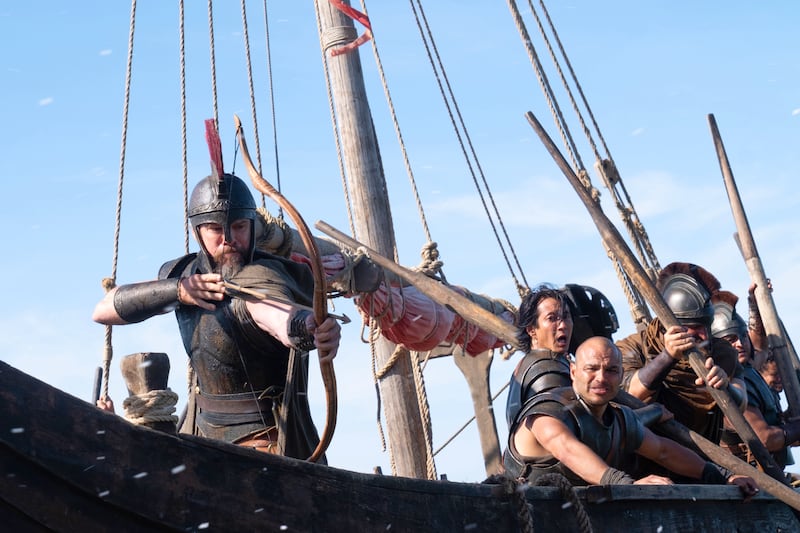
There’s a large web of characters to keep track of throughout the story. Here are some of the major players, as well as the actors portraying them in the movie:
Odysseus (Matt Damon): The king of Ithaca who spends years fighting in the Trojan War; he’s known for his cleverness, including coming up with the plan behind the infamous Trojan horse. “The Odyssey” is the story of Odysseus’ long journey home after the war ends.
Penelope (Anne Hathaway): Odysseus’ wife, who fends off suitors demanding her hand in marriage as she waits for her husband to return home.
Telemachus (Tom Holland): Odysseus and Penelope’s son, who was an infant when his father left for war. Now an adult, he wants to find his father and protect his mother and home from the suitors that are pursuing them.
Calypso (Charlize Theron): A nymph who detains Odysseus on her island for several years.
Circe (Samantha Morton): A powerful witch who turns Odysseus’ men into pigs, though he persuades her to change them back, and she later helps him on his quest.
Athena (Zendaya): The Greek goddess of wisdom, she often gives help to both Odysseus and Telemachus.
Antinous (Robert Pattinson): One of the most aggressive suitors that is pursuing Penelope.
Eurylochus (Himesh Patel): Odysseus’ second-in-command during their return from the Trojan War.
Sinon (Elliot Page): A Greek soldier in the Trojan War who plays a key role with the Trojan horse.
When and why was ‘The Odyssey’ written?
Although “The Odyssey” (along with the tale of the Trojan War, “The Iliad,” which features many of the same characters, including Odysseus) is commonly known as the work of the ancient Greek poet Homer, there are plenty of debates over its true author.
Written as an epic poem separated into 24 books, it originally would have been meant for oral performance, according to Encyclopedia Brittanica. Some scholars date the poem to around 725-675 B.C.E.
While some scholars believe that Homer was the sole author of “The Odyssey” and that he lived in the 9th or 8th century B.C.E. in Ionia, according to Encyclopedia Brittanica, others believe that “The Odyssey” is the product of a long oral tradition, meaning that the poem would have been retold and revised by many people over many years. It’s also possible that the poem was composed by Homer (who is traditionally believed to have been blind) and later transcribed by another poet.
Why is ‘The Odyssey’ still relevant?
As one of the oldest existing written stories, “The Odyssey” plays a foundational role in Western literature. The story itself also continues to resonate with audiences.
“It speaks to the basic human experience,” Daniel Mendelsohn, author of “An Odyssey: A Father, a Son, and an Epic” and his own translation of the poem, told History.com. “It’s about the urgent desire to get home and to belong somewhere, as well as the competing urge to have adventures. That’s something everyone navigates.”
There are plenty of questions raised by “The Odyssey” that audiences still think about today, Mary Beard, professor emerita of classics at Cambridge, told The Guardian: “What does it mean to go home? What does war do to those left behind? Where does the boundary between civilisation and barbarity really lie?”
Translations, adaptations and retellings of ‘The Odyssey’
If you’re looking for other versions of “The Odyssey,” here are some more options:
Translations
- Emily Wilson (2017)
- Robert Fagles (1997)
- Robert Fitzgerald (1992)
Movies
- “Ulysses” (1954): An Italian adaptation starring Kirk Douglas.
- “O Brother, Where Art Thou?” (2000): This Coen brothers film starring George Clooney reimagines “The Odyssey” in the Depression-era South.
- “The Return” (2024): Starring Ralph Fiennes, this film focuses on the second half of “The Odyssey,” after Odysseus has returned home to Ithaca.
Books
- “Ulysses” by James Joyce: The story of a day in the lives of three Dubliners that draws heavy parallels with “The Odyssey.”
- “Circe” by Madeline Miller: A reimagining of the story from the point of view of the goddess and witch Circe.
- “The Penelopiad” by Margaret Atwood: “The Odyssey” from the point of view of Odysseus’ wife, Penelope.