

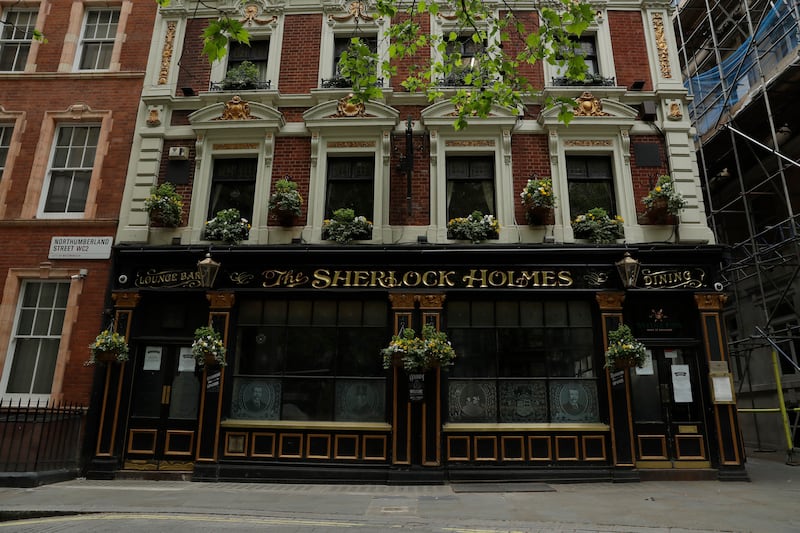

Forks, Washington, is home to only 3,400 people, but tens of thousands more descend on it each year to pay homage to the vampires and werewolves of the “Twilight” series.
In 2024 alone, 66,000 people visited Forks, the atmospheric setting of the blockbuster YA series, according to Business Insider, compared to 5,000 people in 2005 — the year the first “Twilight” novel was published.
But Forks is not alone when it comes to pulling in book-loving tourists. In fact, “literary tourism” across the board is booming.
Literary tourism as an industry is expected to grow to a value of $3.3 billion by 2034, from where it stood in 2024 at $2.4 billion, according to research by Future Market Insights.
Fifty-five percent of travelers have booked — or would consider booking — a trip that’s inspired by literature, per a survey by travel website SkyScanner. And a further 91% of travelers told travel site Vrbo that they are “interested in taking a trip centered around reading, relaxation, and quality time with loved ones.”
If you’re hoping to plan a book-centered vacation of your own this summer, here are some ideas of where to start.
What is the appeal of book tourism?
Book lovers have always felt the impulse to step into the worlds of their favorite novels or authors. Virginia Woolf wrote in 1904 about her excitement to visit Haworth, England, the home of the Brontë sisters — who, at that point, had only died about 50 years earlier.
“This marked the shrine at which we were to do homage,” Woolf wrote about her first sight of the hilltop village overlooking the moors.
Over 100 years later, Brontë fans still flock to pay homage there: Haworth’s Brontë Parsonage Museum, situated in the home in which Charlotte, Emily and Anne all lived, saw 88,000 visitors in 2017.
“(People) want to experience it for themselves … to see a café where one of their favorite writers hung out, or where they lived, what was their writing studio like, what was their desk like,” Francis McGovern, co-founder of the website Literary Travel, told AARP. “It’s a visceral, powerful thing.”
But it’s not only author homes and haunts that hold an appeal. Real-world homes of fictional characters — like the vampires of Forks, or Sherlock Holmes’ townhouse at 221B Baker Street — also draw in huge numbers of visitors.
In the last few years, social media — particularly BookTok, TikTok’s booming book-loving subcommunity — has boosted more interest in this type of book-related travel. Tour companies like EF Ultimate Break have even begun creating entire tour itineraries planned around BookTok, including tours for fans of “Fourth Wing,” “Percy Jackson” and “Harry Potter.”
“Books open doors to other worlds,” Sarah Moriarty, the director of the Charleston Literary Festival in Charleston, South Carolina, told The New York Times. “It’s not a huge surprise that many would take the leap to travel with their feet.”
5 popular destinations for book lovers
‘Anne of Green Gables’
Where: Prince Edward Island, Canada
What: Fans of L.M. Montgomery’s beloved series can visit the Anne of Green Gables Museum, which is inside a farmhouse where Montgomery spent much of her childhood and where she later married in 1911; Green Gables Heritage Place, with the iconic house and the real-life Lover’s Lane; the home that was Montgomery’s birthplace; or take a trip like Anne’s with Matthew’s Carriage Rides.
‘The Shining’
Where: Estes Park, Colorado
What: The Stanley Hotel famously inspired Stephen King’s first bestselling novel. Today, brave visitors can stay in the hotel’s supposedly haunted Room 217; it was in this room that King was staying in the 1970s when he had a dream that led to the idea of “The Shining.” The hotel also offers tours for King fans.
‘Little House on the Prairie’
Where: Mansfield, Missouri; Independence, Kansas; Pepin, Wisconsin
What: Get a taste of prairie life at the Little House on the Prairie Museum in Independence, the site of Laura Ingalls Wilder’s childhood home, complete with a replica of the family cabin. In Pepin, Wisconsin, you can visit a replica of the cabin Wilder was born in, which was the setting of “Little House in the Big Woods.” The Laura Ingalls Wilder Historic Home and Museum in Missouri preserves the home that Wilder lived in until her death in 1957.
‘The Adventures of Tom Sawyer’
Where: Hannibal, Missouri
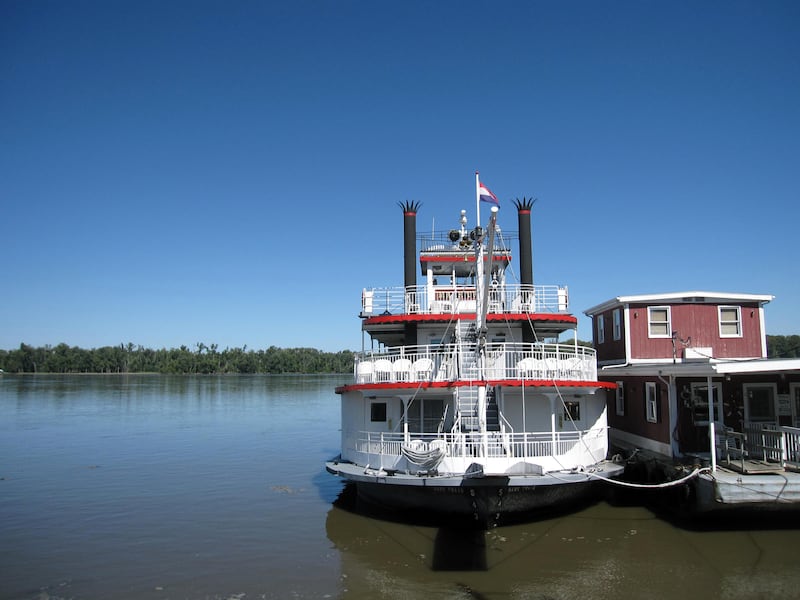
What: The childhood hometown of Mark Twain served as the inspiration for Tom Sawyer’s town of St. Petersburg. In Hannibal, you can visit the Mark Twain Boyhood Home and Museum, the Mark Twain Cave (which inspired the cave where Tom and Becky Thatcher get lost in the novel), take a Mark Twain Riverboat cruise, or visit a bronze statue of Tom Sawyer and Huck Finn that has stood in town for 100 years. Fun fact: “The Adventures of Tom Sawyer” was published in 1876, meaning it’s celebrating its 150th anniversary this year.
‘Sherlock Holmes’
Where: 221B Baker Street, London
What: The Sherlock Holmes Museum attempts to recreate the Victorian era, housing items related to Holmes and Dr. Watson, who — according to Sir Arthur Conan Doyle’s stories — lived at 221B Baker Street between 1881 and 1904. The museum also boasts “the largest collection of Sherlock Holmes gifts and memorabilia in the world,” according to its website, including the iconic deerstalker hats. Down the road at Baker Street Station, fans can also snap a picture of a nearly 10-foot-tall statue of the detective.
10 author museums and events
Here’s where you can find preserved homes and museums, as well as special events happening this year, dedicated to some of your favorite authors.
Jane Austen
- Jane Austen’s House, Alton, U.K.
- The Jane Austen Centre, Bath, U.K.
Charles Dickens
- Charles Dickens Museum, London
Ernest Hemingway
- Ernest Hemingway Home and Museum, Key West, Florida
- Ernest Hemingway Birthplace Museum, Oak Park, Chicago
- Hemingway Lookalike Contest, July 21-26, Key West, Florida
Virginia Woolf
- Monk’s House, Lewes, U.K.
- Tavistock Square, London
John Steinbeck
- The Steinbeck House restaurant, Salinas, California
- National Steinbeck Center, Salinas, California
- Cannery Row, Monterey, California
- Steinbeck House, Sag Harbor, New York
Emily Dickinson
- Emily Dickinson Museum, Amherst, Massachusetts
Louisa May Alcott
- Orchard House, Concord, Massachusetts
Henry David Thoreau
- Thoreau Farm, Concord, Massachusetts
- Walden Pond, Concord, Massachusetts
James Joyce
- James Joyce Tower, Dublin, Ireland
- James Joyce Centre, Dublin, Ireland
Toni Morrison
- Yearlong, statewide celebration of Toni Morrison in Ohio