

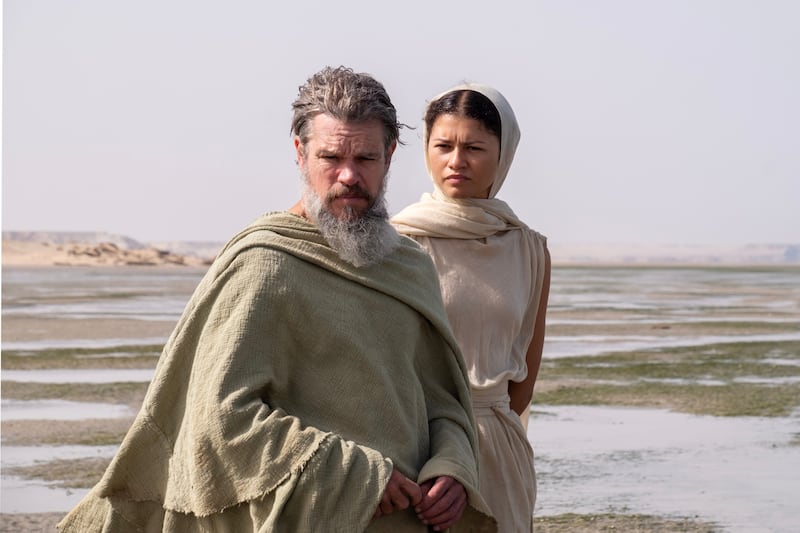

Upon the release of the first “The Odyssey” trailer, a brouhaha erupted online (hard to believe, I know) over the use of the word “dad” used by Telemachus, played by Tom Holland, in reference to his father Odysseus, played by Matt Damon.
When I read “The Odyssey” the first time at age 14, I found it to be a bit of a slog. And it wasn’t until that year when “O Brother, Where Art Thou?” — a satirical retelling of “The Odyssey” set in 1937 — came out that I gained a true appreciation for the story. Because the Coen brothers’ movie felt much more approachable for my young, limited attention span.
I was embarrassed by how much I preferred a modern movie version of Homer’s epic tale to the book translation that was required reading over the summer before ninth grade.
But then, years later, in a Shakespeare class at BYU, which I had to take to complete my major and which I expected to be extremely bored by, the professor spent a lecture hour explaining how Shakespeare was a mainstream hitmaker in his time. She even went so far as to translate a few phrases from his plays into modern slang. Not in a cliche, dorky teacher who raps in English class kind of way, but in a factual, useful insight kind of way that endeared a room full of young adults to plays from the 16th century. And that lesson really unlocked something for my understanding of all the classics.
Learning that William S. was creating plays for the masses gave me the ability to appreciate them as commercial successes, not just indecipherable texts for the academic elite. And it gave me new appreciation for the modern-day interpretations I’d seen and read, and the touchstones they provided to better understand the original.
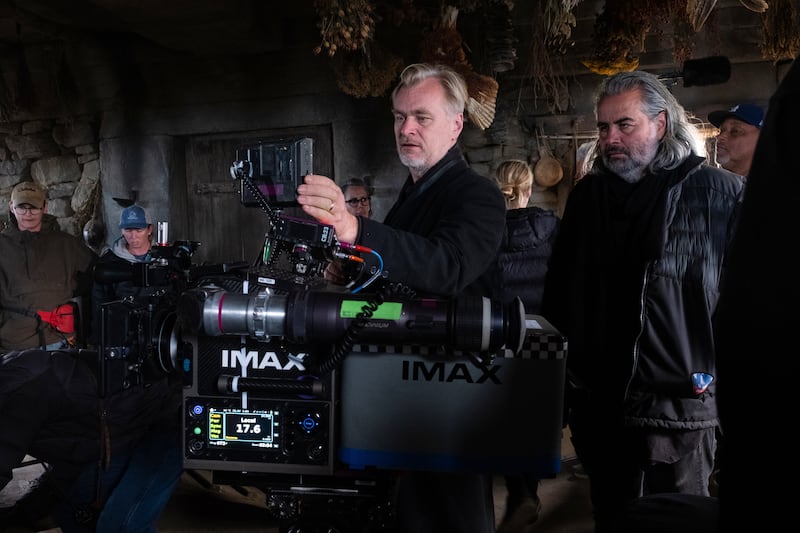
Nolan and his cast seem to have wanted to bridge the gap between the academic elite and the popcorn-buying masses. Both he and Holland defended the use of the more modern, more colloquial word “dad” in interviews with the British Channel 4 News.
“I wouldn’t have even said ‘father’ back in the day, would I?” Holland said. “It would’ve been Greek.”
Nolan added, “There’s a lot of cultural prejudice. There’s a lot of sort of elevating it, because it’s old, you know, whatever it is.”
The cultural prejudice of which Nolan speaks is one of my biggest pet peeves as someone who studied literature and now writes about culture. There seems to be an impulse among some to decry the declining literacy rates and pedestrian preferences of the average American, while gatekeeping access to more heady material and highbrow taste. These people express, loudly, online, their opinion that an adaptation of “The Odyssey” should be looked down upon for having language that is understandable to people besides those who hold a Ph.D. in Homeric Greek. They also seem bothered by historical inaccuracies, which is an interesting fight to pick about a fictional story that features a cyclops, hydra and sirens.
But, as Nolan said in his Channel 4 interview, “When you go to the poem, what you find is something that’s really earthy and grounded and accessible.”
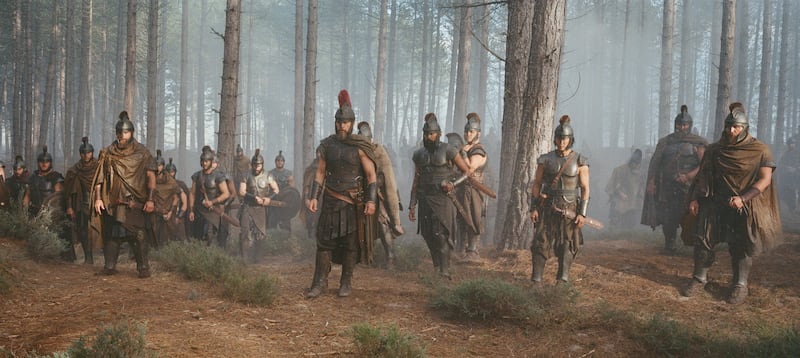
I was worried, given Nolan’s filmography, that he might be waving the word “accessible” around to trick the non-Homeric Greek Ph.D. havers into buying tickets, then giving them a movie more unintelligible than “Tenet,” a film with a plot not even its stars understood. So I was delighted to find that “The Odyssey” is, actually, pretty darn accessible, thanks to the modern language, convincing performances and stunning visuals.
Nolan is right. While the story is at once a story of monsters, combat, voyages, love and revenge, it is, at its heart, grounded and earthy, with themes that have felt relevant for 3,000 years. That is, I suppose, what makes a classic a classic.
And I’m glad this latest interpretation will keep “The Odyssey” alive and well in our collective culture consciousness. While I was grateful to have read the source material and seen other adaptations that helped me understand and anticipate the story beats, I think almost anyone, of the appropriate age, can comprehend and enjoy the movie regardless of prior familiarity. And I think that’s what Homer would have wanted. If he was, in fact, one person, but that’s a different article.