

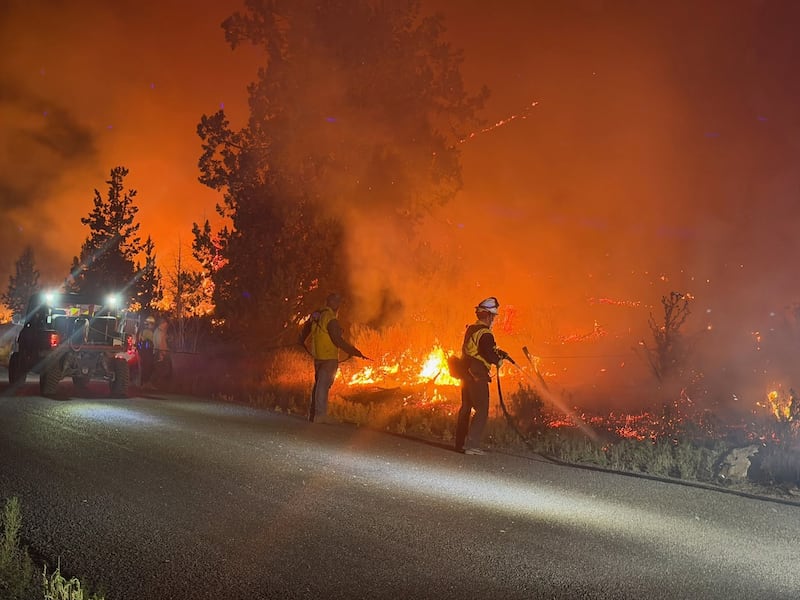

Firefighters in Oregon are stretched to the limit after more than 2,000 lightning strikes ignited 85 fires across the state last week.
Many starts were kept under 0.1 acres, but high temperatures, low humidity and strong winds led some of the sparks to become large wildfires, according to a release by Central Oregon Fire Info.
Even with crews working through the night, several of the major fires remain 0% contained as of Monday morning, and fire managers expect “challenging, wind-driven fire activity” to continue amid dire weather conditions, per a press release by the Oregon Department of Forestry.
The fires are now raging through more than 200,000 acres of Oregon land, per Oregon Public Broadcasting, and efforts are expected to continue well into this week.
Officials urge residents to prepare for evacuation
Due to the increased fire activity, the Oregon Department of Emergency Management has escalated to Level 3 Regional Response measures, urging residents to stay alert and prepare for evacuation. Around 11,000 people were already under evacuation warning as of Friday, per The New York Times, including 1,200 people who were urged to evacuate immediately.
The largest incidents are burning in Gilliam, Wasco, Wheeler, Jefferson, Crook and Umatilla counties, according to IQAir.
Fires are impacting the state’s air quality, with several affected areas now suffering from air quality labeled unhealthy or very unhealthy by the U.S. Air Quality Index.
“Rapid fire spread, reduced visibility from smoke, and strain on local response resources remain ongoing concerns,” the Department of Emergency Management said in a press release.
Oregon residents are feeling the heat — in more ways than one
Annual wildfire counts in Oregon have been on the rise since 2023. The state saw almost 2,800 fires last year that burned nearly 325,000 acres of land.
Oregon’s wildfire season typically lasts into the early fall, with July and September as the peak risk months, according to Frontline Wildfire Defense. Weather conditions play “a major role in shaping the season” as high temperatures and drought can fuel “bigger and more intense” fires.
Lightning is not the main cause of fires in Oregon, but lightning strikes account for a significant share of acres burned in Oregon, per Frontline Wildfire Defense. Many lightning-started fires occur in remote areas, making them harder to contain.
In addition to concerns about the land, growing fire exposure is raising insurance premiums in Oregon, making it harder for consumers to find affordable home or renters insurance.
As the price of materials and labor rises, too, it becomes more expensive to repair and rebuild damaged structures, leaving many affected communities in hot water, even after the flames are doused.