



Since President Donald Trump took office nearly two years ago, the energy sector has flipped the previous administration’s agenda on its head.
“We stopped the war on coal,” said Deputy Administrator David Fotouhi with the U.S. Environmental Protection Agency.
“It was a change in how EPA as a regulatory agency views domestic energy production, domestic coal production and baseload power,” he said at this year’s Coal Innovation Market Strategies Conference in Park City on Thursday. “These are all things we have to have to have a thriving economy — to have consistent affordable baseload power in this country.”
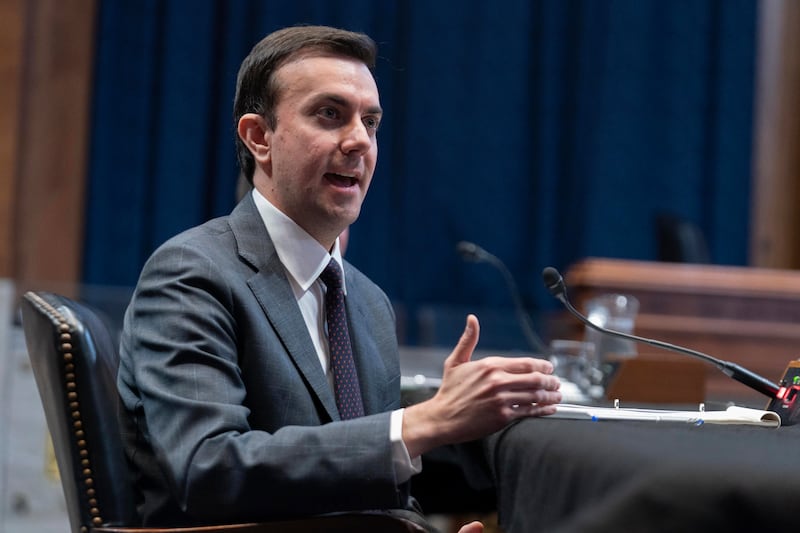
Fotouhi was joined by Deputy Secretary James P. Danly of the U.S. Department of Energy, who echoed his sentiments, saying the last four years before Trump took office were filled with “really, really bad policy.”
In 2024 — under the Clean Air Act, Clean Water Act, and Resource Conservation and Recovery Act — the Biden administration required coal plants to capture 90% of their greenhouse gasses by 2032, or shut down.
Specifically in Utah, PacifiCorp’s coal plants in Emery County were required to cut haze-causing emissions by up to 75%, which PacifiCorp estimated would cost ratepayers millions of dollars.
When seeing reporters and legislators scratch their heads as to why electricity prices continue to climb, “One wonders why nobody pauses to question: Could it maybe be because useful assets like coal generation, which are fundamental to keep the fossil fuels operating, which keep prices low (were not being emphasized)?” said Danly. “Well, obviously what you’re doing is throwing away assets that people have been investing in, rate-based by utilities. They’re expensive. This was terrible policy.”
Danly even mentioned the possibility of data centers being sent into space, risking massive amounts of money: “Do you know the reason why it’s being seriously contemplated? And this is not a joke; this isn’t satire. It’s because there’s no permitting requirements,” he said.
Rescinding unpopular regulations
Fotouhi explained the EPA continues to take a hard look at the regulations put in place by the previous administration — even two years later — “figuring out whether they are still fit for purpose, whether they achieve the results that the last administration said they would achieve, and whether they unduly and unnecessarily burden coal in this country.”
The agency is in the midst of finalizing another deregulatory action under Section 401 of the Clean Water Act — one that wouldn’t allow states to weaponize certifications to block the development of projects like pipelines and coal export terminals.
“That final rule is over at the White House, which is the final step in the process before it becomes law, so we’re very excited about that,” he said.
Fotouhi quickly added that deregulation “does not mean that we have shied away from our mission, which is to protect human health and the environment. We do that every day, and we do it proudly.”
He confidently stated that the nation could grow the economy, provide baseload power and support domestic production all while doing so safely, and without relying on foreign suppliers.
“I would love to see the United States over the next 10 years increase the total amount of coal export by an order of magnitude,” said Danly.
“Whether or not that’s actually feasible on such a timeline, I don’t know. But the demand is real because we’re not the only ones experiencing electric demand. The rest of the world is too,” he said.
Where Utah fits in the mix

In a separate interview with the Deseret News, Danly said the DOE is in full support of local projects that speed up production outcomes like Gov. Spencer Cox’s “Mission Critical” plan.
The plan — Utah’s strategy for becoming the country’s leading hub for critical minerals — cuts permitting timelines from 36 months down to 18.
“And to the extent to which a permitting regime with alacrity and speed is going to underpin that, we are all for it,” he said. “The shorter the process and the more solid those permits are, the better it is for economic development.”
Utah has been a leader in creating simpler processes, like in the Seven County Supreme Court case.
The case — centered on the construction of an 88-mile rail line in Utah’s Uinta Basin — led to the decision that agencies don’t need to analyze the environmental effects of activities they don’t have regulatory authority over.
“We’ve had a handful of Supreme Court cases, most notably Seven Counties,” Danly explained, “that reduced the scope of the required emissions review, downstream and upstream emissions to build as much infrastructure as possible to support the American economy and prosperity.”
Deregulatory efforts will have to continue if corporations are expected to keep up with rapidly increasing demands for power.