


This article was first published in the State of Faith newsletter. Sign up to receive the newsletter in your inbox each Monday night.
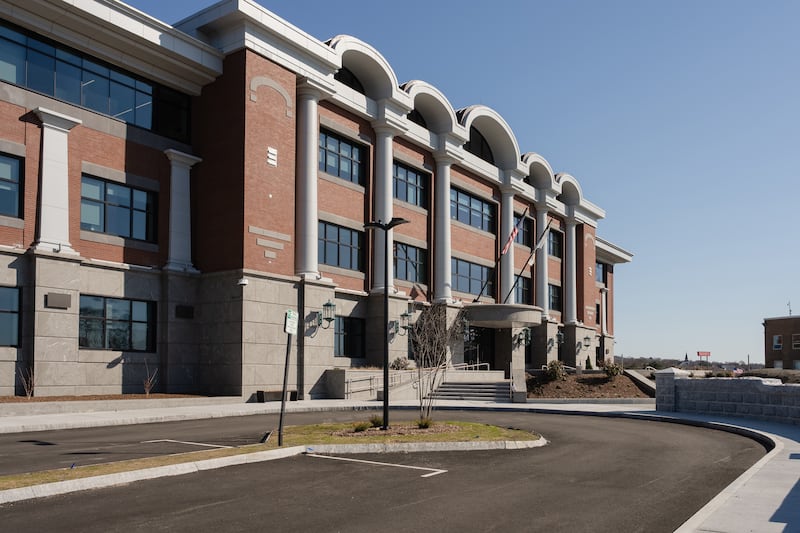
The statues of two saints, Saint Michael the Archangel and Saint Florian, are at the heart of a civic dispute that has sparked lawsuits and national attention on the city of Quincy, Massachusetts, just south of Boston.
The controversy began when the city’s residents learned that Quincy’s Catholic mayor had commissioned two 10-foot bronze statues of the Catholic saints to adorn the facade of the city’s new public safety headquarters, which houses both police and fire departments.
Although the figures of Michael and Florian are most familiar to Catholics, the disagreement hinges on the meaning of the two statues in the particular context and culture of first responders.
According to Quincy’s officials, the goal of the statues isn’t to promote religion, but to stand as iconic symbols of courage in public service: Saint Michael the Archangel represents the warrior who defeats evil, and Florian is the patron saint of firefighters, celebrated for his courage and service. The statues are public art, not religious objects, the city argues.
But not all the locals agree. A group of Quincy residents of different faiths, represented by the ACLU, Freedom From Religion Foundation and others, filed a lawsuit last year to stop the installation of the statues. They argued that the statues violated the Massachusetts Declaration of Rights and elevated one faith over others in a public place, used by residents of different faiths and no faiths, who come to get fire permits, file police reports or who simply pass the building.
“Affixing religious icons of one particular faith to a government facility — the city’s public safety building, no less — sends an alarming message that those who do not subscribe to the city’s preferred religious beliefs are second-class residents who should not feel safe, welcomed or equally respected by their government,” the residents’ complaint said.
The statues were not discussed in public meetings, according to the complaint.
The plaintiffs argue that the statues fail all three prongs of the traditional Lemon Test, which for decades was the Supreme Court’s primary test for deciding whether a government action violated the establishment clause of the First Amendment. In 2022, the Supreme Court effectively abandoned the Lemon Test and said that establishment clause cases should instead be analyzed by looking to “historical practices and understandings.”
The proposed statues aren’t cheap, either — they’d cost the city roughly $850,000.
A Norfolk Superior Court ruling blocked the process of installing the statues while the case continued, and the Massachusetts Supreme Judicial Court heard the case in May.
I spoke with Joe Davis, attorney at Becket, a law firm that represents Quincy officials, to better understand the reasoning behind installing the statues on their public safety building.
Deseret News: What is the purpose, according to Quincy’s officials, of installing the statues of Saint Michael and Florian on Quincy’s public safety headquarters?
Joe Davis: The purpose is pretty simple. It’s to honor and inspire Quincy’s first responders, who put their lives on the line for their fellow citizens every day. These figures, Florian and Michael, they’re effectively symbols of these professions. They’ve become identified with the work of firefighters and police officers really around the world, but particularly in Quincy. These figures will help them do the lifesaving work that they’re called to do on behalf of all Quincy citizens.
DN: Is there anyone among police officers and firefighters who is opposing these statues?
JD: It’s remarkable how unified they are. And not only Quincy’s firefighters and police officers, but really firefighters and police officers across the country have stood up in defense of what Quincy is planning to do here. At the Massachusetts Supreme Judicial Court, there were amicus briefs filled by the largest firefighters and police officer organizations in the country — the National Fraternal Order of Police, the National Association of Police Organizations and the International Association of Fire Fighters. These organizations represent almost a million firefighters and police officers across the country.
DN: The disagreement here is the interpretation of what the statues mean for different groups. How do you distinguish between a statue that’s a religious symbol and something that’s a secular symbol of a community’s identity?
JD: The important thing is that we’re not saying that these figures have no religious meaning at all. I don’t think anybody thinks that. No doubt that to some religious traditions, these figures are revered as saints or as important religious figures, but importantly, not only in the Catholic tradition.
Michael is an important figure for the Islamic and Jewish traditions (those faith groups submitted amicus briefs). Florian is important across multiple Christian traditions as well as being a figure of history. All you have to recognize is that they have a broader significance and there is much in our public life that has some sort of intertwined religious, secular meaning or historical meaning.
Take the figure of Moses — he’s no doubt an important religious figure for Jewish, Christian and Muslim traditions, but he’s come to take on this broader significance as just a symbol of law and the legal profession. So Florian and Michael have taken on this broader significance of a profession — firefighting and police — in the same way that Moses has come to symbolize the law.
DN: But people of different faiths who come into the building interpret them not as symbols of those professions, but as religious symbols. What would you say to that?
JD: People are fully free to have different views about whether they appreciate this public art or not. And the city respects that. But the legal question really doesn’t and really can’t depend on how people subjectively view public art. I think lots of people have lots of objections to lots of the public art that they see around any given town. So the question does have to come back to this more objective legal question.
We have a political process for dealing with objections to public art. When the mayor explains his reasoning for putting these statues up, and the firefighters and police officers say: “Yes, these are the symbols of our profession and not some sort of effort to elevate one religion over others,” I think those explanations ought to bear some weight.
DN: So the significance of these statues depends on the context. If they were put in the church, would they acquire religious significance?
JD: Yeah, absolutely. I mean, it’s their being at a public safety building that shows that it’s that aspect of their meaning that’s being highlighted here. Much the same way that when a statue of Moses is in a courthouse, we understand that he’s being depicted there as a lawgiver and not as a religious figure. The same thing is going on here.
DN: How are the statues defending religious liberty if your argument is that they’re secular in nature?
JD: The argument of the other side is that because these figures have religious meaning for some people, they are inappropriate to be displayed on a public building. And that’s an argument that’s really bad for religious liberty. Because religion is a natural part of human culture, we should expect to see images that have religious meaning to some and secular meaning to some in public places. It would be very bad for religious liberty if all those things had to be scrubbed.
If place names that were named after saints or places in the Bible had to be removed because they have religious significance for some or if we had to take down all the statues of Moses at every courthouse — this is a really bad result for religious liberty. That would drive religion out of the public square in a way that’s very bad for religious liberty.
Massachusetts in particular, because of its rich history, is absolutely covered in images that have some religious significance, some historical significance, some secular significance. And it’s really not a task for the courts to disentangle those and to reject some of them as too religious.
For example, there is a plaque in Boston Common, right across from the courthouse, memorializing John Paul II’s visit there. There is a large equestrian statue of Saint Joan of Arc in Gloucester, another Catholic saint, just like Florian and Michael. The city of Boston’s motto, which is on its seal, is a Latin motto that references God and is drawn from the Hebrew Bible (“Sicut patribus, sit Deus nobis” or “God be with us as he was with our fathers”).
These things are everywhere and we should expect them to be everywhere alongside other aspects of history and culture.
DN: What is the national significance of this case?
JD: The ACLU is saying that the Massachusetts courts should bring back the Lemon Test as a matter of state law. And that’s a really important question, because if that argument succeeds here … it could effectively revive the Lemon Test at the state level. I think it is going to set an important precedent. I’m optimistic and I fully expect that the court will reject the Lemon Test here.
Faith, and other interesting things, in the news
- Students in Texas public schools will be required to read Bible passages as part of their curriculum, according to last week’s State Board of Education vote. — CNN
- Trump’s Religious Liberty Commission released a 224-page draft report on Friday, which recommends allowing churches to endorse political candidates, suggests creating a Presidential Medal of Religious Liberty and First Freedom Hero Awards, and proposes bridge-building between church and state. — AP
- The Supreme Court ruled that a former Louisiana inmate and devout Rastafarian can’t sue prison officials over shaved dreadlocks. — The Washington Post.
- Read more about the case on the SCOTUSblog.
- Previously used mostly by conservatives, the language of morality and virtue is increasingly being used by liberals. “As illiberalism becomes ever more ruthless and relentless, liberals have been pushed to articulate what they believe.” — The New York Times
- On teaching kids patriotism. — The Deseret News
- “Still revolutionary after all these years: A stroll through history on the Freedom Trail as America turns 250″ — The Deseret News
- On the recent episode of his podcast, Ross Douthat interviews author Louise Perry about the gifts and perils of the sexual revolution, about men and women getting along, what “heteropessimism” is and why we need a “feminist way of having children.”
End note
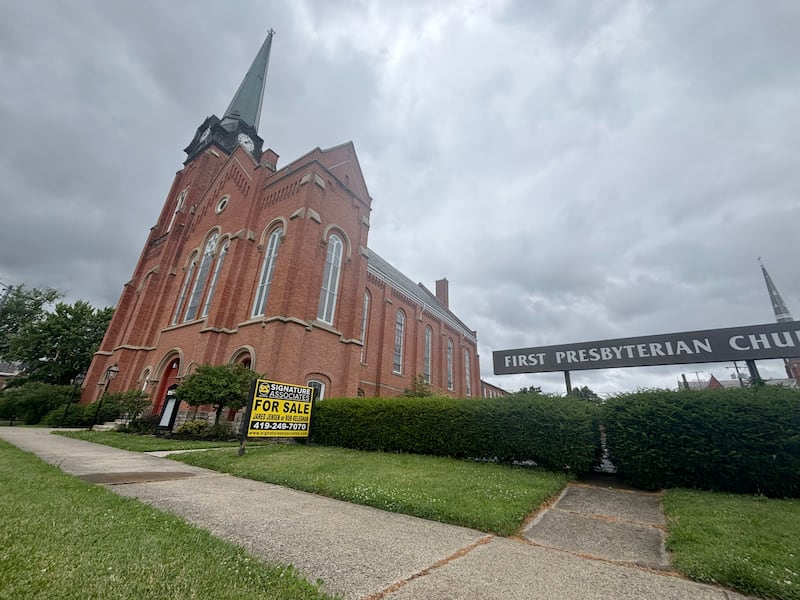
One of the things I noticed while driving across the country last week was old churches with for sale signs next to them. They’re often churches that housed mainline Protestant congregations and their buildings were not in great shape. There was something haunting about these buildings.
One of these closed churches was a Presbyterian church in Fremont, Ohio. I was struck by just how many churches were in that small town. By looking at the city’s maps, I counted at least 17 churches in the area. The locals told me that most of the congregations are dwindling and shutting down, with one exception — the nondenominational congregation.