


This article was first published in the State of Faith newsletter. Sign up to receive the newsletter in your inbox each Monday night.
Hope everyone had a relaxing and inspiring Fourth of July weekend. I joined the local town celebration in Midway, Utah, which featured patriotic stories from a Vietnam War pilot, the town’s community handbell choir, called Swiss Bells in honor of the town’s Swiss settlers, and a unexpectedly delicious pancake breakfast.
This weekend, I’ve also found myself surrounded by cheers and groans that have accompanied the watching of the 2026 FIFA World Cup.
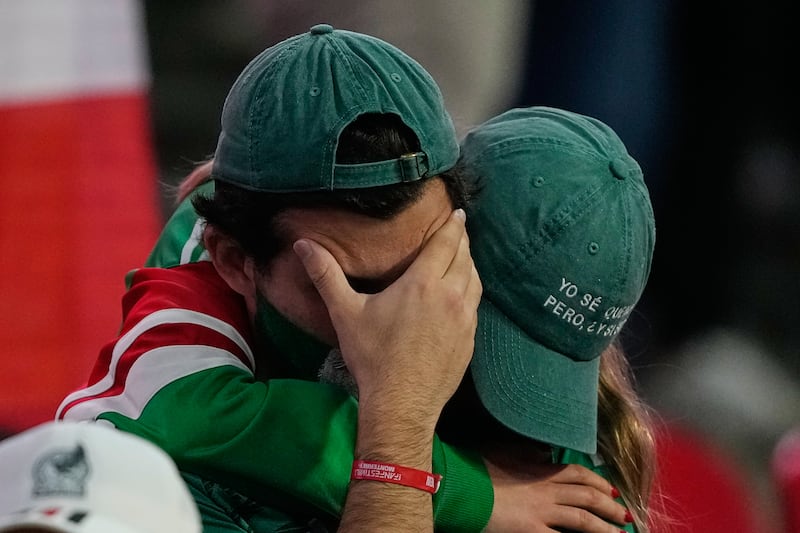
I’ve watched my family and friends erupt in a range of emotions — depending on their allegiances — as England defeated Mexico and Norway stunned Brazil.
I was struck by how a soccer match could unite people in a shared emotional experience, whether it was anxiety or hope. It all resembled, in some ways, an act of worship.
Scholars have been studying and writing about the relationship between sports and religion for decades, and much of that scholarship was done in the 1970s.
Many have pointed out the elements present in both sports and religious worship: specialized language that outsiders may not be familiar with, fallible heroes who redeem themselves, rituals and celebrations, loyalty that stretches for generations, and record-keeping.
This year’s World Cup has had plenty of religious expression from the players themselves.
After the United States opened the tournament with a 4–1 victory over Paraguay, defender Mark McKenzie gathered teammates at midfield for a prayer that has since become a postgame ritual.
USMNT Captain Christian Pulisic is known for organizing the team’s “Bible Time,” a joint Bible study session, and after Germany’s 7–1 victory over World Cup debutant Curaçao, Germany’s two players who are Christian — Felix Nmecha and Jonathan Tah — crossed the field to pray with members of the Curaçao team.
“In the game we are opponents, but after the match we are all Christians and brothers,” Nmecha said. “We simply said a little prayer together because we are all very grateful.”
After scoring his first goal, Spain’s Lamine Yamal knelt down in an act of sujood, an act of gratitude in the Islamic tradition.
And although Mexico lost on Sunday, the nation’s fans put a lot of hope and prayer in a baby Jesus statue dressed in a national team Jersey located at the altar of Mexico City’s Metropolitan Cathedral.
The rhythms of the game itself echo the commitments and structure of a religion.
Rebecca Alpert, a professor emerita who taught religion at Temple University, remarked that great athletes are commemorated in bronze statues and in halls of fame, and those who “sin” through rule-breaking or misconduct become modern examples of moral failure.
Fans travel to sports competitions similar to pilgrimages to shrines and sacred sites. Similarly to following a liturgical calendar, sports fans prepare for certain times of the year marked by sporting events — Wimbledon, the World Series, the Olympics, the Super Bowl.
And of course, each even has its rituals and superstitions: end-zone dances and chants, lucky socks and pregame routines.
In his 1976 book “The Joy of Sports,” Catholic theologian Michael Novak identified what he called “seven seals” of the sports experience: “sacred space, sacred time, rooting, a bond of brothers (a eucharist-like community), agon (inspired struggle), competing, and self-discovery,” per Alpert’s description.
These elements unite participants and spectators in catching the “glimpses of eternity.”
Scholars also have called a shared experience during a sports game a “collective effervescence.“
A stadium is where “a sacred community” is most easily found, wrote philosophers Sean Kelly and Hubert Dreyfus in their 2011 book “All Things Shining.”
“Whether it is in the church or in the baseball stadium, the awesomeness of the moment is reinforced when it is felt and shared by others,” they said. Speaking of baseball, they go on: “When it is also shared that it is shared — when you all recognize together that you are sharing in the celebration of this great thing — then the awesomeness of the moment itself bursts forth and shines.”
As someone whose sports interest has always been less about the game and more about the spectacle around it, including the occasional glimpse into the athlete’s personal lives, I have found myself swept up by the atmosphere of a match, intensely connected to strangers cheering for the same team.
Similarly to religious services, sporting events — especially those experienced in person — remain among the few places that ask us for sustained attention and embodied presence. They also activate a range of human emotions that are often numbed or flattened by a life on the screens.
Fresh off the press
- I wrote about my family’s journey from Massachusetts to Utah and what I learned about our country and what it means to be American.
- Why were six bishops from an ultra-conservative Catholic group excommunicated by the Vatican?
- President Dallin H. Oaks, the leader of The Church of Jesus Christ of Latter-day Saints, reflected on religious freedom and the foundation of the United States. “The preservation of religious freedom in our nation depends on the value we attach to the teachings of right and wrong in our churches, synagogues and mosques. It is faith in God that translates these religious teachings into the moral behavior that benefits the nation,” he writes.
- Trump’s religious liberty report makes the case for building bridges between church and state. Becket’s Eric Baxter talked to the Deseret News about the boundaries between religion and government.
Faith at the 250th celebrations
Faith was front and center at the Independence Day celebrations in Washington, D.C., over the weekend (you can catch up on how the 250th celebration in Washington, D.C., went down this weekend.)
President Trump touched on faith in his Fourth of July address, and connected it to democracy. “We are all made in the image of one almighty God,” he told the audience. “And the communists will never say that.”
Trump took a stance against communism and celebrated the “golden age” of America.
“We have thrived and flourished because our founders were great,” Trump said. “Our cause was just. Our people are brave. Our culture is exceptional. And our destiny is written by God.”
The celebration featured remarks from Dr. Carlos Campo, president and CEO of the Museum of the Bible in D.C. “We feel like family and values and inspiration is what we’re all about, particularly inspiration. So for us, we’re trying to make this connection between the Bible and our nation’s founding,” he told Christian Broadcasting Network News. “And what better place to do it than right here, on the mall.”
The stage performances featured Christian artists and songs including “Ave Maria” and “God Bless America.”
In May, the Trump administration held a prayer festival on the mall, “Rededicate 250: National Jubilee of Prayer, Praise & Thanksgiving,” in an effort to “rededicate America as one nation under God.”
Although Trump has underscored the importance of defending religious liberty, his emphasis on Christianity so closely woven with politics has sparked criticism from multi-faith leaders and accusations that steering the nation toward a theocratic vision sidelines expressions from other faiths that make up the nation.
Faith in the news
- What 250 means, according to Pope Leo. — RNS
- Mexico’s baby Jesus is wearing a team jersey in one of Mexico City’s cathedrals. — The New York Times
- The conservative group of priests from the breakaway Society of St. Pius X, that was excommunicated earlier this week, said they believe the Catholic Church will welcome them back. — Reuters
End note
I loved getting this inside peek from Deseret News intern Mallory Mailloux into the complexity and diversity of marriage ceremonies. For a job in college, she got to perform hundreds of marriage ceremonies, and many of them online. Here’s my favorite anecdote:
“During one Zoom wedding, the groom was in California with his mom and the bride was in the Philippines with her mother. They barely spoke the same language, and the groom explained to me that they’d met online and would meet for the first time after the wedding, when she came to America. I smiled and nodded, then performed their ceremony. It was my job to marry couples, not judge their unique situations.”
It’s a good reminder that sometimes relationships — and love — are at the mercy of forces outside our control: immigration rules, bureaucratic hurdles, reliability of technology. But even then, each relationship needs two people who are willing to put effort into making it last.