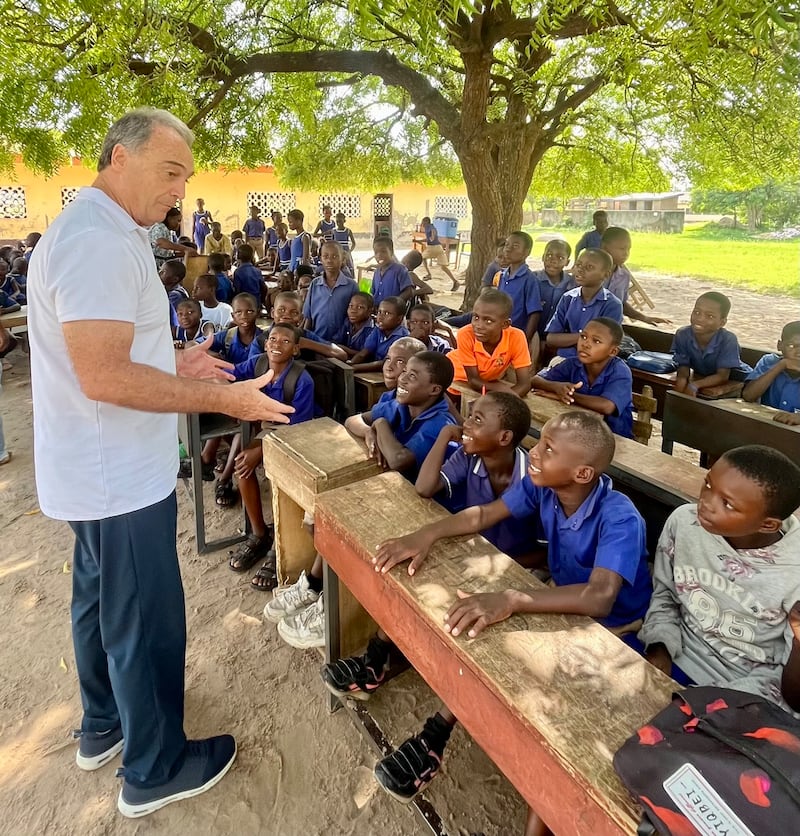

Bill Bollard — a Latter-day Saint serving in an organization bringing human rights education to children worldwide — recalls once sitting in a classroom in Guatemala, shedding tears with his wife, April, for what they were witnessing.
Children in the classroom had just been taught a lesson about nondiscrimination, part of the human rights curriculum offered by the organization, and the children were modeling what they learned.
The lesson had centered on the nondiscrimination of disabled people, and Bollard and his wife saw how the children began actively assisting their classmates with disabilities.
“My wife and I looked at each other and we had tears in our eyes,” Bollard recently told the Deseret News. “It’s one thing to read a lesson or look at a manual. It’s another thing to see the lessons actually applied in real life.”
Bollard and his wife have seen this scenario replicated across classrooms around the world through their service directing the Geneva Office for Human Rights Education, a nonprofit organization sponsored by The Church of Jesus Christ of Latter-day Saints and recognized by the United Nations.
“Our goal is that every child should be taught human rights,” Bollard said. “That is no small task.”
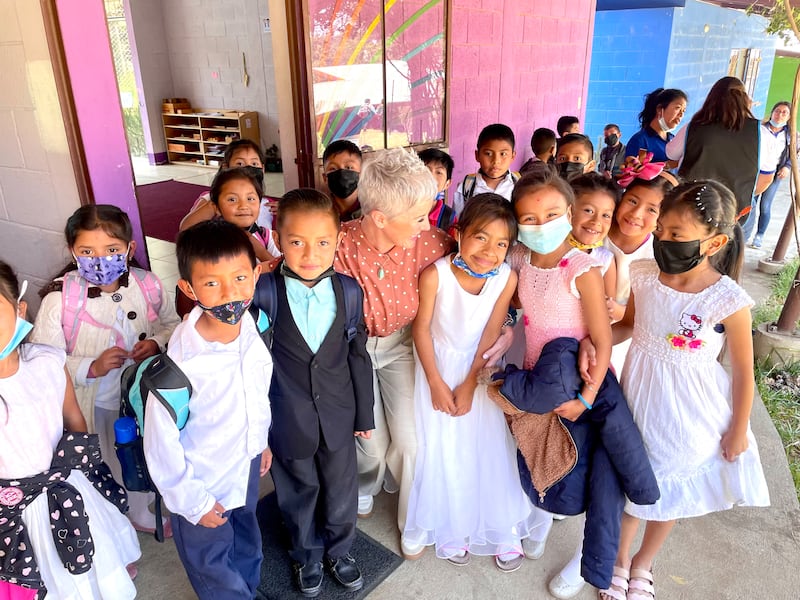
The organization — based in Geneva, Switzerland — was formed nine years ago by the Church of Jesus Christ and has impacted an estimated 2 million children.
It now operates in 23 countries across Latin America, the Pacific, Africa and Asia, and is “growing quickly,” Bollard said.
How the organization operates
The Geneva Office for Human Rights Education is a volunteer-driven, nonprofit organization aiming to make human rights part of every child’s education.
It is sponsored by the Church of Jesus Christ and staffed primarily by Latter-day Saint senior missionary couples, but the 20-lesson curriculum the organization offers is nonpartisan and nonsectarian.
“From its inception, (the organization) was always designed to be an education initiative, not a religious initiative,” Bollard explained.
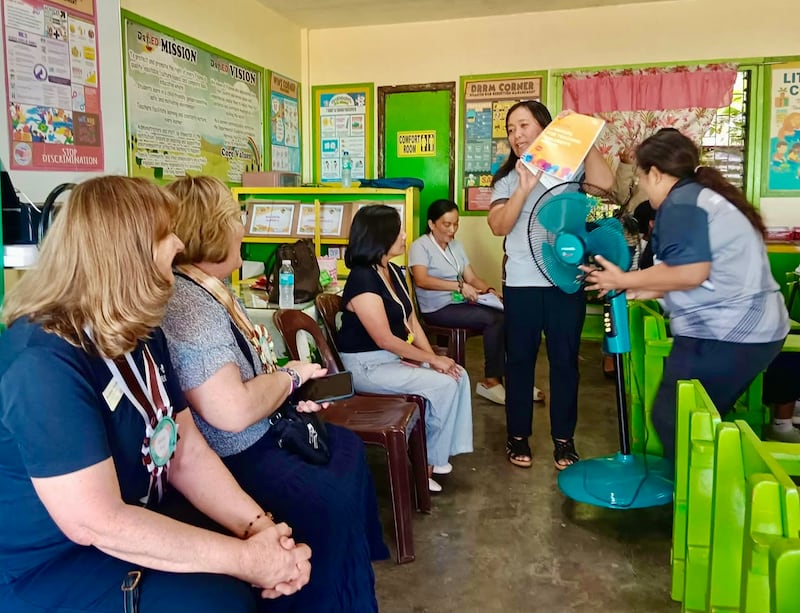
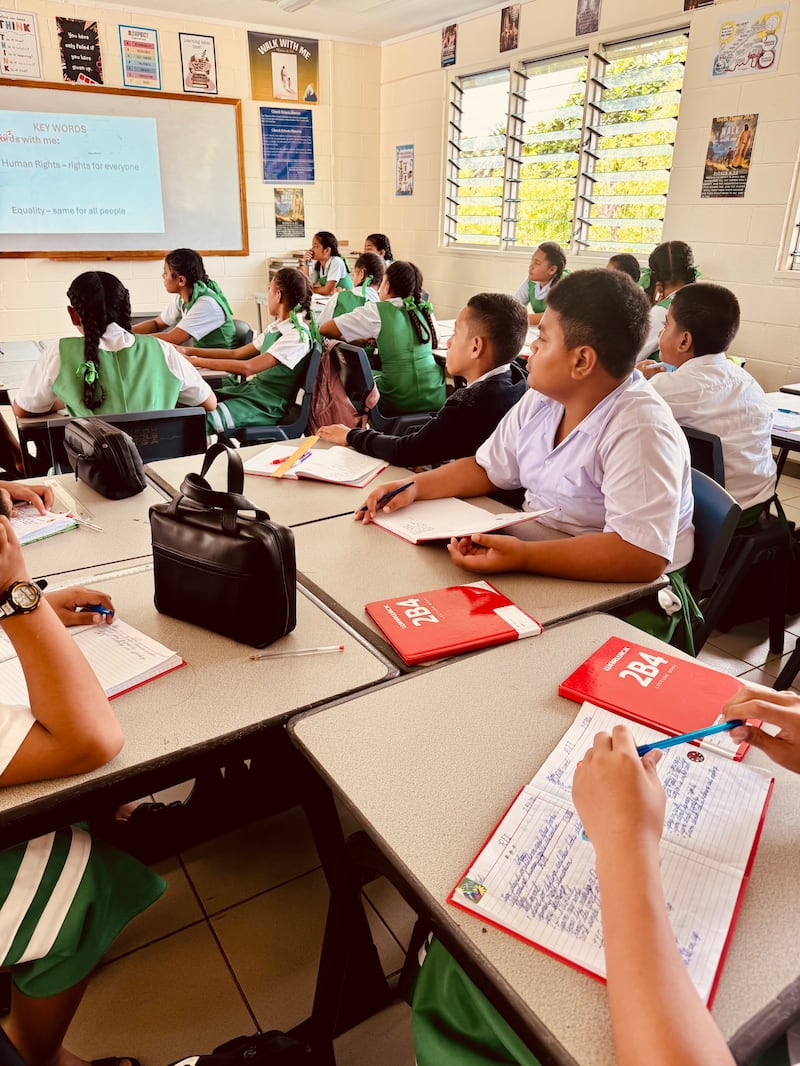
Each of the 20 lessons in the curriculum — called “Colega” or “Colleague” in English — are highly interactive and grounded in the Universal Declaration of Human Rights, which was adopted by the United Nations General Assembly in 1948.
The lessons focus on topics such as religious freedom and the right to safety and education. They incorporate songs, games, stories and discussions.
The organization’s curriculum teaches children about agency and human dignity, Bollard said. It teaches them “to understand that their rights don’t come from government. They come by virtue of the fact that you’re a human being.”
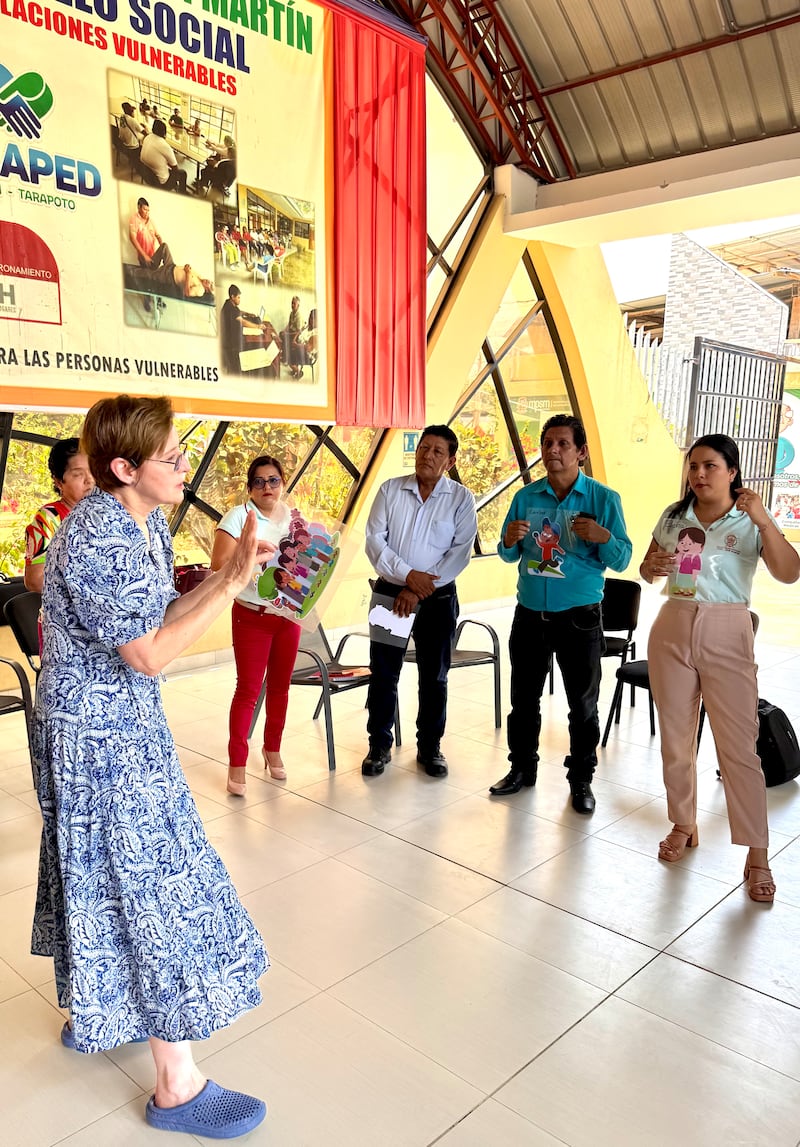
Latter-day Saint senior missionary couples and other volunteers serving under the organization meet with education leaders and government officials across the world.
They present the organization’s aim and curriculum, and once a contract is negotiated, they train local teachers to train their colleagues and bring the curriculum to their schools.
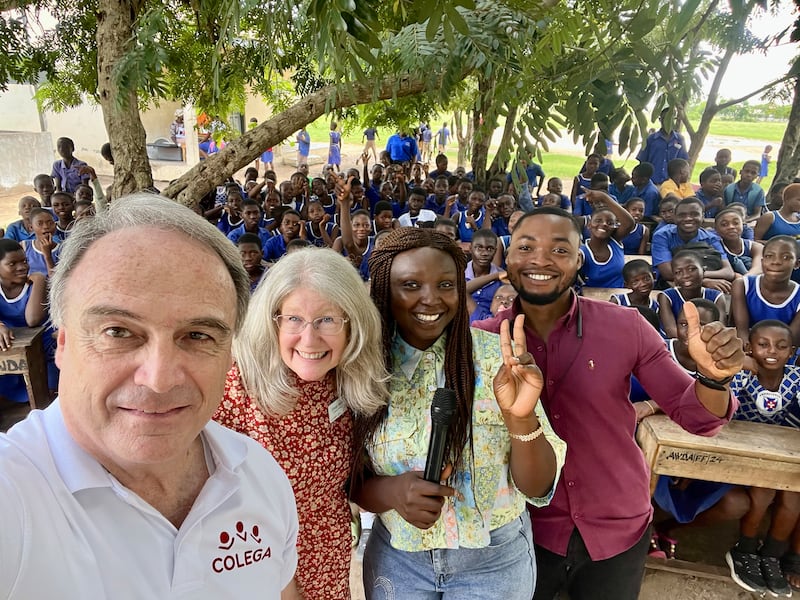
“We don’t teach the children these lessons,” Bollard said. “We never want to be the people delivering the message to the children.” It is more “sustainable” if local teachers learn to use the material themselves.
The organization’s curriculum is currently available in Spanish, English, French and Portuguese, with age-appropriate material for primary and secondary students. All training and materials are offered to schools and governments free of charge.
“We want this to be in front of every child,” Bollard said.
As children learn their fundamental rights, the curriculum also teaches them their responsibilities as members of society.
“We realize that it is no good for a child to learn all about his or her rights, stand on the desk and scream, ‘I’ve got rights,’ if they don’t also understand that they need to respect the rights of everybody,” Bollard said.
The organization’s growing impact
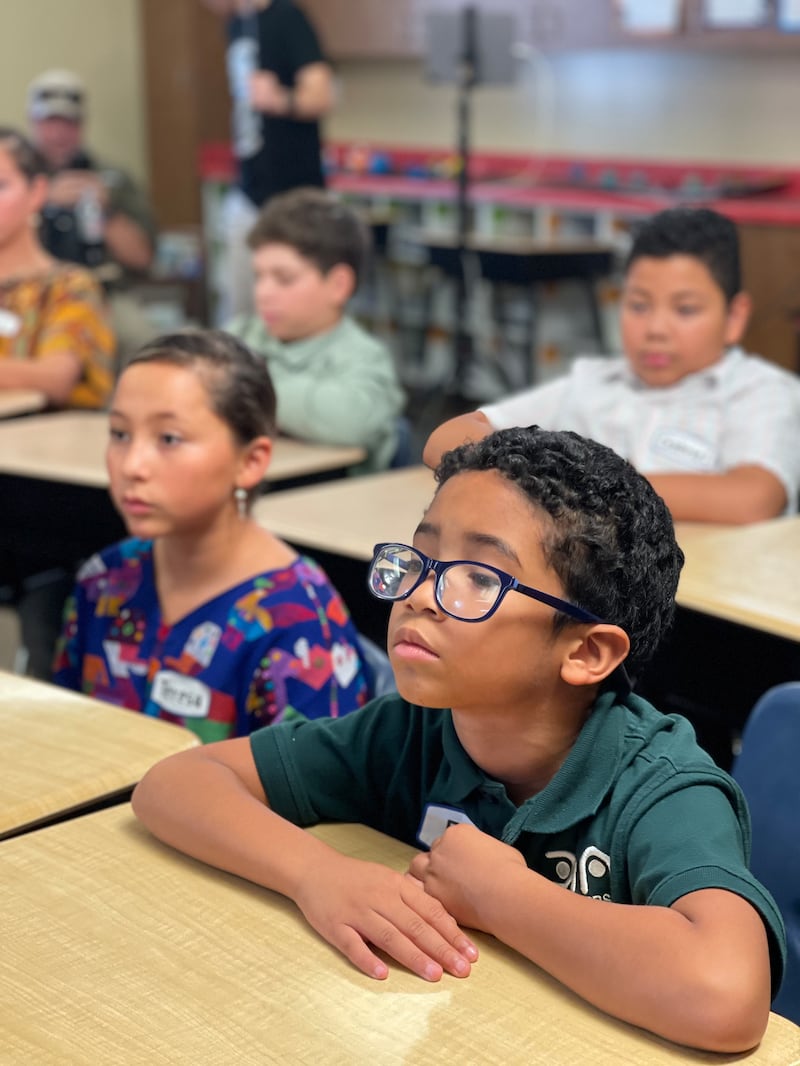
Since the organization was formed nine years ago, it has trained more than 37,000 teachers and taught lessons to an estimated 2 million students.
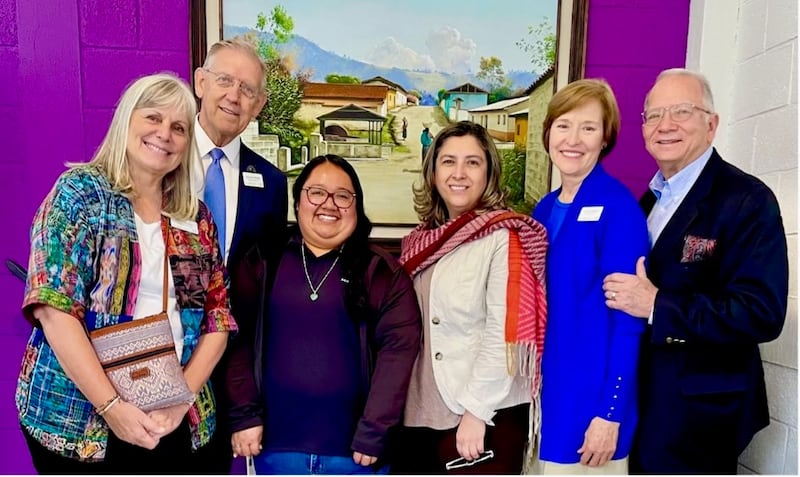
Bollard and his wife, who were first recruited to lead the organization’s Latin America area in 2023, were able to see the organization expand across 12 Latin American countries.
Now serving as the organization’s global executive directors, they have continued to see the organization’s growing reach and impact.
“Teachers are reporting to us that the behavior in their classrooms, among their students, is improving significantly,” Bollard said. “We have teachers report to us that playground bullying has decreased significantly.
“And so we think if we can improve the short term of the lives of these children, while planting seeds for the long term, this is not only the work of good, it’s the work of the Lord.”
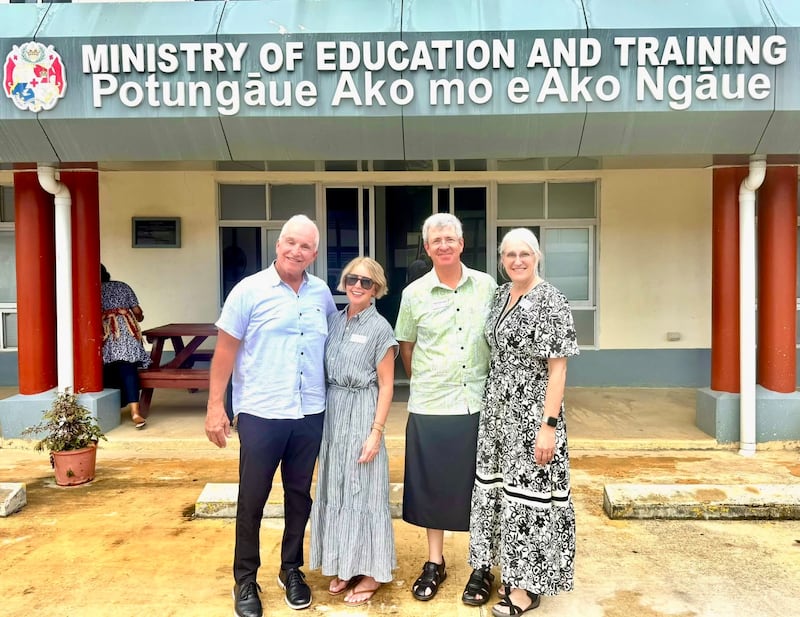
To continue its growth, Bollard said the organization is developing a more robust data collection and evaluation system. It is also developing an app for its training material and exploring how artificial intelligence could help translate the curriculum into additional languages.
“We enjoyed really significant growth in Latin America,” Bollard said, and “now we’re trying to apply those same principles to the world.”
How to get involved
The organization is currently at a growth point where “if we’re truly going to go to the next level, we need an army of volunteers,” Bollard said. “We need the world to know about this.”
Latter-day Saints considering the opportunity to serve in a full-time senior missionary assignment can visit the church’s senior missionary page and search “human rights education” to find available opportunities and then apply to receive a missionary assignment within the organization.
Other interested individuals, including those outside the Latter-day Saint faith, can find volunteer information at go-hre.org. A Facebook page featuring experiences from current senior missionaries and volunteers is available here.
“If you have in your heart a desire to improve the lives of children and their current circumstances and teach them about their God-given rights, this is the program to pursue,” Bollard said.