

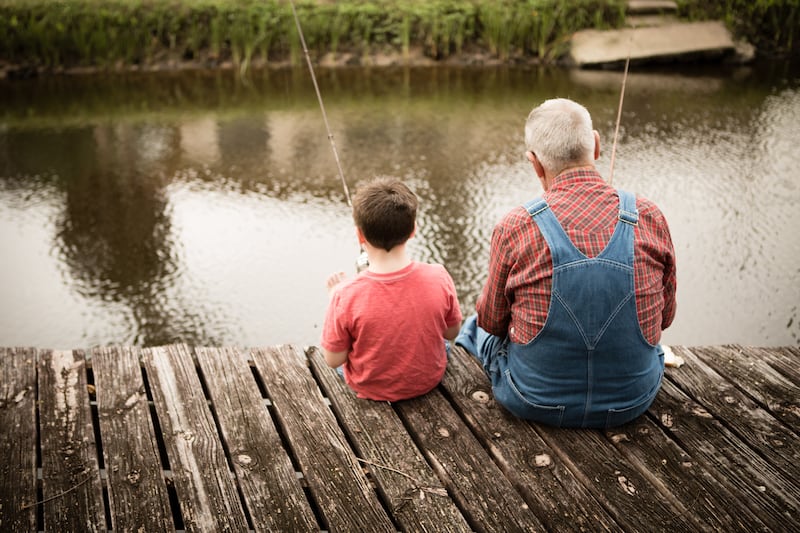

“If I would have known grandkids would be this much fun, I would have skipped the kids,” the old saying humorously goes.
There is something unique about the relationship between grandparents and grandchildren. Let us count the ways:
- Grandparents’ stories often provide a blueprint for resilience, showing grandchildren that it is possible to survive and even thrive despite setbacks or disappointments.
- Grandparents frequently model for their posterity how to find joy in small, everyday moments.
- They also encourage grandchildren to slow down and appreciate the present, a concept closely aligned with modern mindfulness practices.
And we’re just getting started! The value of this intergenerational exchange — even as children are getting older — is backed by extensive social research. Research has shown that a close relationship between grandparents and adult grandchildren reduces depressive symptoms for both generations.
A decades-long study at Harvard likewise shows the quality of our relationships is the strongest predictor of health and happiness as we age. Connecting with teenagers, in particular, can give purpose to older people and perspective to younger adults and teens.
Listening in both directions
There is perhaps nothing more motivational than when someone actually listens to what we have to say. However, when a grandparent then shares a life lesson, it may not always be welcomed with open arms. It can come across as an unwanted lecture rather than helpful advice.
What seems like sharing a “survivor’s tip” by someone from the older generation may unfortunately be received as more of an out-of-date, retro rant to a younger generation member.
How can hard-won sights gained by years of experience from grandparents get shared so that they are both listened to and acted upon by grandchildren?
This may take some trial and honest assessment. While each grandchild is different, openness and vulnerability can make a significant difference, Carson De Fries, University of Utah assistant professor in social work, told me.
9 tips for teenage connection
While there are no “silver bullets” when it comes to giving advice and sharing life experiences, a few things can help:
- Ask for permission first. Unsolicited advice is often viewed as intrusive. It’s best to wait until the grandchild raises a specific problem or asks for help. Giving advice is less about telling and more about influencing a grandchild. My son likes to tell me that my goal should be to “drain the swamp” and not merely “make waves” when trying to offer my perspective. “You may have some good advice, Dad, but if no one is listening, it will still fall on deaf ears.”
- Listen actively. Letting your grandchild open up about their emotions and describe a problem creates a “conversational environment” better suited for problem-solving. Try paraphrasing their concerns back to them to ensure they feel heard. After teaching an online workshop to parents seeking a mutually safe way to navigate important conversations with teens, my daughter emphasizes that trust can be broken even in loving and caring relationships. Grandparents don’t have to just be “seen and not heard,” she says, but they must listen deeply if they want to be included in their teenage grandchildren’s lives and experiences.
- Ask for direction. Clarify what your grandchild might find helpful when talking together. Asking for this type of direction also increases the likelihood that what you have to say later will be accepted.
- Check assumptions. This is critical before giving advice, De Fries emphasizes. To avoid getting dismissed or marginalized, grandparents can ask themselves: “Do I really think my grandchildren are lazy or entitled because they spend so much time on video games/phones/social media or don’t have jobs like I did when growing up?” Try separating behavior (time on screens) from heavier assumptions (laziness or entitlement). It will make a difference — your grandchildren will feel different with you, even when talking about these challenging subjects.
- Share personal experiences rather than instructions. Framing advice as “This worked for me” is less preachy than “You should do this.” Relatable stories help advice feel personal and less like a lecture. Further, asking, “What do you think about that?” enables you to see whether you were on target or need to pull back and clarify further. My grandchildren especially enjoy hearing stories about when I did something wrong or had a bad experience and recovered from it. We all have some kind of a redemption story to tell. They show our humanity, our imperfections and our power to overcome our failings.
- Offer options instead of a single solution. Providing multiple suggestions or ideas preserves the other person’s autonomy. This collaborative approach lets your grandchildren be the architect of their own solution rather than a passive recipient of yours.
- Avoid “should-ing” on them. My wife likes to say that we are the least effective when we “should” on ourselves or others. A “should” is inherently judgmental, critical, condemnatory. In a moment when it feels important to share some encouragement, try instead, “Here’s what happened to me when I …” or “What else have you considered?” or “What longer-term impact might that have on you and others?” whenever possible.
- Give them an out. Explicitly state that they are free to disregard any advice that doesn’t fit their situation. Using language like “Everyone’s experience is different” reduces pressure, creates space and reinforces that you respect their judgment.
- Relate memorable catchphrases. There is great power in proverbs and catchphrases. They exist because they are memorable and remind us of truisms. Timing is everything (a truism itself) when sharing them. Sometimes the best advice is not “in the moment” but later on, when it can be fully appreciated. No one tells a cook in the middle of preparing a meal how to do it. My wife has dozens of catchphrases, and the grandchildren love hearing her repeat them. Some are old fashioned: “A stitch in time saves nine,” “A rising tide raises all ships,” and “A watched pot never boils over.” Others are more unusual: “He has more brass than a government mule,” “A flour mill can’t use water that is downstream,” and “It doesn’t matter how much water is in the ocean when your house is on fire.” When her grandchildren repeat these sayings on their own, she knows they have taken hold. Planting seeds, she says, eventually produces fruit.
Keep learning and say sorry
Despite our best efforts, sometimes we may say or do the wrong thing. When that happens, our advice can be not merely ignored but resented. When that happens, look for opportunities to acknowledge things didn’t go as expected and seek your grandchildren’s advice on how to improve.
“It is about trying to bring those things out into the open,” relationship counselor Dee Holmes told the BBC. “Saying ‘I’ve been thinking about that conversation we had, and I wonder if I was a bit too negative, or I was a bit too forceful in my opinion? ... and allowing them to then give you a response and let you know if they’re upset and why.”
It’s important not to give an explanation in reply but to acknowledge your grandchild’s perspective and accept their point of view. As grandparents, we must be open to advice ourselves.
‘The strong place that could not be taken’
More than what grandparents say or do, they are also symbols of the extended family. They have a role beyond their daily comings and goings. John Steinbeck destined this role well in describing the matriarch Ma Joad in “The Grapes of Wrath”:
“(She was) the citadel of the family, the strong place that could not be taken. ... And since, when a joyful thing happened, they looked to see whether joy was on her, it was her habit to build up laughter out of inadequate materials… She seemed to know that if she swayed the family shook, and if she ever deeply wavered or despaired the family would fall.”
You can be a citadel too — a “strong place that could not be taken.”
But make sure that strength doesn’t stay with you only — that it actually gets shared and transmitted to the next generation.
That means getting better at talking effectively. I’ll be rooting for you!