

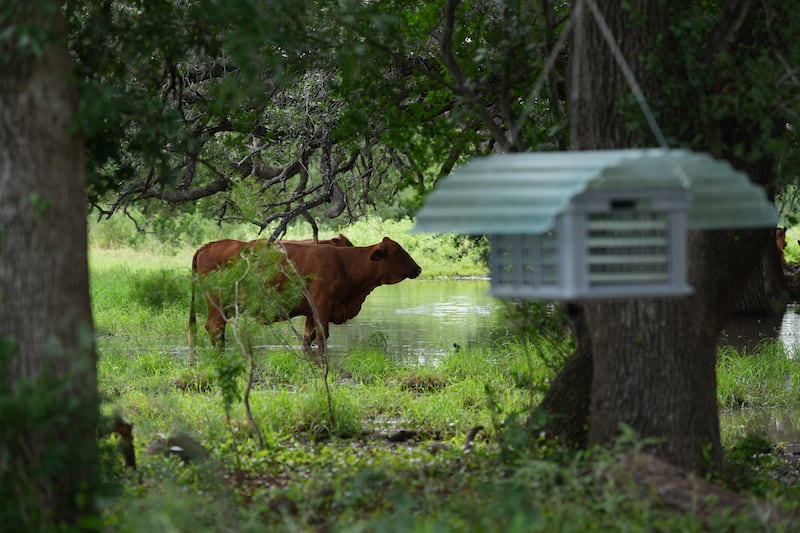

- Screwworm cases confirmed in Texas and New Mexico are affecting various farm animals.
- Emergency treatment was authorized for dogs and cats infested with New World screwworm.
- Containment methods include releasing sterile flies to inhibit reproduction.
Flesh-eating New World screwworm maggots have been found in several species of animals. This week, the U.S. Food and Drug Administration said that it would allow use of a flea treatment on an emergency basis for dogs, puppies, cats and kittens if they become infested.
The animals must weigh at least two pounds and be no younger than four weeks old.
The U.S. Department of Agriculture said that seven cases of New World screwworm have been confirmed in the past week, including six in Texas and one in New Mexico. So far, the infested mammals include cows, a goat and a dog.
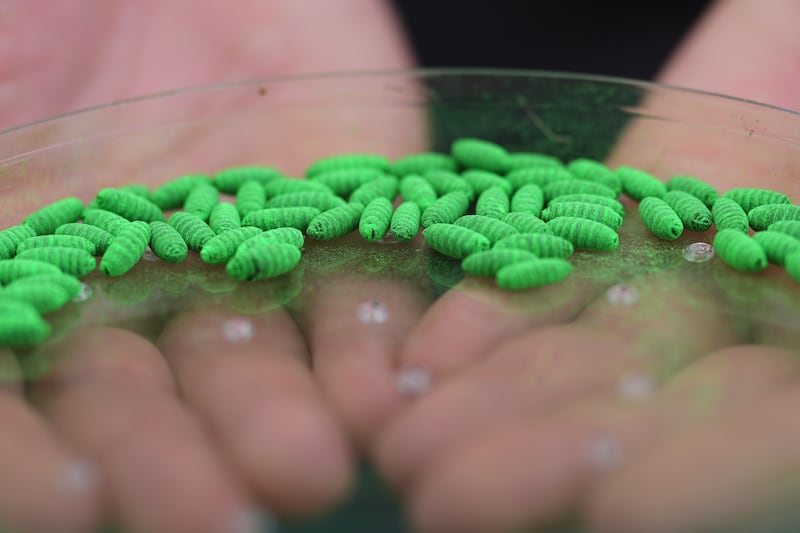
New World screwworm flies look like more colorful versions of the common housefly. They have orange eyes and metallic green or blue bodies, as well as three dark stripes on their back.
The flies lay their eggs in the open wounds or mucous membranes of live animals, including, in rare cases, humans. When the eggs hatch, the maggots use their sharp mouth hooks to twist deeper into the wound, enlarging it. Their name derives from the fact they operate like a screw in wood as they eat their way into the flesh. The damage to the animal can be severe and even lethal. Untreated, the animal dies.
As the Texas Tribune reported, “It is notorious for devastating the cattle and livestock industry. ...” And previously, a person in Mexico was successfully treated with antibiotics after the larvae were removed, as Reuters reported last year.
“The U.S. government is maintaining an aggressive approach to stop the spread and eradicate this pest,” said U.S. Health and Human Services Secretary Robert F. Kennedy Jr. in the release. “When I signed the initial emergency declaration back in August 2025, we established a proactive defense. Today’s authorization is the latest tactical tool in that ongoing containment strategy — providing an affordable, fast-acting treatment for dogs and cats in affected areas.”
The battle to contain the screwworm
According to CBS News, “New World screwworm, once an annual warm-weather scourge of cattle ranchers from the 1930s through the 1960s, had been thought to be eradicated in the U.S.” until recent cases.
“It’s not a time to panic,” Guy Loneragan, dean and professor at the Texas Tech University School of Veterinary Medicine, told the Texas Tribune. “We have been preparing for this for almost 18 months or longer in many cases, and there is a plan to address it.”
One of the containment strategies that has been deployed is releasing sterile flies to mate with the screwworm, creating unfertilized eggs, as Deseret News previously reported. Last August plans were announced to spend $750 million to build the facility to produce sterile flies.
Still, U.S. Secretary of Agriculture Brooke Rollins said the outbreak could last several months. Covering her visit this week to Texas, the Associated Press reported: “Screwworms are on their way to becoming a billion-dollar international problem, but can be contained if ranchers are vigilant, watch their herds and other wildlife, and quickly treat any infestations, Rollins said. She pointed to the calf where screwworms were found six days earlier in a wound where its umbilical cord had been attached.”
Said Rollins, “He couldn’t be happier. He’s bouncing around the pasture.”

The impact on house pets
Loneragan told the Texas Tribune that pets could be infected, since all warm-blooded animals are a potential target. Besides mucus membranes, “For pet owners, this could be any regular, everyday wound, such as tick bites, small scrapes and cuts from being outside, or if their cat or dog gets into a fight with another animal.”
Bird infections are less common.
Loneragan said pet owners can tell by how the animal behaves, showing signs of discomfort or being in pain from a wound, which may also have some discharge. Other signs include licking or biting wounds and unusual restlessness, per the article. “In some cases, according to A&M AgriLife, the animal may become aggressive or lethargic from irritability.”
The Centers for Disease Control and Prevention said smell is also a tool to detect an infestation, because the odor is likely to be “foul.”
A local veterinarian should be consulted immediately.
Owners should pay attention to their animals and watch for open wounds or signs in eyes, nose and mouth. Pet owners near the U.S.-Mexico border should “be monitored more regularly,” per the Texas Tribune.
Protecting dogs and cats
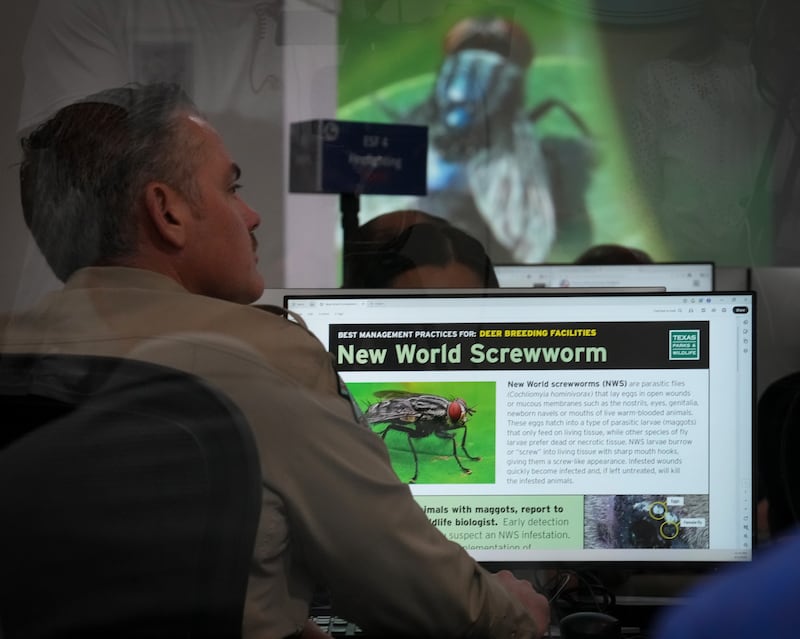
The FDA reported that “based on the totality of scientific evidence available, it is reasonable to believe that Nitenpyram tablets may be effective” in treating those cats and dogs, potential benefits outweighing possible risks.
The larvae typically die quickly after the first dose of Nitenpyram, but a second dose should be administered six hours after the first dose, per the FDA. The medication does not prevent reinfestation. The medication is available over the counter and the dose is based on the pet’s weight, but should not be used in pets weighing less than 2 pounds.
The FDA cautions that it might be best to have a veterinary professional “physically remove any remaining live or dead larvae” after administering the two doses of the flea medicine. It’s also a good idea to ask that professional how to treat the wound and reduce the risk of reinfestation.
Because mammals in general are at some risk, Mysanantonio.com reported that a San Antonio-area shelter is not accepting injured or orphaned warm-blooded wildlife, for fear some could be infected and spread it to other animals. The staff expressed regret at having to make that decision and acknowledged that hundreds of animals could die as a result.
The article said that last year alone, more than 200 animals were rescued through its efforts.