

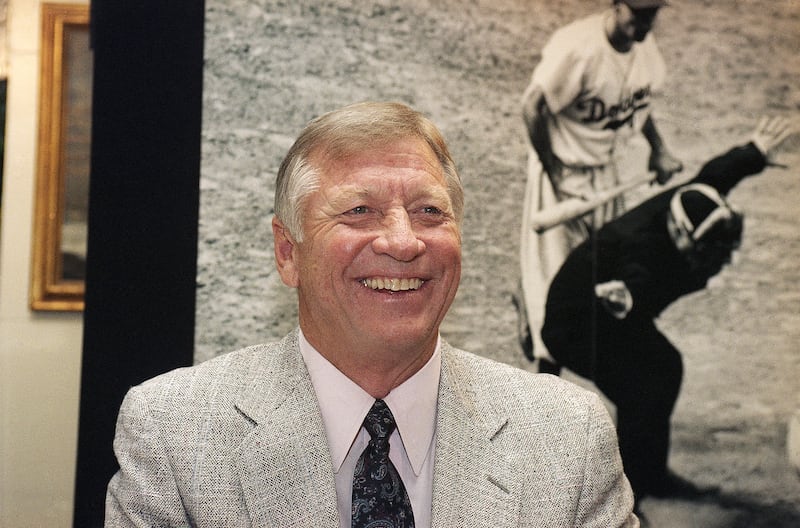

“If I knew I was going to live this long, I would have taken better care of myself,” Mickey Mantle, among others, has been credited with saying. Mantle was known as a partier and hard drinker in his early ball-playing years. He paid a price — dying at age 63 from complications of liver cancer.
While many of us get to live longer than that, sometimes we are more aware of our limitations than our opportunities. As one famous saying attributed to Mark Twain goes, “Do not complain about growing old. It is a privilege denied to many.”
More than our limitations
Growing older certainly has its privileges, but also has its frustrations. Recently, classrooms for health care workers in assisted living centers have used bulky “simulation suits” that camouflage eyesight and restrict hearing and movement to enable workers to empathize with their clients.
Not all hearing loss or eyesight decline is the same, of course. My 88-year-old father-in-law had 20/20 vision until the day he died. He even challenged everyone at the DMV to try and read a line below the one he could read each time he renewed his driver’s license.
And while my wife and I are regularly “profiled” by hearing aid companies and audiologists to join them at upscale restaurants, we have decided not to join them until our hearing range is more restricted than that of our 30-something physician, who constantly wears earbuds.
The view of growing older as a constant decline is not only inaccurate but also disconcerting. It is plainly an unfair stereotype. For both old and young, this limited narrative of development robs us of seeing the good we have and how that can grow over time.
The science of late-stage development
In fact, a new study by researchers at Yale University has found that people not only can improve over time but often do. Analyzing data from a large, nationally representative study, these scholars found that nearly half of adults aged 65 or older showed that cognitive and physical improvements over time were commonplace rather than rare.
This crucial appreciation of late-stage development should both be recognized and included in our understanding of the aging process.
Refusing the box
While some sensory declines may occur over time, it’s not fair to fixate on them as representing the whole. Such ageism is entirely cultural — as people stereotype against people based entirely on their age.
“I won’t let anyone give me a senior discount at a restaurant or a store,” says my older brother Dean. “It is like admitting that I need help, that I’m not the same as everyone else. I won’t let them put me in a box.”
Well-meaning strangers, retail workers and even health care professionals can also adopt “elderspeak” — using a high-pitched voice, simplified vocabulary and terms like “Pops,” “Gramps” or the ever popular “Hey, Boomer.”
This can inadvertently strip away dignity with a single phrase or wave of the hand, a knowing wink, a sly glance.
In daily life, older adults can be rendered invisible or reduced to tropes: the frail victim, the cranky neighbor or the tech-clueless grandparent. In this, the truth about rich internal lives, ongoing personal aspirations and continued capacity for growth can be diminished by a youth-obsessed culture.
The true frustration of aging lies in how these cultural forces potentially diminish us. Navigating a world so often centered around the young requires some resilience. Empathizing with these frustrations isn’t about pity; it’s about building a world that values individuals for what each person can contribute.
Six Saturdays and a Sunday
Recently, youth in our area walked the five miles between the Red Cliffs and St. George temples of The Church of Jesus Christ of Latter-day Saints. This activity reflected a youth theme of “Walk with Me,” referring to walking with Jesus. Ahead of time, a young woman invited us to join her. She said none of the youth leaders planned to make the trek and she didn’t want to go alone.
So, we did. Hundreds of youth were strung out that evening as they meandered from one temple to the other one. Some were running, some caught a ride with their leaders as they drove by, others gathered around us as we sang songs together while walking: sometimes silly verses, sometimes Primary songs.
“How come you are out here, walking in the hot sun?” someone asked my wife. “Aren’t you too old for this?”
“Age is just a number, and ours is unlisted,” my wife said laughingly. “Getting to this stage in life isn’t a jail sentence — it’s instead like getting an all-day pass to Disneyland. We get the equivalent of six Saturdays and one Sunday each week. As you might say: ‘It’s totally lit.’”