


If you turn on a modern television program today, you will notice a striking silence where the jingles used to be. Modern advertising relies heavily on ambient electronic tracks, moody covers of classic rock songs, or minimalist sound design. The goal of contemporary advertising is often to blend in, to feel sophisticated or to evoke a subtle “vibe.”
While this approach might appeal to younger, ad-weary younger folks, it lacks the uplifting, unapologetic joy of the classic era. The modern commercial rarely asks you to sing along.
I asked some friends about their favorite jingles, now gone but never to be forgotten.
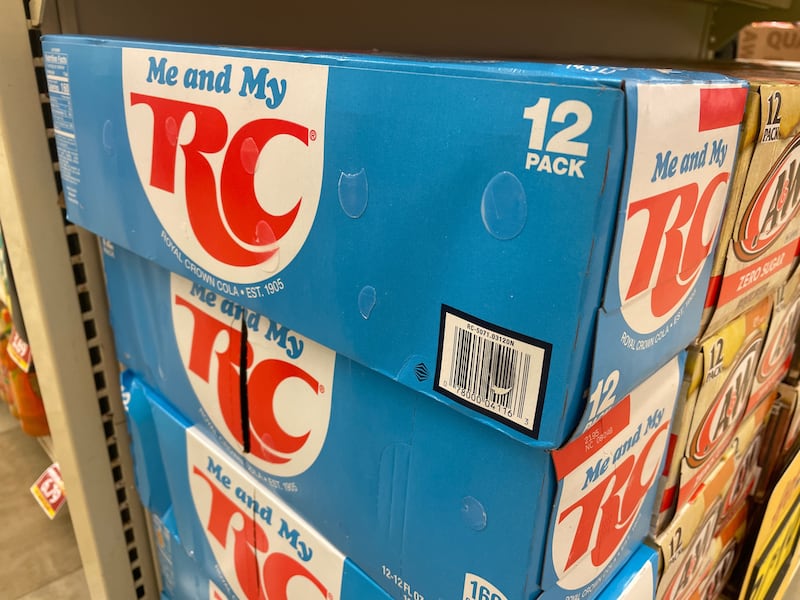
“Me and my RC, ’cause what’s good enough for other folks ain’t good enough for me!” Merlene Barlow told me. “How could you not want something that won so many taste tests and had a clever slogan to go with it?”
“Ai yi yi yi, I am the Frito Bandito,” Marleen Chappell said. “I sing it to my grandkids all of the time. It is so catchy. Once it is in my head, it stays there the rest of the day.”
The old jingles belong to an era that was unashamedly enthusiastic, creative and explicitly designed to bring a little bit of harmony — quite literally — into our homes.
You could be standing in the kitchen, washing dishes in the quiet of a Tuesday afternoon, when out of nowhere, a long-buried melody pops into your head.
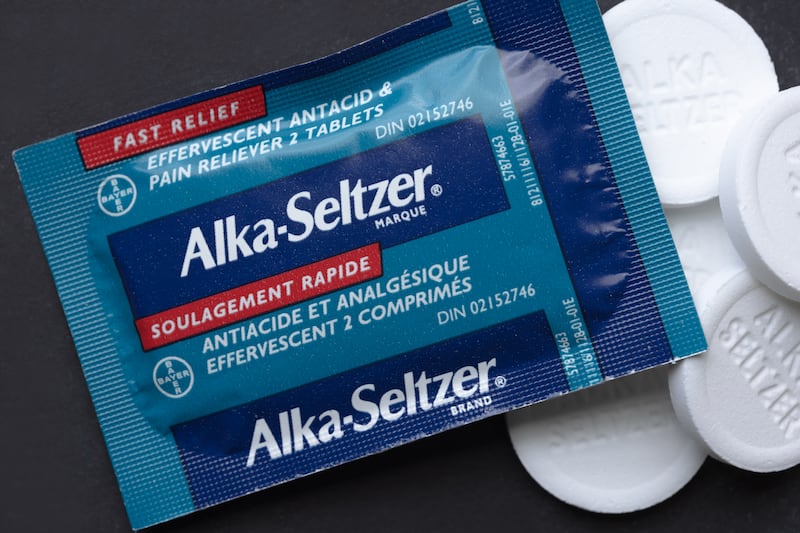
“Plop, plop, fizz, fizz, oh what a relief it is,” for “Speedy Alka-Seltzer.”
Or, while driving down a familiar road, your brain takes you on a short detour down memory lane with:
“I’m a Pepper, he’s a Pepper ... wouldn’t you like to be a Pepper, too?”
Or the rhythmic, playground-like chant of:
“My bologna has a first name, it’s O-s-c-a-r, my bologna has a second name, it’s M-a-y-e-r … cuz Oscar Mayer has a way with b-o-l-o-g-n-a. How’s that?”
These commercial jingles, once the inescapable wallpaper of American television, have largely vanished from the airwaves. Yet, decades after they were retired, they remain permanently etched into the gray matter of an entire generation.
Many of these jingles were drilled into our minds during our formative years — held in reserve later for what psychologists call the “reminiscence bump.” This is a disproportionately higher recall of autobiographical memories by older adults from adolescence and early adulthood compared to other periods in their lives. While memory recall generally follows a curve where more recent events are the easiest to remember, the “reminiscence bump” creates a distinctly strong recall ability for older memories from childhood.
Of course, the musicality of jingles makes them easy to recall as well. Think of the sheer musical dynamism of the Folgers coffee jingle, which I recall vividly even though I’ve never been a coffee drinker:
“The best part of waking up is Folgers in your cup.”
That ad was a complete emotional narrative — transitioning from the grogginess of morning to the soft light of daybreak, delivered in less time than it takes to tie your shoelaces. It wasn’t just a slogan; it was a well-designed piece of functional listening art.
Because we heard these jingles so often during our early development, they became part of our cultural heritage. The television stations may have stopped broadcasting them, but our neural pathways never stopped playing them.
Since everyone was watching the same things, these jingles linked us across the country regardless of where or how we lived. You could say “I am stuck on Band-Aid” in Texas or California or North Carolina and almost anyone could instantly finish the phrase: “... ’cause Band-Aid’s stuck on me.”
When we recall these melodies today, our brains aren’t just retrieving an advertising tune; they are retrieving sights and sounds and smells from our “wonder years,” of eating a bowl of cereal and watching cartoons on the living room floor.
So the next time an old, almost forgotten tune pops into your head out of nowhere, don’t dismiss it as random mental clutter. Welcome it in. It’s a little piece of your history, checking in to remind you where you’ve been, how far you’ve come and the soundtrack that helped get you here.