

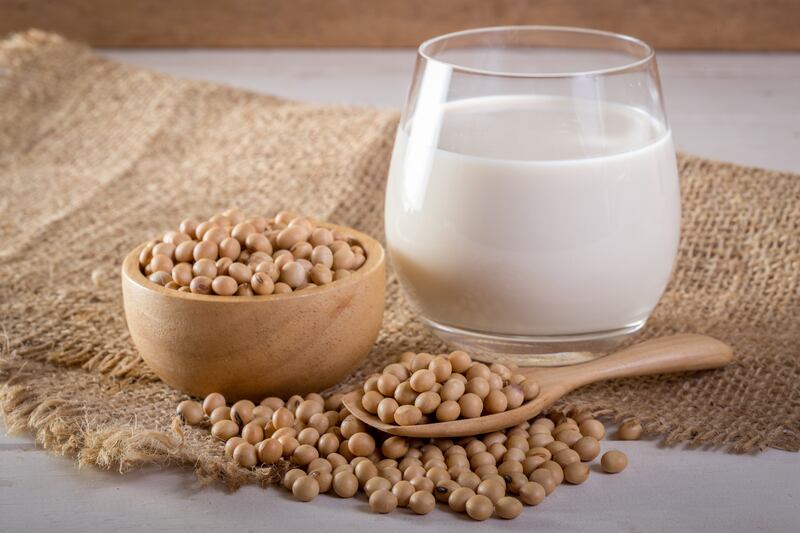
July is the deadline for the U.S. Food and Drug Administration comment period on labeling recommendations for the plant-based milk industry.
It’s a good time to widen the lens on this issue.
The USDA lists soy milk as part of the dairy group and a nutritional equivalent to cow’s milk with the same calcium, vitamin D and Vitamin A, per the 2020-2025 National Dietary Guidelines.
According to Merriam-Webster, one of the definitions of milk is a food product that can be produced from “seeds or fruit that resembles and is used similarly to cow’s milk.” Plant-based milks have been on the market a long time and are growing in popularity. Consumers know what they prefer or are able to drink for health reasons.
This begs the question: Why do we still have a milk mandate that says our public schools cannot be reimbursed, unless they serve our children dairy cow milk?
The dairy cow milk lobby has convinced our policymakers in Washington to ignore consumer choice and public health. A growing number of children will get ill from or waste dairy cow milk because of allergies or lactose intolerance.
It’s not a nutritional program, but a milk mandate.
Congress has introduced Addressing Digestive Distress in Stomachs of Our Youth, or ADD SOY Act, that would add reimbursements for soy milk, too. This is a matter of fair government practice.
The FDA’s proposed rules are a sign of the times. We can go further by passing the ADD SOY Act.
Julie Marshall
National communications coordinator and Colorado state director for Animal Wellness Action and Center for a Humane Economy