



Most mornings, I walk across a university campus in Baghdad where students hurry to class inside buildings that were once part of Saddam Hussein’s palace complex. On their way, they pass marble corridors and courtyards that, not so long ago, were symbols of power rather than places of learning.
Today those same buildings house classrooms, laboratories and lecture halls. What were once halls of dictatorial power during a past era have become places where students debate ideas, work through difficult problems and prepare for careers.
Where authority once flowed from fear and command, it now grows from knowledge and inquiry. It is a striking transformation, one that captures something important about Iraq today.
A new university comes to life
The American University of Iraq—Baghdad exists because of the vision of its founders: the Saihood family, Iraqi business leaders who made the decision to invest in their own country and its future.
Building a university of this scale would be ambitious anywhere in the world. Doing it in Iraq requires an even deeper commitment.
Yet this family believed in the value of an institution that could educate a new generation of leaders and professionals, and they chose to act on that belief.
From a distance, daily life on campus might look familiar to anyone who has spent time at a university. Students move between classes with backpacks and laptops in hand. Faculty members meet with advisees. Research projects are underway in laboratories and offices. Conversations spill out of classrooms and into cafes and common spaces.
Optimism amid broader tensions
Yet in recent weeks, as regional tensions have risen and headlines have been filled with reports of missile and drone activity across the Middle East, many friends in the United States have asked me the same question: What is it actually like to live and work here right now?
The honest answer is that the situation is serious, and we watch it carefully. But daily life, especially on a university campus, continues with a sense of purpose that may surprise people following events from afar.
Our students are overwhelmingly Iraqi. They come from Baghdad and from cities across the country. Many represent different religious, ethnic and socioeconomic backgrounds. What they share is a determination to build a better future for their country.
Many of them have grown up during years of instability. Yet they arrive on campus with a sense of optimism that is hard to miss.

For them, education is not an abstract exercise. It is a practical path toward rebuilding institutions, strengthening the economy and connecting Iraq to the wider world.
A high privilege of my life
My own path to Baghdad came after spending many years working in American higher education, including leadership roles at Utah Valley University and Southern Utah University and later as president of Snow College. Those years in Utah shaped much of my thinking about education and public service.
But throughout my career, I have also lived and worked in this region, and I have long felt drawn to the role education can play here.
In some ways, that connection began much earlier. I grew up in Saudi Arabia, where my parents were educators. Living there as a young person was a formative experience. Watching my parents devote their lives to education in another part of the world left a deep impression on me, and it sparked a lasting interest in the Middle East and its cultures.
Over the years, I have had the opportunity to live and work in several countries in the region, including Egypt, Kuwait, the United Arab Emirates and Bahrain. Moving between the United States and the Middle East has been a recurring part of my professional life, and in many ways, my current role in Baghdad feels like a continuation of that long journey.
In more than 30 years as an educator, I have never held a position that feels more consequential. There are moments in a career when an opportunity feels less like a job and more like a responsibility. For me, serving here in Baghdad increasingly feels like one of those moments.
Iraqi commitment to education
Since arriving in Iraq, I have had the opportunity to meet with the country’s president, the prime minister and several senior government ministers. They lead different institutions and hold different perspectives, yet their message is remarkably consistent: Iraq needs this university.
They see institutions like the American University of Iraq—Baghdad as essential to educating the next generation of leaders, professionals and innovators who will guide the country forward.
Part of my role involves speaking to audiences back in the United States and reminding them why Iraq still matters. Iraq is a country with a deep and noble history. Its stability and success matter not only to Iraqis but also to the broader stability of the region.
Student safety as top priority
Of course, leadership in this environment requires constant attention to safety and risk. Our campus maintains a professional security operation with trained personnel, controlled access points and active monitoring systems. We also remain in close coordination with trusted partners and regularly review our procedures.
For obvious reasons, we do not discuss every operational detail publicly. But the guiding principle is straightforward: Our first responsibility is to protect the people who study and work here.
At the same time, we try to preserve continuity in the life of the university and make decisions calmly rather than reactively.
Recent regional tensions have required careful attention. There have been missile and drone interceptions in the broader Baghdad area, particularly around Baghdad International Airport, which lies not far from where many members of our campus community live.
When events like that occur, they are taken seriously. At the same time, the day-to-day reality often looks quite different from the way the region appears in international headlines.
The work of education continues
Most days in Baghdad feel remarkably normal. Traffic moves steadily through the city. Shops are open. Families gather for meals in the evening. Students attend class, prepare for exams and talk with one another about their plans for the future.
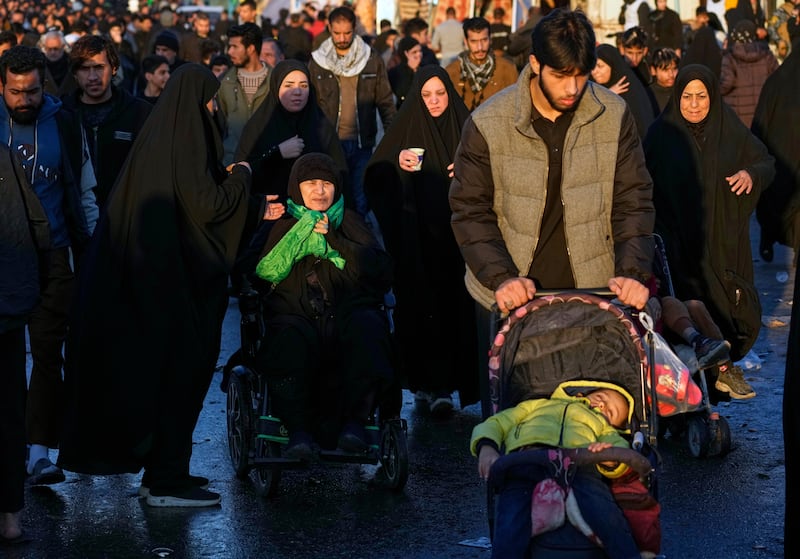
People follow the news carefully, but they also continue with their routines. Iraqis have lived through years of uncertainty, and that experience has produced a resilience that outsiders sometimes underestimate.
On campus, we try to maintain that same steadiness. We monitor developments closely and communicate regularly with students, faculty and staff. When necessary, we make adjustments — whether that means building flexibility into the academic calendar or preparing contingency plans.
But the central mission remains the same. The work of education continues.
A stunning transformation
One of the most memorable moments I have experienced since coming to Iraq occurred during our first student graduation ceremony. Families filled the campus on the grounds of Saddam Hussein’s former palace complex — once symbolizing fearful, authoritarian power. On that evening, it felt like something entirely different.
Parents and grandparents watched with pride as their sons and daughters crossed the stage to receive their degrees. You could see the emotion on their faces.
Standing there, it was impossible not to reflect on what the place had once represented and what it represents now. A site that once embodied control and intimidation had become a place of learning and opportunity.
Watching those young Iraqis graduate felt like a moment of redemption. It was a reminder that the next generation is reclaiming its future and writing a different chapter for their country.
The future in our students’ faces
When Americans read about the Middle East, the region can sometimes appear as a series of crises unfolding on a map. Living here reminds you that it is also home to millions of ordinary people who are simply trying to build stable lives, educate their children and contribute to their communities.
As a city with a deep cultural history, Baghdad is often viewed through the lens of its past. Yet the city also has vibrant neighborhoods and a young population eager to connect with the world.

Universities like ours are part of that story. They represent an investment in Iraq’s future built on education, dialogue and opportunity.
For those of us who live and work here, that future is visible every day in the faces of students on campus.
In classrooms that once stood inside palaces of power, young Iraqis are quietly shaping what their country will become next. Walking across campus in the early morning, watching students hurry to class, it is hard not to feel that something important is happening here.