



I have been practicing immigration law for more than 37 years. I have represented asylum-seekers, Fortune 500 companies, nurses, engineers, farmworkers and the foreign-born spouses of American citizens. I have testified before Congress, litigated in federal courts and watched administrations of both parties stretch and compress our immigration laws in ways that sometimes made me proud and sometimes made me perplexed.
What U.S. Citizen and Immigration Services did on May 22 made me furious.
The agency issued a policy memorandum titled — and I want you to notice the careful bureaucratic language here — “Adjustment of Status is a Matter of Discretion and Administrative Grace, and an Extraordinary Relief.” Read that title slowly. Every word is doing work. Every word is a misrepresentation about what adjustment of status actually is under the law.
What is adjustment of status?
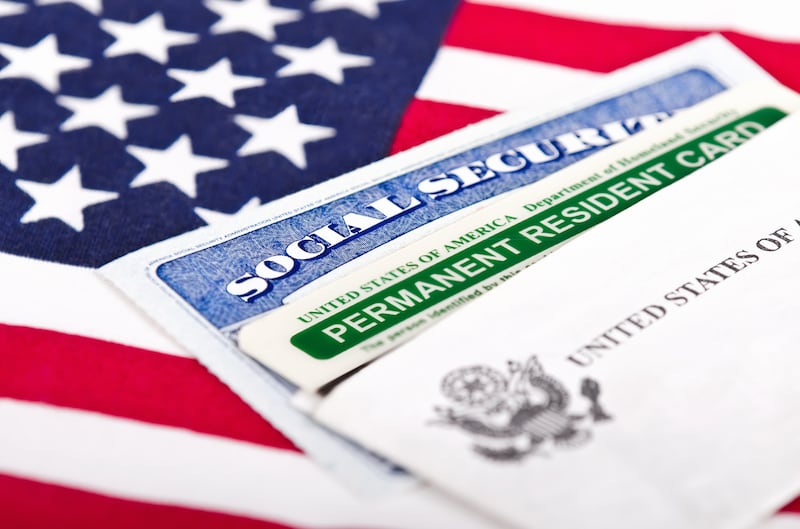
Adjustment of status is Section 245 of the Immigration and Nationality Act. Congress put it there in 1952. In the 74 years since, Congress has come back to that provision more than 20 times — not to weaken it, not to question it, but to refine it, expand it and reaffirm it. That is not the legislative history of an accident. That is the legislative history of a deliberate, durable policy choice that Congress has made over and over again across generations and administrations of both parties. You do not amend a statute more than 20 times because you are indifferent to it. You amend it because it matters and you want to get it right.
Before 1952, if you were lawfully in the United States and wanted a green card, you had to leave. My own grandparents did this. You had to board a plane, travel to a U.S. consulate abroad, attend an interview and hope to reenter.
Today, for many people, that process can take two years. Two years separated from your spouse. Two years without work authorization. Two years of living in a country you may not have lived in for a decade, running up costs your family cannot afford — lost income, international travel, foreign housing, overseas medical exams, legal fees for navigating a consular process.
Congress looked at that system and called it what it was: needlessly cruel, economically wasteful and contrary to the values of a country that claims to reward those who follow the rules. So, Congress created adjustment of status. Congress said: If you are lawfully present, if you qualify for a green card, you should not have to go through an exile as a precondition for belonging.
The USCIS policy manual — USCIS’s own policy manual — acknowledges this. It states that Congress created adjustment of status to serve “family unity” and the “public interest.” Those are not my words. Those are the agency’s own words about why the law exists.

How this USCIS memo impacts a decades-old law
Now comes this memo, which instructs officers to treat that law as if it were a lottery — something to be granted only in exceptional circumstances, an act of “OK administrative grace” rather than a legal right that qualified applicants have earned.
Officers this week are reportedly asking applicants at their adjustment interviews: “Why didn’t you consular process this case?” Think about that question for a moment. A federal officer, in a federal interview room, asking a lawfully present person why they chose to use the legal process that Congress specifically created for them to use. That is not immigration enforcement. That is an officer weaponizing bureaucratic condescension against someone who did exactly what the law asked them to do.
Friday, the Homeland Security Department appeared to try to respond to some of the fear and outrage that followed the initial memo, stating, as The New York Times reported, “This was just a reminder to officers of their discretionary authority, which has always existed on a case-by-case basis,” a D.H.S. spokesperson said in a statement.
The memo cannot change the statute. The memo has no authority to change the statute. What it can do — what it is designed to do — is raise the bar so high that the law becomes functionally inaccessible. Make the process unpredictable enough, hostile enough, arbitrary enough and people stop using it. The law stays on the books. It just stops working. That is not enforcement. That is obstruction dressed up in the language of discretion.
Who bears the cost of this memo? Not employer-sponsored applicants in most cases. Tech workers and nurses on dual-intent visas have stronger footing under the framework this memo creates.
The people most exposed are the foreign-born spouses of American citizens — the very category that Congress has always treated with the most protection under family based immigration law. These are not people gaming the system. These are people who came here legally, maintained their status, played by every rule this country set before them, fell in love with Americans, got married and applied for green cards through the process Congress created for exactly that purpose. Now they are being told to get on a plane.
For a working-class American family — a mechanic in Salt Lake City married to a woman from Peru, a nurse in St. George married to a man from Canada — consular processing is not an inconvenience. It is a financial catastrophe. One spouse loses their work authorization while the case is pending. The other attends the consular interview alone. The family absorbs the cost of international travel, overseas housing, lost wages and legal fees for a process in a foreign country they may not have navigated in years. We should be honest about what we are asking these families to do and who bears the burden of that ask.

Legal immigration helps build the U.S.
I have watched this country debate immigration for decades. I have seen legitimate disagreements about border security, visa categories, processing times and annual caps. Those are real debates worth having. But there is nothing legitimate about using a bureaucratic memorandum to nullify a statute that Congress has reaffirmed more than 20 times.
There is nothing conservative about an executive agency telling Congress that its 74 years of deliberate policymaking can be undone by the stroke of a minor bureaucrat’s pen. Anyone who believes in the separation of powers — regardless of where they stand on immigration — should be alarmed by what USCIS did on May 22.
We have been here before. The last time this country embraced this level of hostility toward legal immigration — the closing of doors, the treating of newcomers as threats rather than assets — was 1924. The Emergency Immigration Act that year imposed sweeping national-origin quotas, effectively barred immigrants from Southern and Eastern Europe, and nearly eliminated Asian immigration. Economists have since documented what followed: The dramatic contraction of immigrant labor contributed to the rigidity and fragility that deepened the Great Depression and lengthened it beyond what it might otherwise have been. Immigrants don’t just consume opportunity. They generate it. The costs of restriction echo across generations, and we have already paid those costs once.
Legal immigration, done right, is one of America’s genuine competitive advantages. The foreign-born spouse who adjusts status, earns a green card and joins the workforce is not taking something from this country. She is building it. He is contributing to it. Their children are growing up as Americans. Adjustment of status, when Congress designed it, was the system working exactly as intended — rewarding lawful presence, keeping families together and welcoming people who chose to come here the right way.
This administration cannot pass an immigration law to its liking. What it can do is make existing law so difficult to access that it ceases to function in practice. That is what this memo attempts. Congress spent 74 years building adjustment of status because it works and because it reflects who we say we are as a nation.
It is time for Congress to say that loudly — and to defend it from the USCIS director who wants to bury it.