


A recent poll reported by the Deseret News found that 60% of Utahns support collecting fossils and artifacts from public lands. While this view may reflect a genuine appreciation for Utah’s remarkable natural and cultural heritage, it also highlights an important misunderstanding about why federal laws protect these resources and why permits are required to collect them.
For more than a century, Congress has recognized that archaeological artifacts and scientifically significant fossils found on federal and tribal lands are part of our shared national heritage. Beginning with the Antiquities Act of 1906, and later reinforced by the Archaeological Resources Protection Act of 1979 and the Paleontological Resources Preservation Act of 2009, federal law established protections for this irreplaceable natural and cultural heritage and required permits for their collection and removal.
These laws exist for a simple reason: The true value of a fossil or artifact lies not only in the object itself but also in its context. Where an object is found, what it is associated with, the layers of rock or sediment surrounding it, and its relationship to other objects all provide critical information. When fossils or artifacts are removed without proper documentation, that information is often lost forever. Even a rare or visually spectacular specimen can lose much of its scientific, educational and cultural value if its context is lost.
The true value of a fossil or artifact lies not only in the object itself but also in its context.
Unpermitted collecting diminishes our collective ability to understand Utah’s past. It prevents future finds and insights by removing or altering the evidence needed to interpret them.
Museums play a vital role in ensuring that these resources remain available for the benefit of everyone. The Natural History Museum of Utah serves as the state’s repository for archaeological and paleontological objects recovered from public lands. We care for approximately 2.5 million cultural and natural history objects that are held in public trust for the people of Utah and the United States.

These collections are far more than backroom cabinets filled with specimens. They are a permanent record of Utah’s natural and cultural history. Researchers from Utah and around the world use these collections to investigate questions about biodiversity, ancient ecosystems, the evolution of life, changing environments, and the rich histories and cultures of Indigenous peoples. Because specimens are preserved alongside detailed records about where and how they were collected, scientists can return to them repeatedly, asking new questions that could not have been imagined when they first entered the museum.
Just as importantly, these collections belong to the public. Museums preserve them not for private ownership or individual benefit but so they can be shared broadly through exhibitions, educational programs, publications and community engagement. We partner with local communities, including tribes, land managers and other stakeholders, to ensure that these collections are properly cared for and preserved.
Every year, hundreds of thousands of visitors come to the Natural History Museum of Utah to encounter authentic objects that illuminate the story of our state. Museum educators bring specimens and educational programs into classrooms across Utah, reaching more than 50,000 students annually, while traveling exhibits and outreach programs connect communities throughout the state with their local nature and culture.
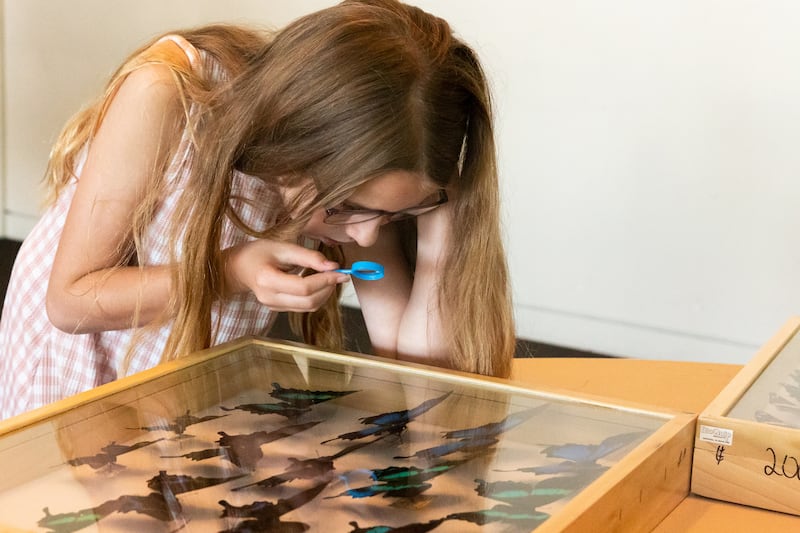
The ability to tell these stories depends on responsible stewardship. Because these museum collections were recovered through careful, documented processes that preserve both the objects and the information associated with them, the stories these objects tell are robust, verifiable and grounded in evidence. The public can trust that these collections continue to yield new insights while remaining available for future generations.
Most people who encounter a fossil weathering out of a hillside or an artifact on a trail are motivated by curiosity and wonder. We share that sense of wonder. But these objects are part of a larger story that belongs to all of us. When they are left in place until properly documented and curated, they can contribute to scientific advances, public and community engagement, and a deeper understanding of Utah’s extraordinary heritage.
Protecting fossils and artifacts is not about keeping them hidden from the public. It is about ensuring that they remain accessible to all. Through that stewardship, Utah’s natural and cultural history remains available not just for us today but also for generations yet to come.