

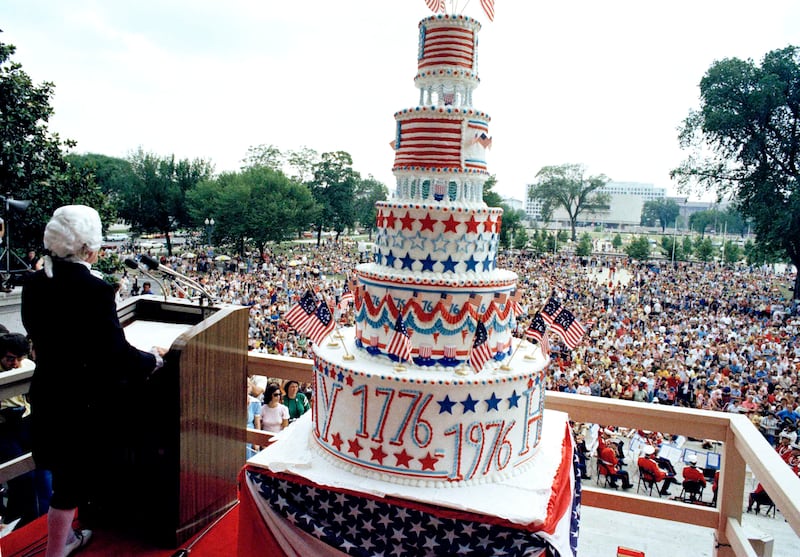

Sometimes, predicting the future can take an ironic twist.
Fifty years ago, United Airlines President Richard J. Ferris gave a speech in which he predicted airfares would rise to staggering levels by the year 2026. A flight from Chicago to New York, for instance, would cost $430, he said, according to a Chicago Tribune story I found on newspapers.com.
Turns out he was pretty close on that prediction, but by the time we all got here, $430 was the equivalent of only $74 in 1976, which is hardly staggering at all. If you use any reputable flight-comparison website — something few people in 1976 predicted we would have by now, or ever — you can find fares for about half that.
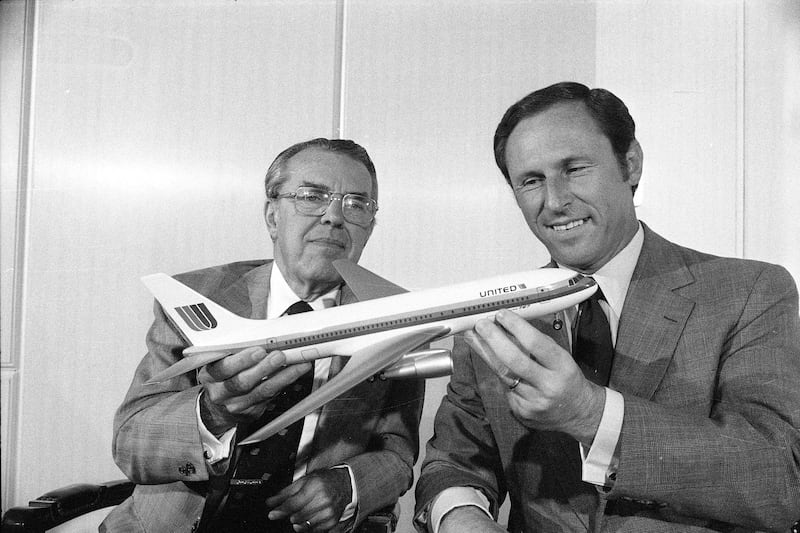
To be fair, Ferris understood inflation. He alluded to it in the talk. However, he was less perceptive when it came to free markets. Airlines, he predicted correctly, would be deregulated by today (it may surprise some people to know they once were regulated). That, he said, would result in only three major carriers being left to serve the American public by 2026.
As any capitalist can tell you, competition results in more, not fewer, choices. Modern airlines may have problems today handling rising costs, but whenever one goes under, new ones seem to come along.
A fool’s game
As I have written before, predicting the future is a fool’s game. Those who attempt it are vulnerable to two common traps. One is the assumption that human nature will somehow change dramatically, and the other is to project today’s fashionable concerns into the future. Even if you avoid those traps, you can’t foresee history-altering events such as wars, pandemics or natural disasters.
And yet, whenever the nation reaches a milestone birthday, people seem compelled to jump in, or at least to imagine what life will be like at the next milestone birthday.
Ferris was hardly alone. Lots of people filled time capsules with essays describing what they thought life would be like in 2026. Among my favorites were those written by fifth graders in Tipton, Indiana (current population 5,275).
“We might be living in space, or we might be driving airplanes for cars,” speculated young Becky Allen. “The men might not have to work when they don’t want to and still get paid.”
I give her points for predicting the guaranteed wage plan so popular today with the far left, although nothing like that has yet to be implemented.
Sherrie Nightingale, in the same class, wrote, “Gas might be $10 or $15.” She also speculated, “The Communists might have taken over,” and, “The rapture will have taken place by then.” Not that she drew a connection between the two. She was rather prescient at foreseeing the rise of the democratic socialists, however.
Overpopulation and famine
These predictions were refreshing to read. By contrast, most of the adults who made predictions back then seemed to focus on bleak things that occupied attention spans in the ’70s, such as the myth of overpopulation. A common theme is that we would be out of food and land by now, perhaps living in the ocean.
Today, falling birthrates worldwide are leading to predictions of depopulation, collapsing economies and empty cities. Washington’s $40 trillion debt triggers predictions about national insolvency and depressions. Many hover between opinions that artificial intelligence will either fill the world with helpful robots or destroy jobs and civilization.
History suggests we’re missing the mark with these — projecting today’s fashionable worries on the future. We are likely missing the young genius somewhere who is developing the next world-changing technology in his or her garage.
Regardless, one surefire prediction is that people in the future will continue to predict the future. Doing so is too big of a lure to ignore. The future, after all, will be the sum total of what people today want it to be. It will reflect our present values, dreams and imaginations, and hopefully not our nightmares.
Writing a few years ago for the American Enterprise Institute, senior fellow James Pethokoukis predicted China, India, the U.S., Indonesia and Nigeria would be the largest economies in the world by the tricentennial in 2076.
That may not be as fun as what a fifth grader could imagine. But he prefaced all of that by saying, “Everything in this essay assumes a) the United States doesn’t descend in Civil War 2.0, b) Vladimir Putin doesn’t press The Button, and c) there’s no reason for fresh supervolcano concerns (you people know who you are) over recent news that there’s more magma below the Yellowstone Caldera than previously thought.”
Smart man. The most important rule of thumb when predicting the future is that it never hurts to cover all the bases.