

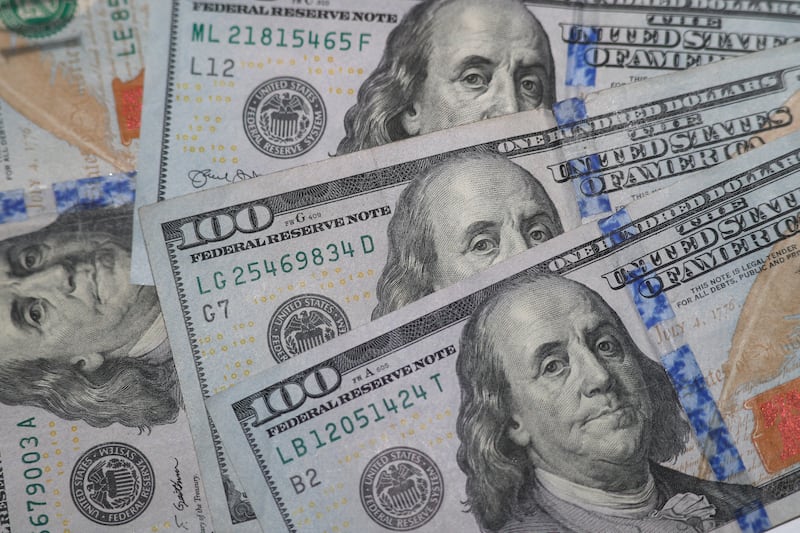

Some of you are incredibly generous — to a fault, even.
Seriously, a few of you (I’m guessing very few) are making me think I should start a GoFundMe just for the sake of fattening my savings account.
About a year ago, I noted that the federal government has a website devoted entirely to accepting voluntary contributions intended for paying down the national debt, which, by the way, just passed the $40 trillion mark. It’s true. Just go to pay.gov, navigate to click “Make a donation or contribution” near the bottom of the page, then scroll down to “Gifts to reduce the public debt.” The rest is easy. Uncle Sam even takes Venmo.
The Treasury provides a month-by-month tally of these contributions, going back to 1997. In July of this year, people donated a combined $23,143.83. In September 2025, the total was a whopping $173,710.42.
Or, in other words, less than a hydrogen molecule in the bucket of debt Washington owes.
I don’t know why people gave this money, but it does provide a good illustration of the nation’s problem.
An enormous problem

As far as I know, Elon Musk is the only human being on Earth worth more than $1 trillion. He could donate his entire net worth, and we still would need 39 more people just like him to do the same. But that wouldn’t keep the nation from quickly racking up more debt in the meantime. This year’s overspending is quickly approaching $2 trillion, according to USdebtclock.org.
If we wanted to levy a one-time tax to retire the debt, it would cost each taxpayer $320,795.
When I last wrote about the voluntary debt contributions, 13 months ago, the debt was just under $37 trillion. It has grown by more than $3 trillion since.
I write about this because a lot of intelligent voices have been warning in recent weeks that Washington needs to begin addressing this problem. Investors, the kind who buy Treasury bonds allowing the nation to finance its debt, are beginning to squirm. The 10-year version of those bonds are being offered at 5%.
That means the annual interest the government pays on the debt, which already is a number greater than the annual outlay for defense, will climb higher.
Every candidate this year should be laser-focused on this.
How a collapse plays out
The nonprofit Committee for a Responsible Federal Budget published a paper explaining what the day of reckoning might look like. The list is long, but it starts with a sharp rise in interest rates to mollify panicked investors, which could lead to greater inflation and bank failures. The government might decide to impose tax hikes or steep budget cuts, leading to a recession.
The dollar could depreciate significantly as Washington prints more of it to cover debts, and the government could default on its debts. Or perhaps we just experience a gradual drop in living standards and access to money, which the committee said would cause “as much or more long-term damage than an acute crisis.”
There aren’t many pleasant alternatives.
An easy fix?
In a recent New York Times op-ed, the former Biden administration chair of the Council of Economic Advisers, Jared Bernstein, said it wouldn’t take much to keep these things from happening. Congress doesn’t have to balance the budget.
“But we do need the government to signal to investors that it understands the risks,” he wrote. “The best way to do so is to stop digging a deeper debt hole, or even to dig more slowly. Any sign of reawakening in Congress in response to the data will send a potent, positive signal to investors.”
But first, somebody has to make this the central issue in this year’s congressional races.
Apparently, relying on volunteers to donate their excess money isn’t working out too well.