


Earlier this month, a 3-year-old Michigan boy was found with a loaded handgun at his daycare. The child had taken it out of his backpack and was passing it around to his classmates when a teacher spotted the weapon and took it away safely. In the aftermath, the local police chief explained that “we have a great responsibility if we’re going to choose to own a firearm … no matter how busy our lives are.”
Because you know, we’ve all been there. Running around trying to get everyone out the door in the morning. Sometimes you forget to pack a snack. Or your child is wearing mismatched socks. But is finding a loaded gun in your toddler’s backpack really that relatable?
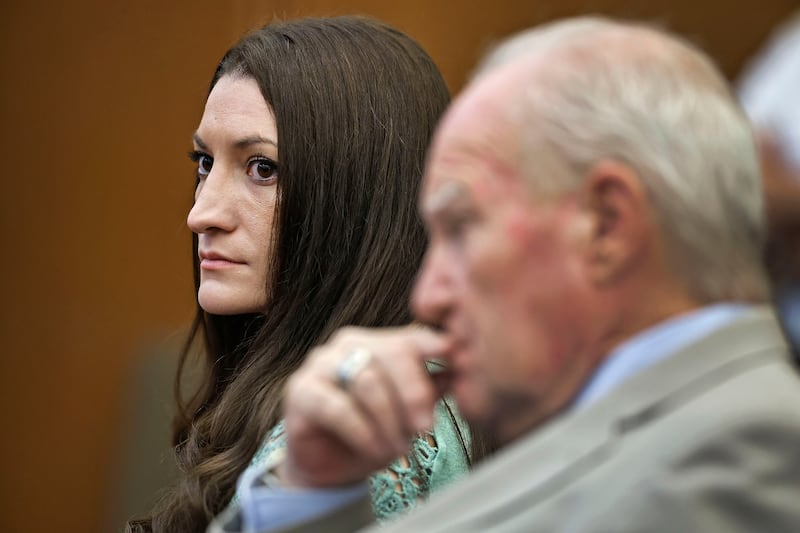
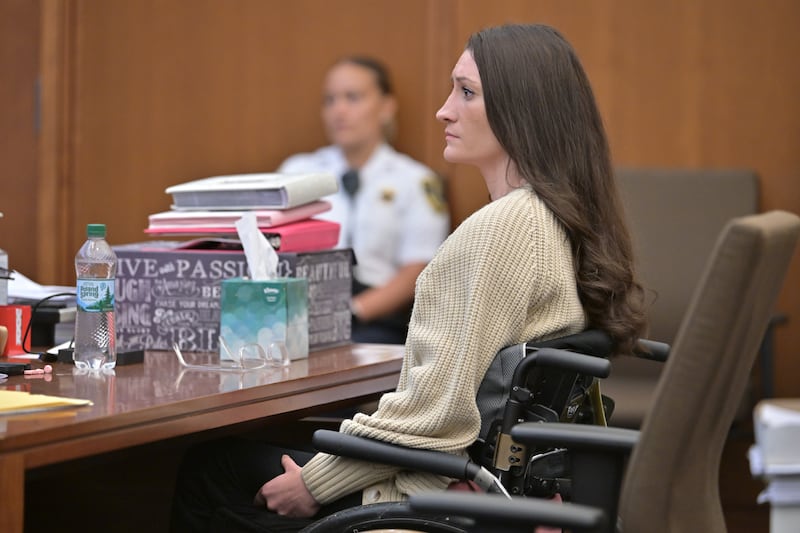
I’m not sure when we got into this habit of trying to make egregious behavior seem normal, but since Lindsay Clancy went on trial, accused of murdering her children, it has become de rigueur.
Take The New Yorker’s recent article, “A Mother on Trial,” by Anja Aronowsky Cronberg. It’s about the case of Nakira Griner, who was convicted of murdering her 23-month-old son in 2019. Griner claimed that her son, Daniel, fell down the stairs and was bleeding from the mouth and had a large bump on his head. She didn’t seek medical attention for him, afraid that authorities would discover bruises all over him from a recent beating by (she claims) his father. Instead, she put him to bed. When he didn’t wake up the next morning, she put his body in the oven and buried his remains in a purse in her backyard. Then she called the police and claimed someone kidnapped him.
Cronberg became interested in Griner’s case, she explains, because she had become unexpectedly pregnant with her second child and was worried it would interfere with her ability to work and that it would “disrupt our family dynamics.” She confesses, “As much as I loved being a mother, I found myself secretly wishing the baby away.”
This idea that mothers who feel ambivalent about a pregnancy, or are worried about what it will mean for their families, are just one step away from murder and grisly cover-ups is just bizarre. If Cronberg is really thinking “there but for the grace of God,” then someone should call 911.
Cronberg paints a strangely sympathetic portrait of Griner, telling the story of her difficult and abusive childhood, and arguing that if she had been wealthy or white like Lindsay Clancy, she probably would have been able to mount a better legal defense and wouldn’t have been sentenced to life in prison. (As it happens, she is mounting an appeal.) Cronberg says that Griner’s crime was one of “omission” and quotes the mother as saying, “My lack of action led to his demise.” (It reminds me of Theodore Dalrymple’s interview with a murderer in prison, who recalled: “The knife went in.”)
Griner and Clancy have become symbols of the oppression of mothers generally, particularly wealthier ones. The 2026 National Parent Survey found that mothers with higher incomes were more likely to say that parenting was “extremely or very challenging” than those at the lower end of the income distribution. No doubt the expectations for upper-class women are higher in terms of time commitment, but the pressure to get your kid onto a better club soccer team is not driving the vast majority of women to violence.
Cronberg told Griner: “I became a mother myself some years ago, and with it the cultural and societal expectations and pressures of motherhood became very real.” She says she realized that “rather than interrogating the underlying issues — the kind that might cause a mother to break — we prefer to scapegoat such women. … Because any ambivalence I might feel towards my own children, any sense of weariness, despair or ‘mom-rage’ is not at all the same because ... I am not her.”
And actually, that is most likely true: You are not her. Most stressed-out mothers are not just one toddler temper tantrum away from homicide. And pretending that these are all steps along a continuum of buckling under patriarchal oppression, that “we have all been there,” is absurd and dangerous.
In the past few months, there have been a number of maternal filicides that have led people to speculate about whether the Clancy trial is creating a spate of copycats. According to the New York Post, “there have been at least eight cases of mothers allegedly killing or attempting to kill their children since Clancy’s trial began in July.” But it is hard to say whether this represents any kind of trend. According to the Lives Cut Short database, there are hundreds of children who die each year as a result of an inflicted injury by their mothers.
But social contagion is a real thing. And the more writers like Cronberg suggest that violence against children is a reasonable response to societal pressure, the more we normalize child abuse.