



- The share of Americans who disapprove of Congress rose to 86% in April, tying with the highest levels on record.
- This unpopularity coincides with a series of resignations among U.S. House members over the past two weeks.
- Rep. Mike Kennedy's takeaway from his first term is how hard most members are working to improve the country.
The lesson Rep. Mike Kennedy delivered to Republican delegates ahead of Saturday’s convention appeared to contradict recent surveys and multiple weeks of messy scandals: Most members of Congress are trying to do their jobs well.
Despite the poll toplines and polarizing headlines, the former state Senator and practicing family physician said he has been encouraged by the caliber of his new coworkers and the policies they have gotten through since he entered office.
Kennedy’s biggest takeaway, he said, is that the painstaking process so often criticized by commentators in the media is how Congress is intended to work.
“The system is designed to slow things down and make it difficult,” Kennedy said. “It’s a process that is messy, it’s convoluted, it certainly takes time. But ultimately we get to better answers because we’re forced systemically to work together.”
Americans naturally focus on the salacious aspects of its largest governing body, Kennedy said. But Kennedy recognized that whether it is in reaction to facts or perception, Americans are not happy with their 535 federal legislators.
Confidence crumbles in Congress
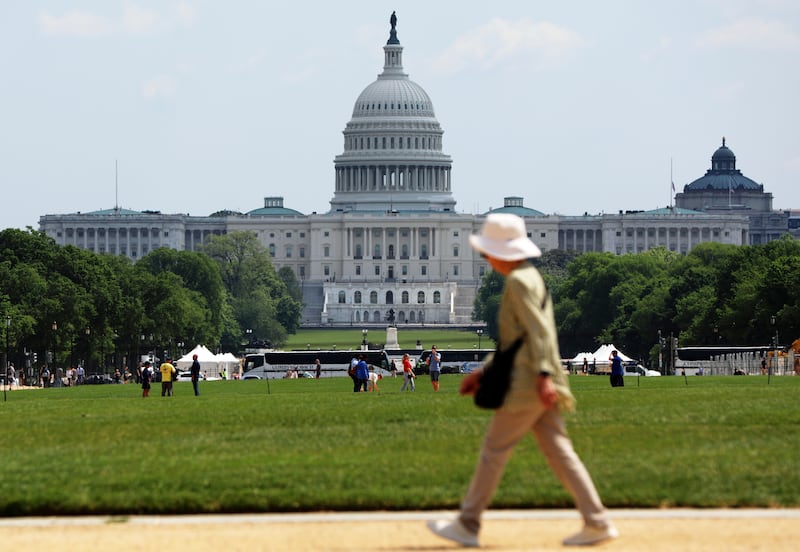
Americans’ approval toward Congress has plummeted over the past year to 10%, with the overall share of Americans who disapprove of its performance reaching 86% this month, tying for the highest level ever, according to Gallup.
Utah voters held Congress in slightly higher esteem, according to the latest Deseret News-Hinckley Institute of Politics poll. It found 28% approval among all adults, rising to 42% among Republicans and falling to 10% among Democrats.
These numbers have coincided with GOP frustration over the Senate’s failure to pass Utah Sen. Mike Lee’s Safeguard American Voter Eligibility Act, which would require proof of citizenship to vote, a Gallup analysis pointed out.
It also comes as the GOP-led chambers struggle to fund the Department of Homeland Security and hesitate to vote on President Donald Trump’s military action in Iran, which most U.S. voters disapprove of, according to the most recent Deseret News-Hinckley Institute poll.
A series of resignations has also cast Congress in a negative light as individual lawmakers have come under scrutiny for alleged unethical behavior.
On Tuesday, Florida Democratic Rep. Sheila Cherfilus-McCormick resigned before she was scheduled to appear before the House Ethics Committee for allegedly transferring $5 million in FEMA overpayments from her company to her congressional campaign.
A week earlier California Democrat Rep. Eric Swalwell and Texas Republican Rep. Tony Gonzales separately announced their resignations after facing allegations of sexual assault and misconduct toward former staffers and other women.
While Congress has its share of “flawed individuals,” these members are not representative of most lawmakers who get elected to Washington, D.C., according to Kennedy, who said most are “trying to solve problems for the American people.”
“To focus only on those that have had criminal, nefarious behavior, or are just spouting nonsense, is not reflective of a lot of good, hardworking people that are really trying in a patriotic fashion to help this country be successful,” Kennedy said.
Explaining the plummet in approval
Over his 16 months in the U.S. House of Representatives, Kennedy said he has been impressed with “the decency and honor and civility” he sees.
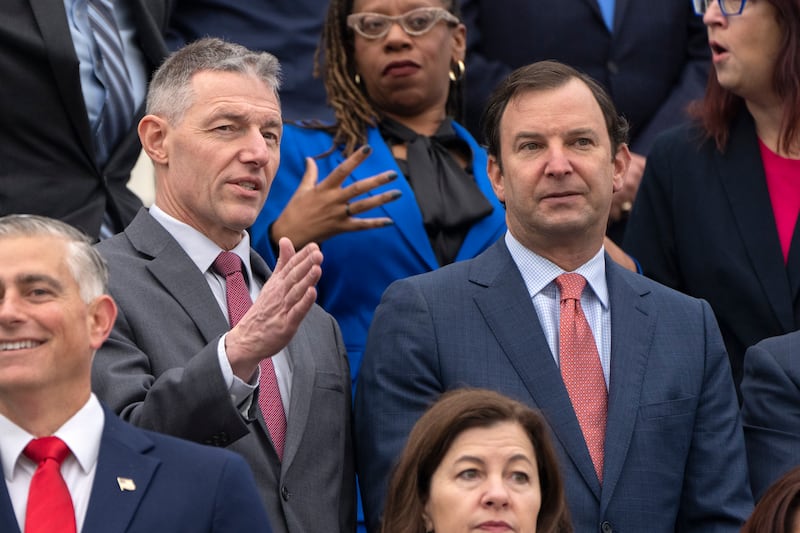
But the actions of individual lawmakers may ultimately have little effect on improving how the nation views its legislative branch, according to Brigham Young University professor Jeremy Pope, who helps run the influential Cooperative Election Study.
Congress has tended to have negative approval ratings because, regardless of which party is in control, the institution tends to produce compromise results that often incorporate many viewpoints but typically please few voters, Pope said.
This doesn’t mean public opinion is tied to congressional output — most people don’t follow the legislative process closely, Pope said. But unlike the presidency, or an individual lawmaker, many voters may never feel like Congress as a whole represents their views.
“Congress as a whole requires compromise that people may like in the abstract but do not love in practice,” Pope said. “People largely do not get what they personally want out of Congress and so it makes sense that they are unhappy with the body.”
While a single individual member is unlikely to improve general attitudes toward Congress, multiple scandals, and consistent media coverage of things people disfavor, may go a long way to driving voter disapproval, Pope said.
One claim that is often made in the media, that Congress is less productive in passing bills than in the past, is actually not true, Pope pointed out.
While the standalone bills passed by Congress has declined over the past two decades, the total number of bills passed, including those embedded in larger bills, have actually gone up from around 700 each year to almost 1,000.
Kennedy as a caucus-only candidate
The national political environment may determine attitudes toward Congress, but Kennedy said he is doing what he can to overcome a major obstacle.
“That’s one of our struggles in national politics is the disconnection of many elected officials from the grassroots,” Kennedy said. “It’s a complicated world. And the more people that I talk to, the better I am at serving.”
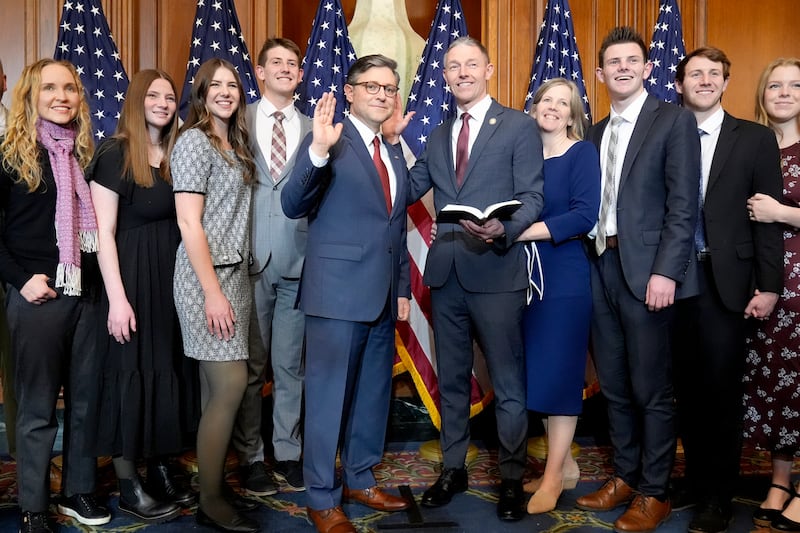
Utah’s unique caucus-convention system, which gives a small number of precinct representatives influence over primary ballot access, prides itself as a forum for allowing regular Utahns to vet, question and get to know lawmakers.
Kennedy is the only member of Utah’s federal delegation who has always relied on delegates to qualify for the ballot. He has never used the signature path because he said he prefers the intimate setting of the delegate nominating convention.
“I’ve made over 1,000 phone calls to my delegates,” Kennedy said. “These are smart, capable people who really do due diligence to try to assess who’s the candidate that’s going to best represent them.”
Only 1-in-10 Utah voters said they participated in the March caucus meeting to elect state delegates, the Deseret News-Hinckley Institute of Politics poll found. This is consistent with presidential years, but appears high for a midterm.
More than 60% of voters said they either do not care about how a candidate qualifies for the primary, or prefer that a candidate qualifies through signatures. Only 17% preferred that a candidate qualified through the convention.
Who else is running in CD4?
Kennedy was elected in 2024 to replace Sen. John Curtis in the 3rd Congressional District. Following a lengthy court battle, a state district judge eliminated Utah’s congressional map and replaced it with one submitted by advocacy groups.
Kennedy is running in the new 4th District which covers northern Utah County, southern Salt Lake County and much of western Utah. The district now favors Republicans by around 42 percentage points, according to Inside Elections.
So far this year Kennedy has raised $190,000, with $371,000 cash on hand. His Republican opponents have not reported raising or spending more than $5,000 to the Federal Election Commission.
Here’s who else is running in the district:
Republicans
Scott Hatfield — Author and worked for Utah Department of Corrections
Isaiah Hardman — Former student
Tyrone Jensen — Small business owner
Pasitale Lupeamanu — Retired U.S. Marine and Army veteran, president of nonprofit
Seth Stewart — Volunteer precinct and poll worker, former candidate
Democrats
Jonny Larsen — Marine veteran, University of Utah student
Archie Williams — Heavy equipment operator
Libertarian
Taylor Wright — Hosts “The Saving Humanity Podcast”
Unaffiliated
Steven Burt — Attorney