

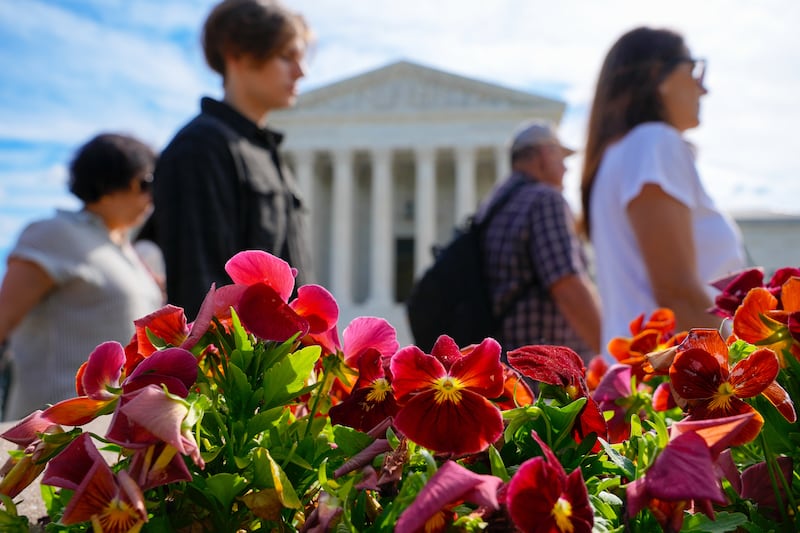

The Supreme Court heard oral arguments Wednesday in a case related to the Trump administration ending temporary protected status for Syrians and Haitians.
The TPS designation allows an administration to designate certain countries to be temporarily protected from deportation. Eligible individuals can live and work in the United States if they can’t return to their home countries due to armed conflicts, natural disasters and other temporary conditions.
The option was enacted in 1990 by Congress for people fleeing turmoil. Every president since then, including both Democrats and Republicans, has chosen to extend the status to those from designated countries, but President Donald Trump reversed that trend.
Last June, then-Department of Homeland Security Secretary Kristi Noem said conditions had improved since Haiti suffered a hurricane and former President Barack Obama issued temporary status for migrants in 2010.
The justices seemed likely to side with the administration, represented by U.S. Solicitor General D. John Sauer. He faced his most serious questioning from Justices Sonia Sotomayor and Ketanji Brown Jackson, highlighting the administration’s argument that the court has no role in deciding TPS eligibility. The administration’s argument focused on Congress saying the court can’t review the Homeland Security secretary’s decision to grant or terminate TPS status.
In Haiti, the 2010 earthquake left the country in ruin and with unstable conditions that still exist today. Fewer Syrians have been granted protected status than Haitians, with the initial decision coming because of a brutal civil war.
Attorneys for the Syrian and Haitian beneficiaries argued that Trump was ending their status on racial grounds. During the 2024 election, and referred to the country in a derogatory way in 2018. Sauer contended in his argument that the administration’s decision had nothing to do with race.
Ahilan Arulanantham, arguing on behalf of the migrants, said people should be able to have faith that the government would conduct a lawful and thorough review of which countries are eligible to be in the program.
Arulanantham argued that should the court rule in the administration’s favor, it would give a future DHS secretary extraordinary power and the ability to allow changes to be made to immigration status for people already in the country as well as those who could be granted TPS in the future.
Justices Samuel Alito, Clarence Thomas, Neil Gorsuch and Brett Kavanaugh stayed pretty quiet during Sauer’s argument.
A decision is not expected in the case until the end of June.
The case has sparked interest in Utah with members of MomsRising, a nonprofit advocacy group that spoke at the state Capitol earlier this month. The group is asking Congress to pass legislation to guarantee protected status for immigrants they worry are at risk.