



Utah Sen. John Curtis spent the first 18 months of his Senate career proving a reputation for collaboration buys you two things in America’s polarized partisan landscape: unexpected influence and a target on your back.
The former 3rd District representative and Provo mayor, quickly learned Congress’ upper chamber empowers individual members to stop, tweak or stall almost anything. Curtis didn’t wait for permission to try all three.
After a year in the Senate spotlight, under which he single-handedly slowed the phaseout of energy subsidies and squashed a presidential nomination, he wondered how to turn attention to the reason behind it all.

Anger among some constituents over Curtis not standing up more to President Donald Trump, and ire from others over Curtis occasionally getting in Trump’s way, made his typically intimate town halls increasingly unproductive.
But there was another Curtis trademark he could employ: taking town halls on the road for a hike across the state.
Part political stunt, part potent symbol, Curtis planned to walk 250 miles to commemorate the nation’s founding, trekking from his mother’s birthplace in Dingle, Idaho, to his home of Provo, for a Stadium of Fire finale on July 4.
“I didn’t want this 250 to come and go, and have it just be another Fourth,” Curtis told the Deseret News.

Along the way he would snap photos with surprised voters, counsel with local leaders and release videos emphasizing the values that made the country great — and that he believes can still save it from self-destruction.
A common theme for Curtis might reveal the role he hopes to play. Pioneers, he said on Day 1 of his journey, are defined by going ahead on the path to prepare the way for others, navigating with courage, faith and forethought.
At the United States’ semiquincentennial, Curtis’ conclusion is that more independent voices are the key to overcoming America’s challenges — which are best understood, not in Washington, D.C., but from a Utah mountain trail.
What will the post-Trump GOP look like?
Curtis begins his walking days at 3:30 a.m. He is in tennis shoes before 4:30 and by 10:30 has already walked 20 miles. Averaging 30 miles daily, the 66-year-old grandfather of 18 takes diligent precautions to avoid blisters and dehydration.
But for the most part, he simply enjoys taking it all in.
“Seeing Utah at 3 miles per hour, you really get to see the heart of people,” Curtis said.
The Deseret News joined Curtis on a 4-mile segment of his walk on Wednesday, descending from the Wasatch Range into Park City, where the senator gave his analysis of U.S. politics from beneath a polyester baseball cap.

Behind Curtis’ determination to make deals on Capitol Hill is a belief that America has a foundational problem that if left unresolved will hinder its ability to respond to every other crisis. For Curtis, the “most underlying” issue is debt.
At nearly $40 trillion, publicly held debt surpassed the value of the nation’s annual economic output this year for the first time. Driving the enormous numbers are mandatory spending programs, Medicaid, Medicare and Social Security.
Curtis is willing to be the “bleeding edge” on welfare reforms that combine spending cuts — likely through an elevated retirement age — and tax increases — potentially removing the cap on payroll taxes for top earners.

But Senate Democrats’ recent refusal to back a Republican-sponsored amendment to increase taxes on millionaires, confirms to Curtis that nothing will be done on the issue until it is prioritized by the party standard bearers.
During the 2024 presidential campaign, both Trump and Democratic nominee Kamala Harris vowed to preserve retirement benefits in their current form, even as they are projected to fall by 25% because of insufficient funds.
Curtis suspects the trajectory of the country, and of his party, depends on who Republicans nominate to replace Trump in 2028, with the two presumptive front-runners representing divergent visions for the post-Trump GOP.
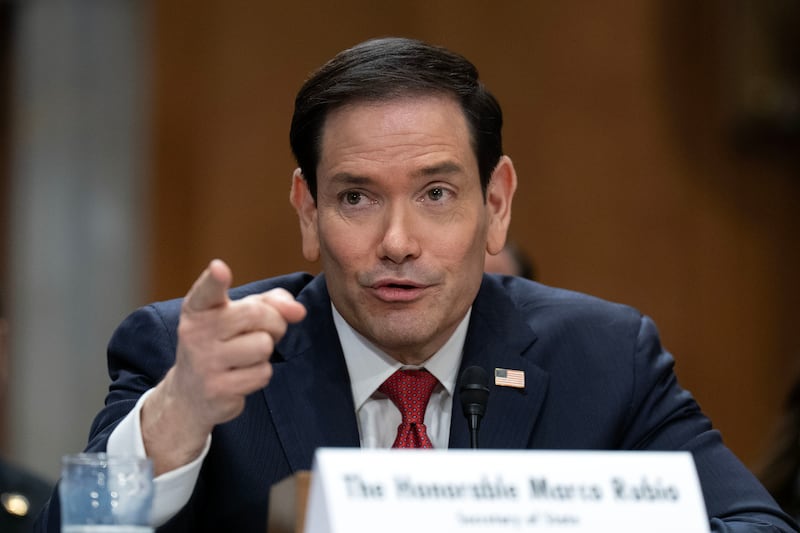
Secretary of State Marco Rubio speaks for a conservatism “much more aligned” with Curtis, while Vice President JD Vance represents the new right’s emphasis on American heritage, economic protectionism and military restraint.
The divide derives just as much from style as substance, according to Curtis. Between Rubio and Vance, who each left the Senate as Curtis entered it, there is “a very stark difference” in what Curtis calls “presentation.”
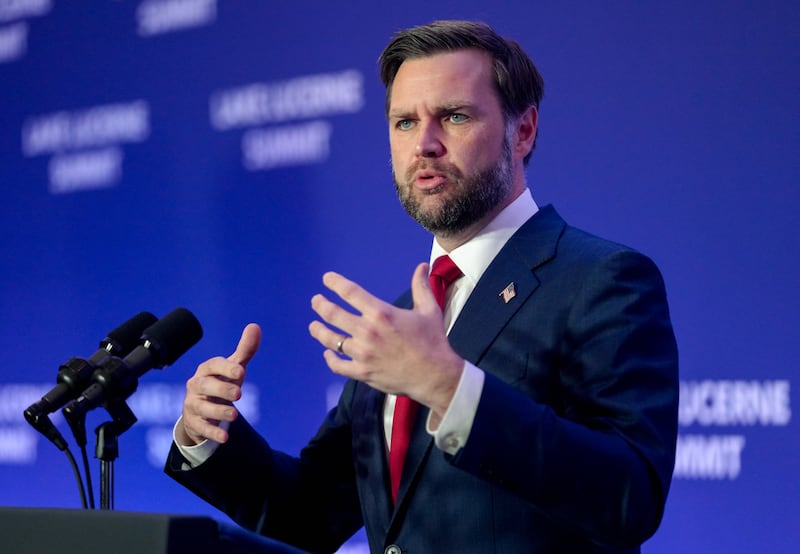
“I’ve thought a lot about that on this walk,” he said. “Part of the purpose of this walk is to show that there is an audience for values, and talking about things in a civil way can work. And for me, I don’t think you can separate them.”
A politician’s rhetoric shapes the policies they pursue and how they are received, Curtis said. There are many who wish he were more “bombastic,” but Curtis believes he is most effective when his focus is not on sounding like a “fighter.”
Being curious in today’s Congress
It was the way Curtis sounded that first caught the attention of Provo City residents two decades ago.
Wayne Parker, who served as Provo’s chief administrative officer for 20 years, including with Curtis, remembers first meeting him when he was COO of Action Target, a shooting range manufacturer co-founded by his cousin.
Unlike many executives, Parker said, Curtis was “a really good listener,” seeking feedback from neighbors upset with his factory. Coming face-to-face with the city’s zoning bureaucracy soon motivated Curtis to run for city office.

As mayor, Curtis made it a priority to meet with detractors, hosting a monthly “Juice for Junkies” event to hear them out. This strategy stemmed from realizing a low-turnout municipal victory did not give him a mandate, Parker said.
“It substantially changed the narrative,” he told the Deseret News. “It showed people who were his critics, his skeptics, as well as his fan club, he was approachable and would be willing to answer their questions and engage in a dialogue.”
Soon after sailing to the U.S. House in a special election, Curtis wielded his folksy authenticity with dramatic results.
From the beginning he stood out: a sitting congressman attending panels on conservative approaches to energy innovation, not as a panelist, but as an audience member, eager to learn about an issue he would make his niche.
Curtis approached Heather Reams, then CEO of Citizens for Responsible Energy Solutions, about reframing the conversation around environmentalism to get Republicans on board. She couldn’t believe what happened next.

To advance solutions separate from committee theatrics, Reams charged Curtis with getting GOP leadership and most committee chairs to sign on to creating a “Conservative Climate Caucus.” It was “mission impossible,” Reams said.
“And he got them all to sign on, every single one of them,” Reams told the Deseret News. “I’ve never seen leadership like this and on an issue Republicans weren’t naturally there on ... with all my 30 years in Washington.”
The caucus has grown to 70 members, bringing a GOP presence to U.N. climate conferences for the first time.
This has given Republicans a much-needed seat at the “climate table” by creating an alternative to the left’s alarmism and the right’s denialism, according to American Clean Power Association CEO Jason Grumet.
The secret to Curtis’ “principled pragmatism” is he doesn’t just preach politics of persuasion, he lives it, Grumet said.

“Curtis really embraces this thought that there is a constructive collision of ideas that makes America strong,” Grumet told the Deseret News. “But I think he is uniquely good at avoiding conflict just for the sake of polarization.”
Curtis’ disregard for party orthodoxy has often made him the “elephant in the room,” joked Rich Powell, CEO of Corporate Energy Buyers Association. This was especially true in negotiations over last year’s “big, beautiful bill.”
Curtis was one of the sole GOP defenders of clean energy tax credits, securing a more gradual end to the subsidies to avoid turmoil in the renewables industry. His ability to bring colleagues along was “classic John Curtis,” Powell said.
The move put Curtis in a shrinking category of senators willing to buck their party, Powell told the Deseret News.
What is Curtis’ relationship with Trump?

One of America’s most tenured congressional experts described Curtis as a rare example of a “normal senator.”
For more than 50 years, Marty Gold has advised Senate leadership on rules, tactics and personalities. Curtis, he told the Deseret News, is a “throwback” to senators of decades past who acted as an independent branch of government.
This doesn’t mean antagonism toward the president, Gold said. It means being a “team player without being a rubber stamp,” being the “president’s friend, ... not the president’s man,” and being independent but not obstructionist.
“He is a very good student of the Senate,” Gold said. “Curtis is much more of the work-with-them school. When I say he has learned the Senate well, ... he has chosen that way of being influential. And all senators want to be influential.”
That influence extends across the aisle.
Curtis is one of the lawmakers most willing to get behind bipartisan efforts, Arizona Democratic Sen. Mark Kelly said. The two have sponsored a bill to make social media firms liable for harms and hosted a joint town hall in Utah.
Kelly was also close with former Sen. Mitt Romney, who he greatly admired. He puts Curtis in the same camp.
“And those are pretty big shoes to fill,” Kelly told the Deseret News. “It didn’t take long to figure out that if anybody is going to be able to step into Mitt Romney’s shoes, it’s John Curtis. That’s how I feel about him.”
Curtis’ good standing among Senate Democrats illustrates his controversial place in the eyes of some conservatives.
No one more so than conservative scholar Jeremy Carl, who withdrew his nomination for a high-ranking State Department position in March after Curtis became the only Republican to publicly oppose him over his stance on Israel.
In the Senate Foreign Relations Committee, Curtis accused Carl of “anti-Israel” views for saying that the U.S. paid too much attention to the country and for agreeing that Jews claimed “special victim status” because of the Holocaust.
Despite his track record of bridge building, Curtis never showed interest in where he was coming from, Carl said.

“That’s not really something I would have expected from a senator from my own party,” Carl told the Deseret News. “I never got that opportunity to explain to him. I just basically wasted a year of my life to get ambushed in a hearing.”
Carl, who is Jewish by ethnicity but converted to Christianity, called himself a “raging moderate” on the issue of Israel. Before becoming a senior fellow at the Claremont Institute, Carl published research aligning with Curtis on energy for the Hoover Institution.
Carl has since been praised by right-wing commentators for his book “The Unprotected Class: How Anti-White Racism Is Tearing America Apart,” while receiving criticism for social media posts about race, religion and immigration.
Curtis said this controversy, paired with Carl’s committee performance, was reason enough to tank his nomination.
The freshman senator believes he invested more into vetting Trump’s nominees “than anyone in the Senate, and maybe in some cases, more than all of them combined,” interviewing them, reading their books, calling colleagues.
While Carl talked with his staff, Curtis said Carl didn’t try to meet with him directly.
Curtis’ only regret is not expressing his concerns more forcefully about other nominees, like Tulsi Gabbard as national intelligence director and Kristi Noem as Department of Homeland Security secretary overseeing immigration.
“I felt like I saw it. I tried to warn him and he still wanted them,” Curtis told the Deseret News.
Can a nation this divided celebrate?

Standing outside a Phillips 66 gas station, Curtis framed his relationship with the president as that of a board of directors to an executive: Curtis wants Trump to be successful, so he owes Trump his candid advice.
“I feel like my job in many ways is to be the voice of Utah in this period,” Curtis said.
The Utah County resident proceeded to ask his staff to please grab him a gas station fountain drink, a mix of Dr Pepper, Coke and Mountain Dew — “anything with caffeine” — the dirtier the better to fuel the last few miles of the day.
With independence comes introspection: despite differences in character and manner of communication, Curtis sees Trump as more of a mirror image of the American people than the source of their polarization.
The hostility burdening the country at its 250th anniversary is harder to dismiss than a single politician.
It traces back to ignorance of history, amnesia about moments of unity when the country came together and the “pride cycle” of a population who hasn’t had to make the same sacrifices for freedom as their ancestors, Curtis said.
A prime example, according to the senator, is the slew of self-described democratic socialist candidates who recently won congressional primary elections in Colorado and New York — but, notably, not in Utah, Curtis pointed out.
“That was so taboo to be aligned as a socialist, and now all of a sudden it’s the hip thing,” he said. “It does disturb me.”
Trends like this are why Curtis thought a walk — to touch grass outside the Beltway and urge Americans back to the basics — was worth his time during the Senate break. But the trip, like his Senate service, has sparked different reactions.
Some online have said the idea is self-serving. Others have praised the physical feat and his effort to meet with leaders, including Utah Gov. Spencer Cox, Attorney General Derek Brown and county commissioners every day.
He is not the first politician to draw attention to himself and his values with an epic walk.
In the 1970s Lamar Alexander, while running for Tennessee governor, took six months to walk 1,000 miles across the state, and Lawton Chiles launched a campaign for U.S. Senate with a 3-month, 1,000-mile walk across Florida.
While he is currently reading Alexander’s book about the walk, Curtis insists he is not about to run for Utah governor, despite recent reports he is considering it. He figures if he is a good senator, the next steps will work themselves out.
He said he is in no rush to leave the greatest deliberative body on earth. He still gets goosebumps when he enters the Senate chamber, he said. More than anything he wants Utahns not to give up on the gift of America amid difficult times.
“We need to pause every once in a while and celebrate our founding, our history and just how remarkable this country is,” Curtis said. “I think we forget just how great of a country we are because we focus on our warts.”
The ingredients are all here — in the Beehive State more than anywhere else — to breathe new life into the constitutional order and civic engagement with the “pioneer values” of hard work, frugality, charity, family and faith.
Curtis’ message is: there are reasons to hope America 250 is just the beginning.
But it can be hard to see, he admits, until you slow down to 3 miles per hour.
