



The House adopted a resolution seeking to extend government funding levels through the beginning of December in an effort to avoid another shutdown fight ahead of the midterm elections.
Lawmakers voted 220-205 mostly along party lines to advance the spending bill, overcoming the simple majority vote needed to pass the House. The spending extension, known as a continuing resolution or CR, would punt the funding deadline to Dec. 4.
All four members of the Utah House delegation voted in favor of the resolution. Six Democrats broke party lines to vote in favor of the resolution, while only one Republican voted against.
The spending resolution passed with little Democratic support as top party appropriators lamented the lack of bipartisan collaboration and said they had no opportunity to give input. Top Democrats also criticized the lack of language setting funding levels for ICE and Border Patrol at $0, a previous agreement made on the basis that Republicans have already funded the two immigration enforcement agencies through the end of President Donald Trump’s term.
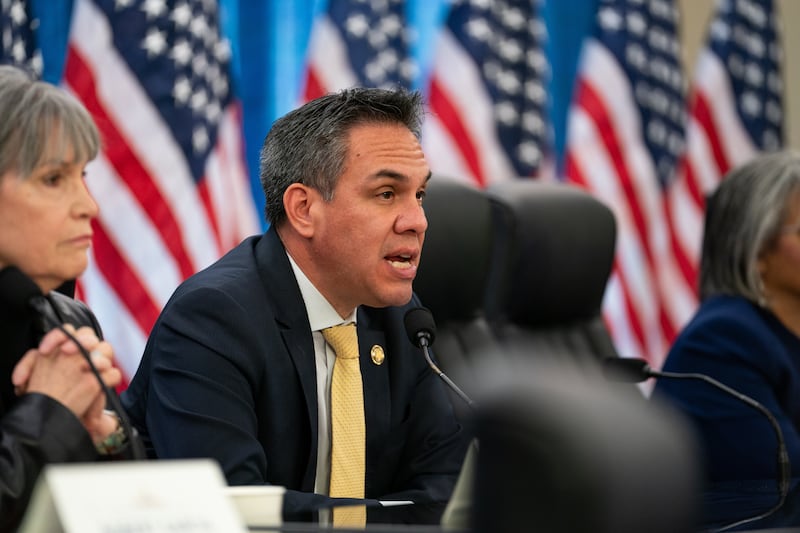
“I think that there are some drafting errors within the CR that give Customs and Border Patrol flexibility to move money around,” House Democratic Caucus Chairman Pete Aguilar, D-Calif., told reporters on Tuesday. “The administration said that all of that was funded within reconciliation 2.0, and I think they’re creating other opportunities to transfer funds.”
The two-month extension comes as Republicans look to avoid another contentious shutdown fight after the record-long funding lapse last fall that saw the entirety of the federal government shuttered for 43 days.
The resolution is deemed by GOP leaders to be “mostly clean,” meaning it doesn’t attach unrelated policy provisions — aside from two death gratuity payments for the heirs of the late Sen. Lindsey Graham and Rep. David Scott.
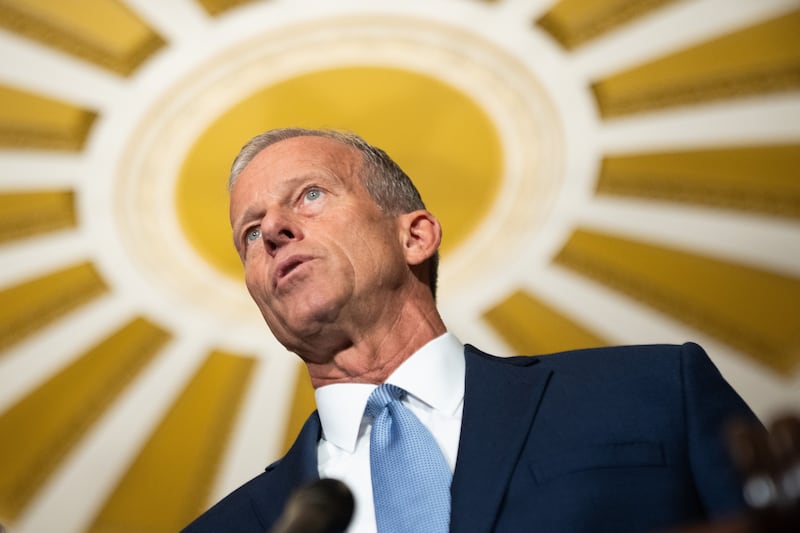
The resolution will now head to the Senate, where top Republicans are already tamping down expectations. Majority Leader John Thune, R-S.D., said he plans to bring a continuing resolution to the floor before the Senate leaves town on its August recess in two weeks, but he said it likely won’t be the House version that passed Tuesday night.
The House iteration doesn’t include anomaly requests from the White House, referring to specific programs the Trump administration wants to see additional spending during the two-month extension period. The Senate version would be drafted in a bipartisan manner, Thune said, making it more likely to be successful.
“(The House CR) doesn’t have a number of the anomalies that the Senate CR carries, and which frankly the administration has requested,” Thune said on Tuesday. “We got the list from them yesterday of things that they want in there, and we’re really working with the Democrats on a path forward here in the Senate. So I think that’s the, probably, more likely vehicle in the end.”
If the Senate passes its CR before the recess period, the House won’t be able to consider it until the beginning of September at the earliest. The funding deadline is midnight on Oct. 1, the start of the new fiscal year.
House considers slate of other funding bills this week
The House will vote on a number of other spending bills this week before they leave for the August recess. Those are also expected to pass along party lines.
Lawmakers are expected to vote on the National Defense Authorization Act on Wednesday, the annual defense bill that outlines the proposed budget for the Pentagon. That bill typically passes in a massive bipartisan vote, but its fate is more uncertain as Republican leaders say they’ll attach the SAVE America Act to the package when they send it over to the Senate.
The SAVE America Act, which seeks to establish proof-of-citizenship and voter ID requirements for federal elections, is staunchly opposed by Democrats and has stalled in the Senate due to the 60-vote filibuster.
The House will also vote on Republicans’ third proposed budget reconciliation package seeking $95 billion to cover defense spending and election integrity, among other things. The budget resolution was unveiled just last week and doesn’t include spending cuts to offset the multibillion-dollar price tag, prompting fiscal hawks to raise their eyebrows.
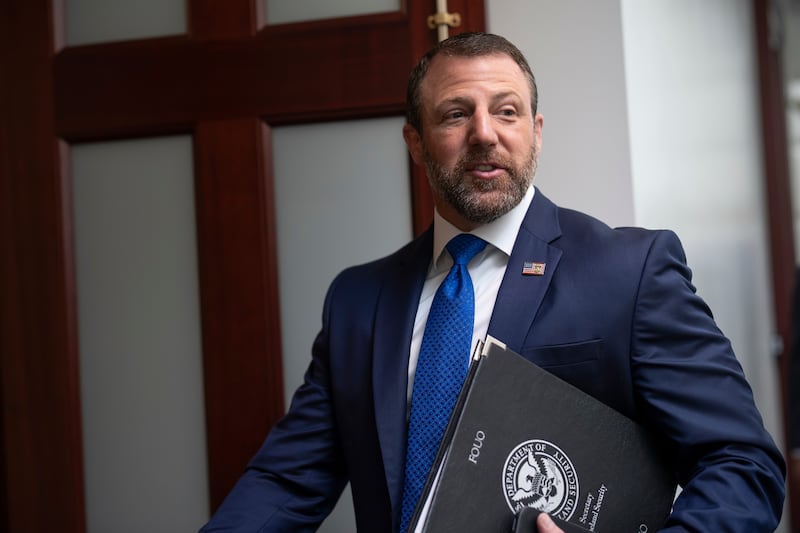
Some White House officials including Homeland Security Secretary Markwayne Mullin and Office of Management and Budget Director Russ Vought met with GOP lawmakers on Tuesday to advocate for the legislation. It’s not yet clear if it’s convinced enough to switch their votes to yes.