

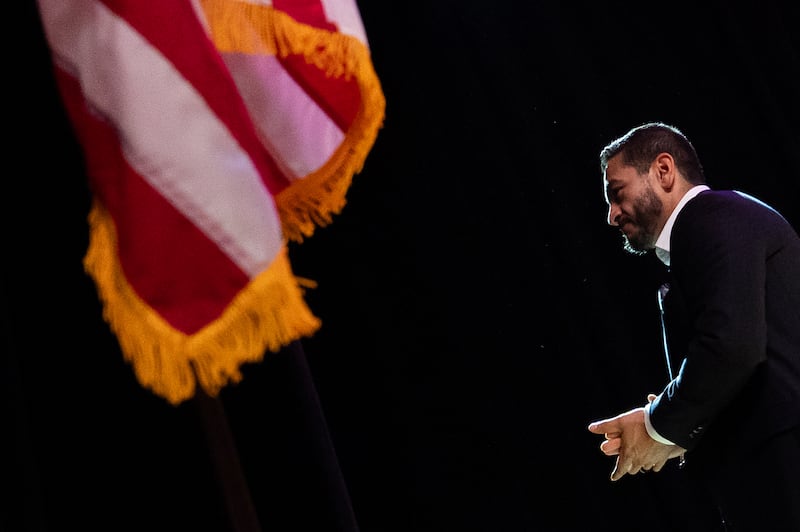

- Democratic socialists win in Michigan, continuing a streak of victories nationwide.
- Salt Lake City Mayor Erin Mendenhall said this is a natural response by Democrats to Republican “extremes.”
- Gov. Cox said both parties appear like they're “actively trying to lose” midterms.
The Republican governor of solidly red Utah and the Democratic mayor of its deeply blue capital spoke out separately about what they see as the growing polarization pushing their parties to the fringes.
In an interview with Deseret News in late July, Salt Lake City Mayor Erin Mendenhall explained her party’s shift toward democratic socialism in recent congressional primaries as a natural reaction to the perceived overreach of President Donald Trump.
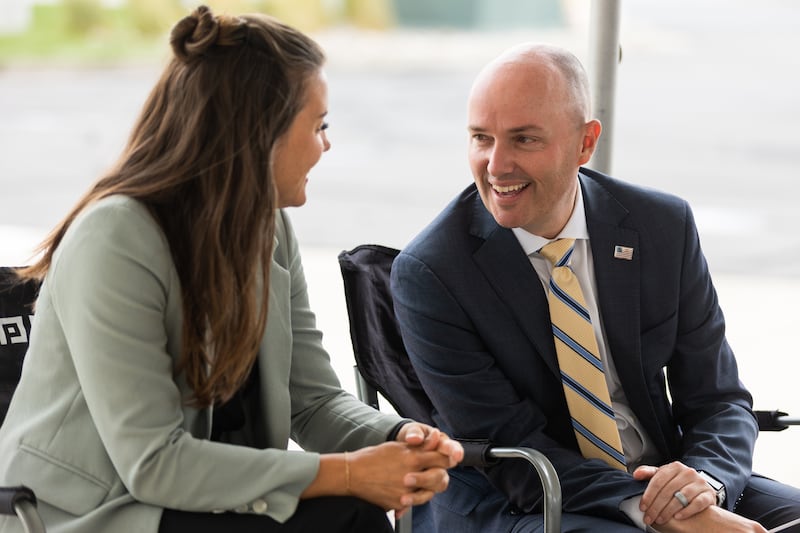
“There is a human instinct to counterbalance extremes,” Mendenhall told the Deseret News. “And with the extremes the Trump administration is going to on almost every front, we are seeing a reactive Democratic response that is alluring to many voters.”
On Tuesday night, democratic socialists scored two more wins in Michigan, adding to a slate of victories in Colorado, New York and Pennsylvania that signal a stark shift to the left for the Democratic Party.
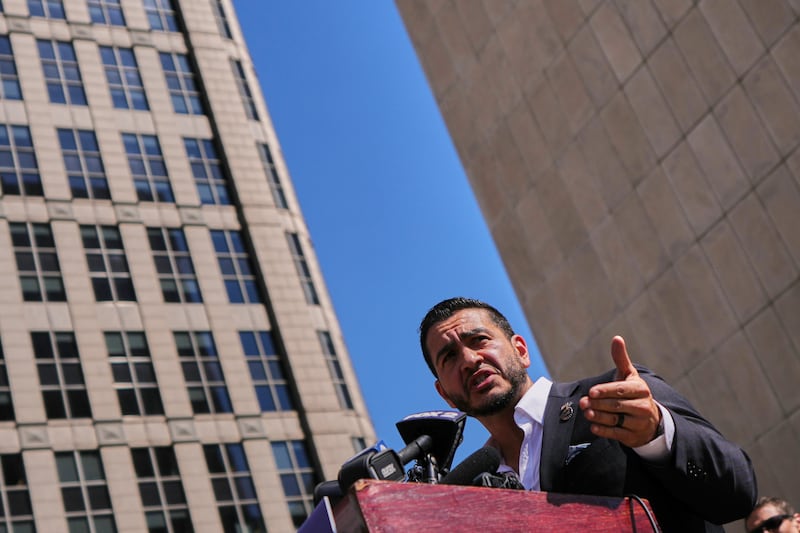
Former public health official Abdul El-Sayed, who received support from the socialist “squad” in the U.S. House — including Reps. Alexandria Ocasio-Cortez, D-N.Y., Ilhan Omar, D-Minn., and Rashida Tlaib, D-Mich. — narrowly defeated Democratic Rep. Haley Stevens, who counted on a huge fundraising advantage.
El-Sayed will now face former Rep. Mike Rogers in a competitive race.
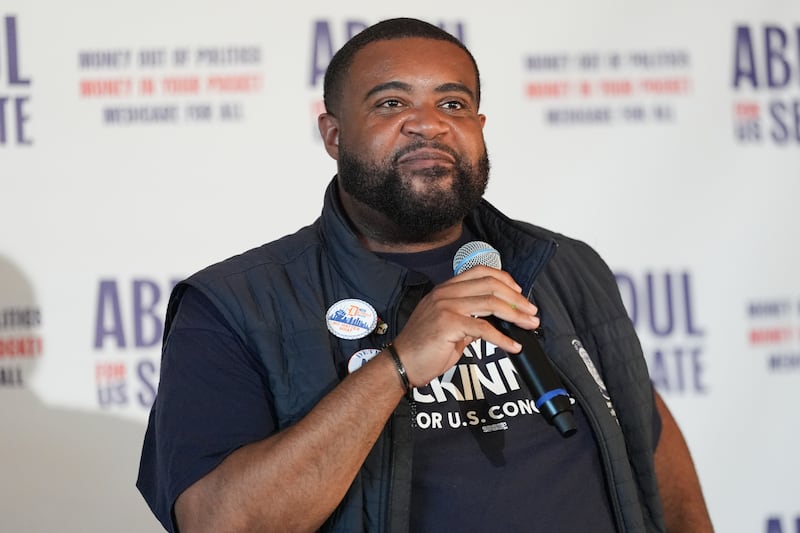
Also in Michigan, a member of the Democratic Socialists of America, state Rep. Donavan McKinney, defeated incumbent Democratic Rep. Shri Thanedar, who had the backing of House Minority Leader Hakeem Jeffries.
Meanwhile, a democratic socialist, state Rep. Francesca Hong, is leading the Democratic primary race for governor in another swing state: Wisconsin. Democrats are watching these two battlegrounds closely.
Mendenhall: Don’t be ‘purely reactive’
Mendenhall chose not to criticize the leftward lurch of Democratic primary voters, but she cautioned the party not to let outrage over Trump’s impact on democratic norms and immigration dictate their every move.
“While at once we must acknowledge, and in some cases combat, the actions of this administration, our policies as Democrats should not be purely reactive,” she said. “If they are, we are dancing to their tune and not setting our own agenda and our own vision.”

As mayor of a “blue island,” Mendenhall has been one of Utah’s most vocal critics of Trump, using her annual State of the City address to lambast the president’s mass deportation policies as having disrupted Utah communities.
This is where she draws a “line in the sand,” she told the Deseret News. The administration’s approach to arresting immigrants in the country illegally has been “un-American and cruel and doesn’t have a place here in Salt Lake City,” she said.
But disagreement over immigration should not decrease faith in the American way, according to Mendenhall. If anything, Democrats should feel more emboldened now to defend what makes the country great, she said.
“I think there is something to the 250th anniversary in voters’ minds as we consider how much the nation has been through and in particular how fragile the democracy actually is,” Mendenhall said. “There’s an impact that is unique in this year.”
Salt Lake County Democrats had a unique opportunity to influence the national fight over the party’s future in June. Primary voters handed moderate former Rep. Ben McAdams a resounding victory over his democratic socialist opponents.
McAdams faces Republican Riley Owen in November’s midterm elections.
Cox: Parties ‘actively trying to lose midterms’

Around the country, Republicans have made the democratic socialist insurgence a key talking point, highlighting the radical platform of the Democratic Socialists of America, which is led by self-described Marxists and communists.
But Republican primaries have been plagued by their own scandals that could threaten general election outcomes as parties fight over less than 20 “toss ups” in the House, and just four toss-up seats in the U.S. Senate.
GOP voters selected Texas Attorney General Ken Paxton in a landslide win over incumbent Sen. John Cornyn. Despite Paxton’s track record of conservative court victories, allegations of corruption and adultery could shape the race.
Democratic nominee James Talarico has come out with a slight lead in three consecutive polls, suggesting that the seat in a state where Trump won by more than 13 percentage points could be in play for either party.
Republican hopefuls trying to keep their congressional majority also face political headwinds from unpopular White House policies, including the Iran war, tariffs and aggressive Immigration and Customs Enforcement tactics.
“Trying to imagine what either party would do differently if they were actively trying to lose the midterms … really can’t think of anything. Great work everyone. #MakeAmericaNormalAgain,” Cox said Sunday in a post on X.
When asked, the governor’s office declined to comment further on Cox’s post.
This is not a new sentiment from the Utah governor. Cox often repeats his prediction that the first party to figure out how to focus its message on the average, instead of the most ideological, voter will win by large margins.
His forthcoming book, “Off Ramp: How to be a Peacemaker in an Age of Contempt,” promises to provide a blueprint for this kind of politics as a “practical guide to depolarization,” centered around his “disagree better” slogan.