

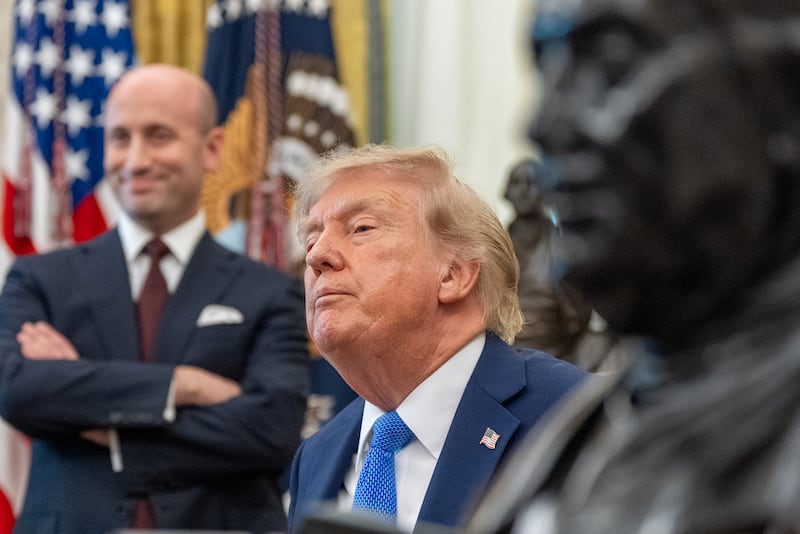

President Donald Trump on Thursday signed executive orders that would put limits on birthright citizenship and what he is describing as “birth tourism” after receiving a setback earlier this year at the Supreme Court over the issue he tried to end on his first day back in office.
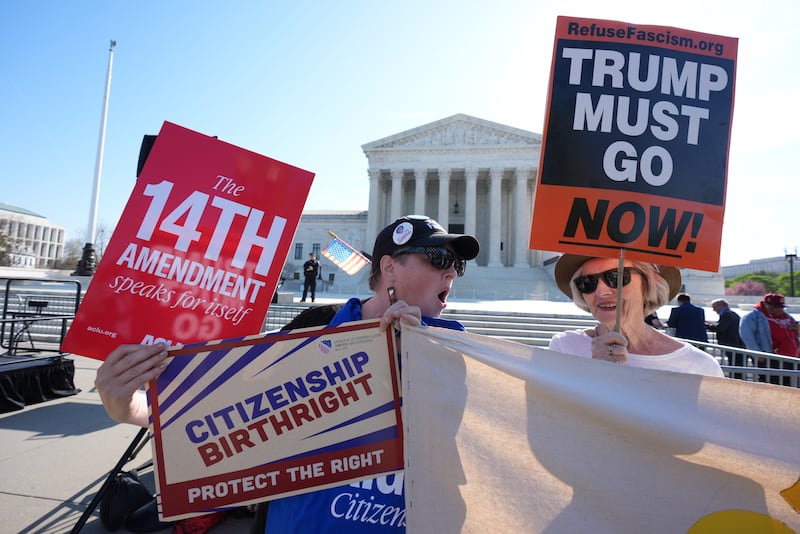
The two orders appear to circumvent the court’s ruling in late June, striking down his executive order seeking to end birthright citizenship for all children who are born on U.S. soil. The justices, in a 5-4 ruling, said the order violated the 14th Amendment.
Following the loss, Trump vowed to get rid of the long-standing constitutional right a different way.
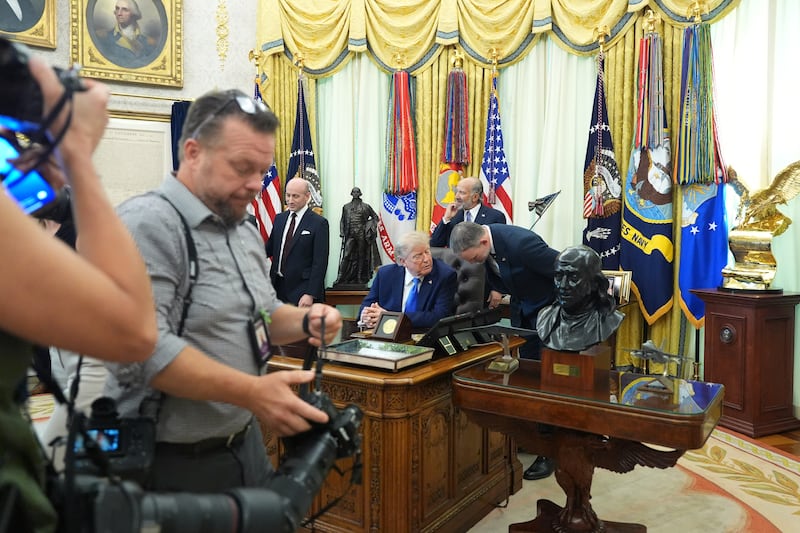
On Thursday, accompanied by White House deputy chief of staff for policy Steven Miller, Trump signed the orders, restricting birthright citizenship, including for children of people who are classified as alien enemies, children of foreign diplomatic staff and parents who engage in “birth tourism.”
“People are building businesses around it,” he said. “From wealthy people are building businesses around birthright citizenship. That’s not the way it’s supposed to work. It’s a disgrace. They’re buying their way in, and we’re not going to let it happen.”
Trump went on to say that in recent years there are “organized rings” of criminals that are setting up a system where thousands of people come to the country in an “organized fashion” to give birth “purely for the sake of obtaining birthright citizenship.”
“This order takes a number of different actions intended to combat those sorts of organized practices,” he said. “We look very heavily at denying visas to people that we have reason to believe are coming here for that purpose.”
Trump said one man came to the U.S. and said he had 56 children. He said that wasn’t what the 14th Amendment was set up for, and was “meant for the babies of slaves.”
The president criticized the Supreme Court ruling, saying it was a “close, but a very, very unfortunate decision.”
“So, we’re making adjustments because it’s very unfair,” he said.
Trump signed the original birthright citizenship executive order on his first day back in office in January 2025. The order challenged the long-established interpretation of the Constitution.
Immigration advocates and expecting mothers took the case to court, and the Supreme Court in 2025 ruled not on the matter but a separate, related nationwide injunction issue.
The Trump administration celebrated the ruling at the time, taking the win that judges couldn’t put a hold on a policy nationwide. Then, the case made its way back before the justices for consideration in its 2026 term.
Chief Justice John Roberts wrote the majority opinion in the case earlier this year, deeming that children born in the U.S. to parents “unlawfully or temporarily present” are “subject to the jurisdiction” of the United States and are citizens under the 14th Amendment.
He was joined by Justices Sonia Sotomayor, Elena Kagan, Amy Coney Barrett and Ketanji Brown Jackson. Justice Brett Kavanaugh concurred in part and dissented in part. Justices Clarence Thomas, Neil Gorsuch and Samuel Alito filed dissenting opinions.
Trump indicated in a July post online that he would ask the court for a rehearing, calling the ruling a “miscarriage of justice.” However, it appears his administration didn’t ask the Supreme Court to reconsider by filing a petition, since the deadline, which was on July 27, passed without the court taking it up. Rehearings are extremely rare at the court.
At the time of the ruling, Trump said the ruling was “too bad” but he would “easily” make up for it by having Congress pass legislation.
Thursday’s order appears to skip past Capitol Hill and any legislation that could have been passed with the Republican majority.
It’s an issue that’s of major interest to Trump. He made history earlier this year by becoming the first sitting U.S. president to attend an oral argument session, proving how important the issue is to him.
The first order signed Thursday expands the definition of who would be ineligible for citizenship.
The second order looks to ban the practice of “birth tourism,” which is when people travel to another country with the intention of giving birth there so the child automatically gets citizenship. It’s become a hot-button issue for the Republican Party, but also would require an individual to obtain a visa on fraudulent grounds, which is already illegal.
Miller argued in the Oval Office that Trump has the authority to change birthright citizenship under the Immigration and Nationality Act, which he said is rarely used but is “probably” one of the strongest laws.
Trump, during the event, criticized the Supreme Court for its ruling and said the U.S. stands out for the automatic citizenship outlined in the founding documents.
“We’re actually the only country of size, I think just about the only country, period, that does birthright citizenship,” he said. “I thought we were going to win it at the Supreme Court. Unfortunately we had a bad decision, very unfair decision. Our country suffers because of it, and we’re ending it a different way.”
It’s unclear if any immigration advocacy groups or others will challenge these orders at this time.