



The days of political campaigns reaching voters through TV commercials or mailers sent to your home aren’t entirely over, but with the accessibility provided by social media, politicians are able to tap directly into your feed instead.
And social media feeds offer something extra: Politicians are able to target who sees their ads based on voters’ interests.
Thanks to the Meta Ad Library, searching all the advertisements currently running on Meta technologies, like Facebook and Instagram, or seeing ads that have run in the past, is easily viewable.
What a search of the library shows is that politicians and their teams are being strategic in how they target the voters they know they need come Election Day, with detailed information including a person’s ZIP code, age, gender and specific interests like which sporting events users watch, what they like to do with their free time, which celebrities they follow or podcasts they listen to.
For example, take the recent competitive Democratic Senate primary in Michigan. Rep. Haley Stevens, a moderate, was narrowly defeated by Dr. Abdul El-Sayed, a more progressive candidate. They each were registered through Meta’s Ad Library, and their results show the different interests of the voters they were trying to reach.
NPR listeners or activists?
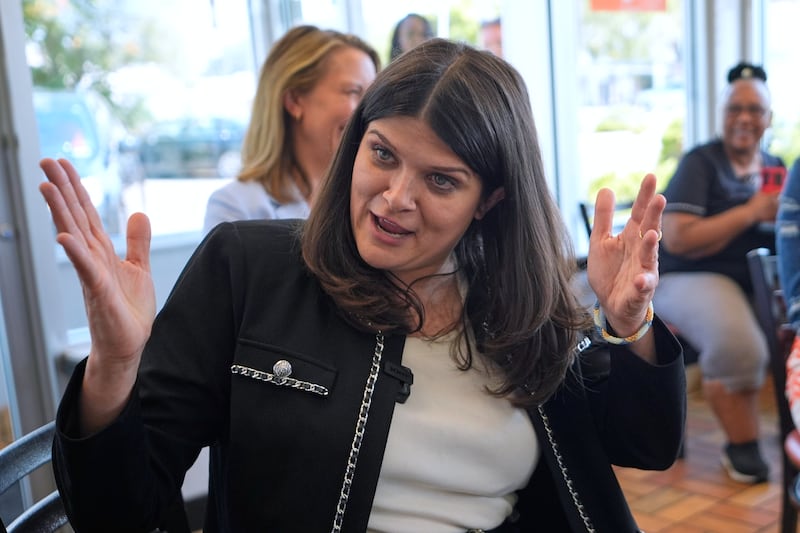
Stevens’ data shows she posted hundreds of advertisements across Facebook and Instagram since launching her campaign in April 2025. Under her Haley Stevens for Senate disclaimer, it shows she spent more than $202,000 on ads and in the final week of the campaign she spent an estimated $9,700.
Stevens, unlike her competitor El-Sayed, did not use detailed targeting settings for the advertisements and voters’ other interests online.
Advertisers pushing content on Meta platforms are able to use detailed targeting to refine their audience with information including demographics, interests and behaviors.
El-Sayed’s ad library shows that his campaign used detailed targeting to reach users, including those who are interested in NPR’s “All Things Considered” podcast, Palestine, Middle Eastern cuisine, social issues and activism. The detailed targeting provides insight into the voters El-Sayed’s team was looking to target with their messages.
Like Stevens, after launching his campaign in April 2025, El-Sayed’s Meta information shows he ran more than 7,000 advertisements and spent more than $1.5 million under the Abdul for U.S. Senate disclaimer. In the final week of the primary campaign, El-Sayed spent almost $189,000 on ads.

NFL watchers, older voters targeted in Maine
The Senate race in Maine also made national headlines this year after Democratic candidate Graham Platner ended his campaign after being accused of sexual assault. He easily won the primary earlier this year after marketing himself as a working-class oysterman ready to take on the establishment.
His Meta information shows he spent more than $3 million in advertisements under his Graham For Maine platform. From May until when he ended his campaign in early July, Platner spent more than $800,000 on more than 240 ads, with 2.5% of them specifically targeting female voters.
Detailed targeting shows he looked for users tapped into local news, current events, breaking news and feminist philosophy.
Platner’s replacement, chosen by delegates in Maine, is Troy Jackson, who earlier lost in the Democratic gubernatorial primary. His detailed targeting information shows he was advertising to users interested in charity, volunteering, community issues, sustainability, composting and renewable energy.
In just the last week of available data, he spent more than $61,000 on ads highlighting his nomination for the Senate race and how he’s starting from “WAY behind” Republican Sen. Susan Collins. As of last Friday, he had 10 active ads on Meta platforms, both pushing his message and criticizing his Republican counterpart.
Collins, who has served in the Senate since 1997, has spent almost $48,000 in the last 90 days on advertisements for her campaign. The Meta data shows she is targeting mostly older voters, with a slight drop off on attention for voters under 25 years old.
Detailed targeting shows Collins was looking to put her ads in front of users interested in watching the NFL on Fox, the Big 12 Conference, Food Network, ESPN, those who are stay at home moms, or interested in hunting, Girl Scouts, personal finance, recreational fishing, country singer Jason Aldean, patriotism and more.
Older women or middle-aged men
Down South, Georgia Sen. Jon Ossoff is looking to win his second Senate campaign. This time, he’s up against Rep. Mike Collins, who beat out former football coach Derek Dooley in the Republican primary. Collins earned the endorsement of President Donald Trump in a runoff against Dooley.
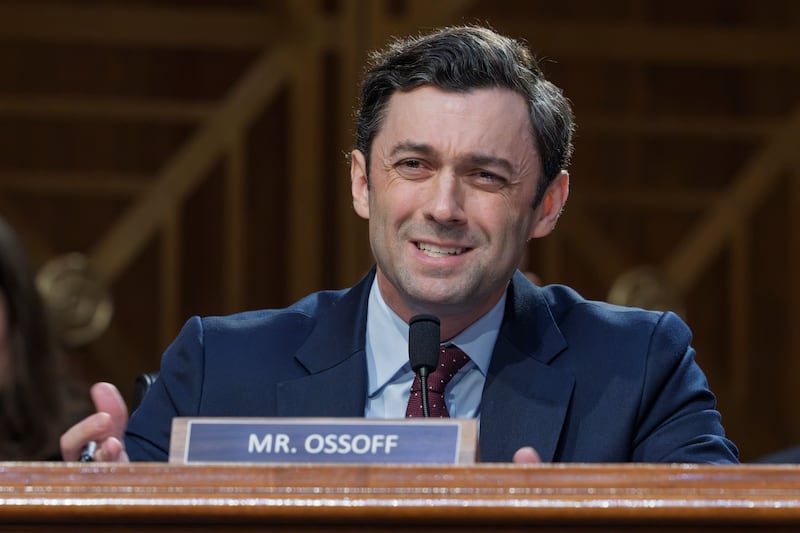
While the race is leaning in Ossoff’s favor, Georgia’s swing-state nature puts the race in the could-be competitive column. Spending on ads shows the incumbent is ready to fight for his seat, according to Ossoff’s Meta ad library.
An ad he ran from June 26 through July 2 with just eight hours of “total active time” online cost anywhere from $10,000-15,000, per Meta’s estimate. Most of the people who saw that specific ad were women 65 years old and older and the ad made 200,000 impressions on users’ screens. Additionally, during the most recent 7-day period, Ossoff is estimated to have spent more than $140,000 on 19 different ads.
Ossoff’s challenger, Collins, has served in the House since 2023. Collins’ most recent ad ran from June 9-13 about a meet and greet event. He spent less than $100 on the ad but was able to make more than 15,000 impressions. The ad made the biggest difference among men, particularly those ages 45-64.
Meet voters where they are: on social media
Peter Loge, an associate professor of media and public affairs and the director of the project on ethics in political communication at George Washington University, evoked a saying from the late former Arizona Sen. Barry Goldwater, who used to say “you hunt where the ducks are.”
In other words, politicians have to meet voters where they’re at. In 2026, voters are on social media.
It makes sense for Susan Collins to target voters who are interested in hunting or recreational fishing, given the rural nature of much of Maine. It also makes sense for El-Sayed to cater to Middle Eastern values, given his Egyptian heritage and Michigan having the nation’s largest Arab American population.
In a competitive media market, politicians hope to stop voters from scrolling and grab hold of their hearts and minds through the ads.
It’s not entirely a new concept, Loge explained.
Political strategists looked at zip codes in suburban areas with two adults listed with the same last name in a household between the ages of 25 and 40, likely determining them to be parents that were later on the receiving end of a candidates’ mailer talking about public school issues.
Politicians ran TV ads targeting older voters during re-runs of shows popular in the ‘80s or ads targeting younger generations on more popular, up-to-date shows, Loge said.
Campaigns capitalizing on Americans’ perpetual social media habits is just them adapting to modern technology and trends, but the software is allowing them to be much more “sophisticated about who they’re targeting with what message and what level of granularity.”
“What they’re doing at Meta is just a much more sophisticated version of what smart candidates and persuaders have been doing for 2,500 years,” Loge said.