

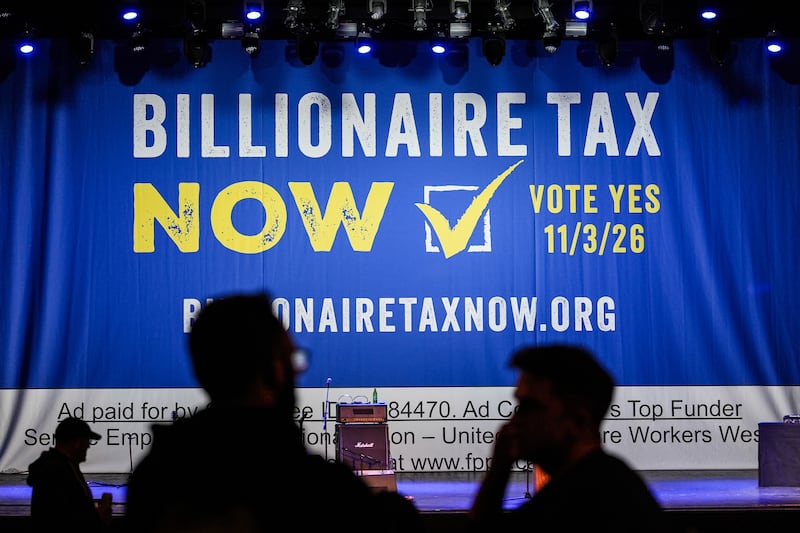

The partisan divide is clear as California voters prepare to decide the fate of two key issues in November: billionaires and ballots.
An initiative to enact a one-time wealth tax on California residents with a net worth greater than $1 billion, known as Proposition 40, could generate billions of dollars to support underfunded healthcare and education for low-income residents.
However, the act could also lead to an exodus of jobs and wealthy individuals which could put future tax revenues at risk. Though many Democratic voters support the measure, some Democratic leaders, like California Gov. Gavin Newsom, said the measure is “quite the contrary” to what the state needs right now.
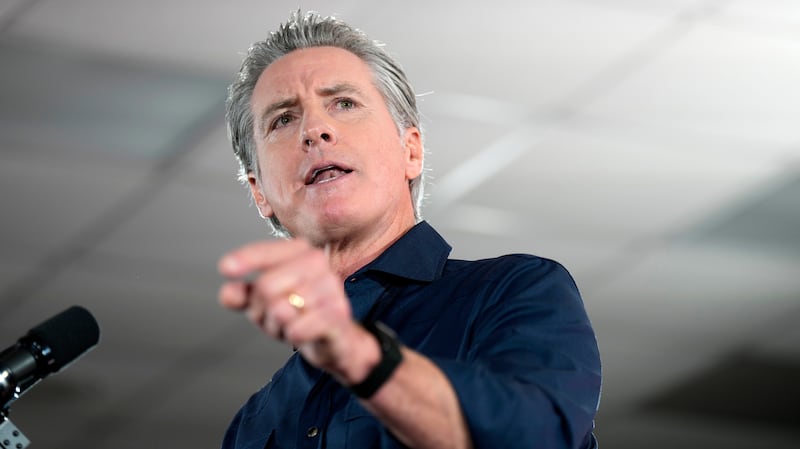
Another measure, Proposition 39, moves to establish strict voter ID laws for California elections, a change that would cost tens and possibly hundreds of millions of dollars.
A recent poll by the UC Berkeley Institute of Governmental Studies showed both issues are examples of a strong partisan divide.
With billions of dollars on the line in California, it’s unclear what the voters will decide in November.
The fight over Proposition 40
If Proposition 40 was enacted, the state of California would likely collect tens of billions of dollars from the wealth tax, according to The California Legislature’s Nonpartisan Fiscal and Policy Advisor.
A wealth tax is a fee charged on a person’s total net worth. Their net worth is calculated by combining the value of any assets the individual owns — such as real estate, stocks, businesses holdings and cash — and then subtracting any liabilities or debts.
That means to pay the tax, billionaires could be expected to liquidate assets.
Supporters of the tax say the funds collected would be used to pay for healthcare programs that provide access and services to low-income residents, with remaining funds going to education and food assistance programs.
Currently, these programs are under “extreme financial pressure” due to a lack of federal funding, according to the full text of the initiative.
“This emergency measure to save our hospitals, clinics, and healthcare facilities is critical,” said Tony Thurmond, California superintendent of public instruction, in a press release. “Without the billionaire tax, California hospitals and ERs will close, healthcare costs will skyrocket, and patients will be forced to drive further, and wait longer, for medical care. That’s not a sacrifice anyone should be asked to make.”
Even though the initiative would collect billions, it could also significantly lower future tax revenue if California’s billionaires decide to leave the state to avoid future wealth taxes.
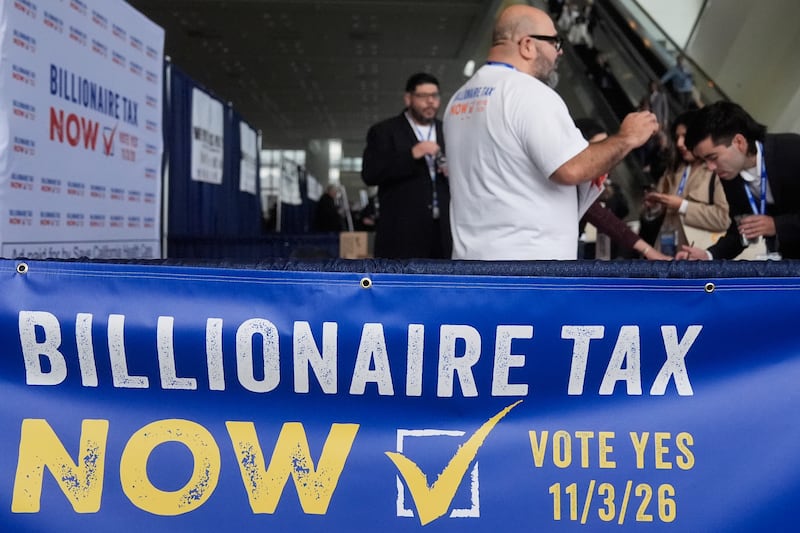
Newsom told Politico the measure “makes no sense” and could be “really damaging to the state.”
“The good news is the overwhelming opposition to this by others,” Newsom said. “I think it will be defeated, because I think people understand what it does versus what it promotes to do.”
A recent poll by UC Berkeley Institute of Governmental Studies showed that there are slightly more voters inclined to vote yes on the initiative (48%) than those inclined to vote no (41%). Support for Proposition 40 is found largely among Democrats and strongly liberal voters, with Republicans and conservatives largely opposing it.
“These results suggest that the Billionaires Tax initiative is shaping up to be a closely fought contest, with the key question being whether opponents can make big enough inroads among the state’s traditionally Democratic-leaning voters,” said IGS co-Director Eric Schickler.
Opponents of the tax are expected to spend immense amounts of money to defeat the measure.
Mark Cuban, others wade into billionaire tax debate
Over the weekend, Mark Cuban, an American businessman and entrepreneur, engaged in a lengthy and explicit debate about the wealth tax with U.S. Rep. Ro Khanna, a centimillionaire who supports the proposal.
After Khanna posted a video on social media in support of the proposal, Cuban vocalized his opinion against the wealth tax and said if the proposal passes, he would not invest in any startups in California.
“IMO, if this passes, only idiot startup founders stay in Cali,” Cuban said. “I’ve done it before and will do it again. Dallas. Pittsburgh. Indiana. I will make NOT being in California a pre requisite for an investment.”
In a later post responding to comments made by Cuban, Khanna said, “Mark, come on a road trip with me around California, Pennsylvania and the country and ask ordinary Americans how they feel about a billionaire tax. Most say, I promise you, why only 5 percent?”
Khanna said the tax could “offer a new social contract for this country” and suggested founders with mostly illiquid assets, like business or property wealth, could take a loan from the government to pay the tax for a “long but not infinite” period, a suggestion Cuban called “insane.”
“You want the state to loan money to the founder, who will then immediately give it back to the state as a wealth tax ? Meaning the state has not received any incremental receipts? What’s the point of that?” Cuban said.
Khanna said he has “respect” for Cuban’s “intellect and ability to get things done” and suggested Cuban put energy into “more pressing issues than a one time 5 percent tax on 250 billionaires to pay for healthcare for poor kids and families in California.”
New voter ID requirements could cost tens of millions of dollars
Proposition 39, another measure up for debate ahead of a November vote, would require California residents to provide proof of citizenship when registering to vote. Voters would also need to present a government-issued ID when voting in person or list the last four digits of their Social Security number when using mail-in ballots. Currently, California voters simply verify their vote by signature.
The cost of implementing Proposition 39 would be tens of millions of dollars, according to The California Legislature’s Nonpartisan Fiscal and Policy Advisor.
Much like Proposition 40, opinions on Proposition 39 are largely partisan. Approximately 80% of liberals and Democrats said they would vote no and more than 90% of Republican and conservative voters said they would vote yes, according to the UC Berkeley study.
“Foes of the Voter ID initiative have already started to solidify making it a more typical Democratic-Republican fight, in which Democrats in California generally hold the advantage,” Schickler said.
Overall, 51% of polled voters said they would vote against the measure, and 42% said they would support it.
In 2024, Newsom signed SB1174 into law, prohibiting the state from adopting a law requiring voters to present ID before voting. If the proposed initiative is approved, it would supersede the state law and require an amendment to the California Constitution.
California voters will decide the fates of Proposition 39 and Proposition 40 with a vote on Nov. 3.